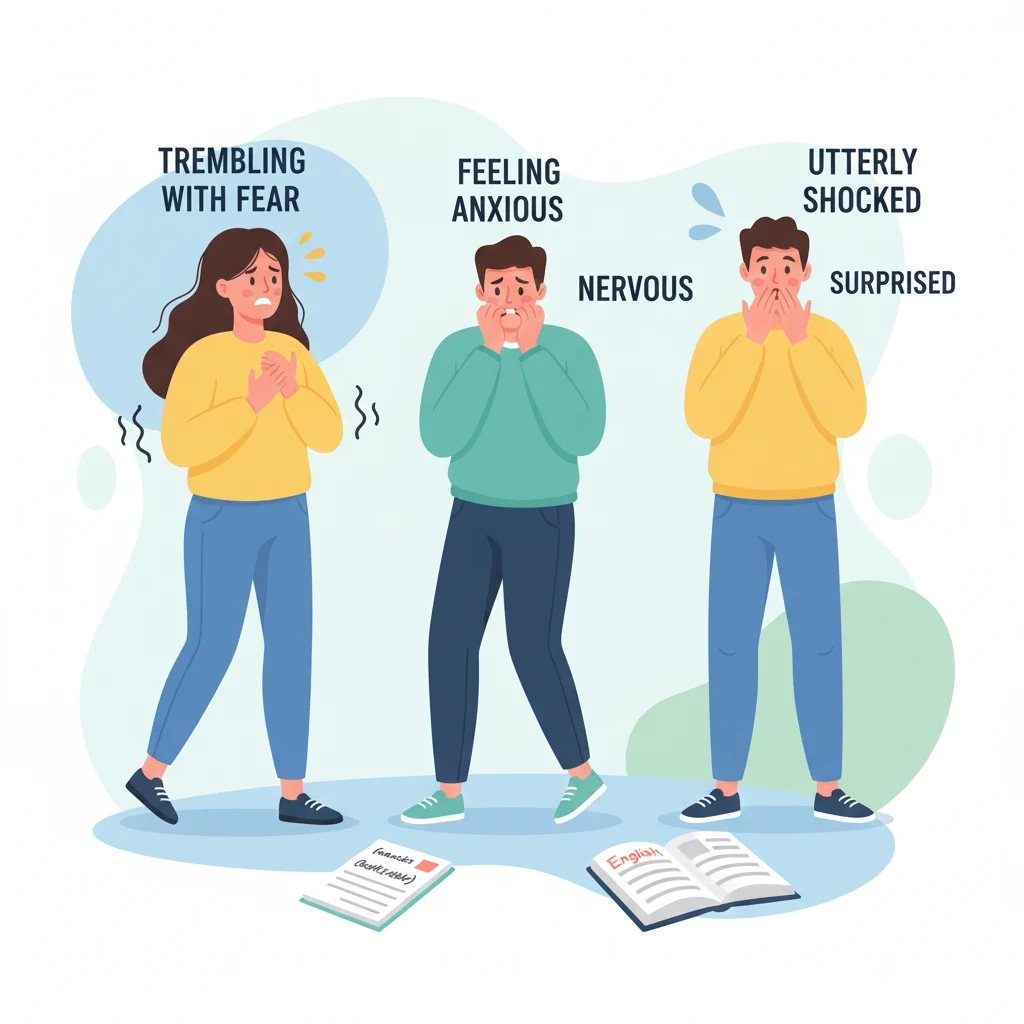
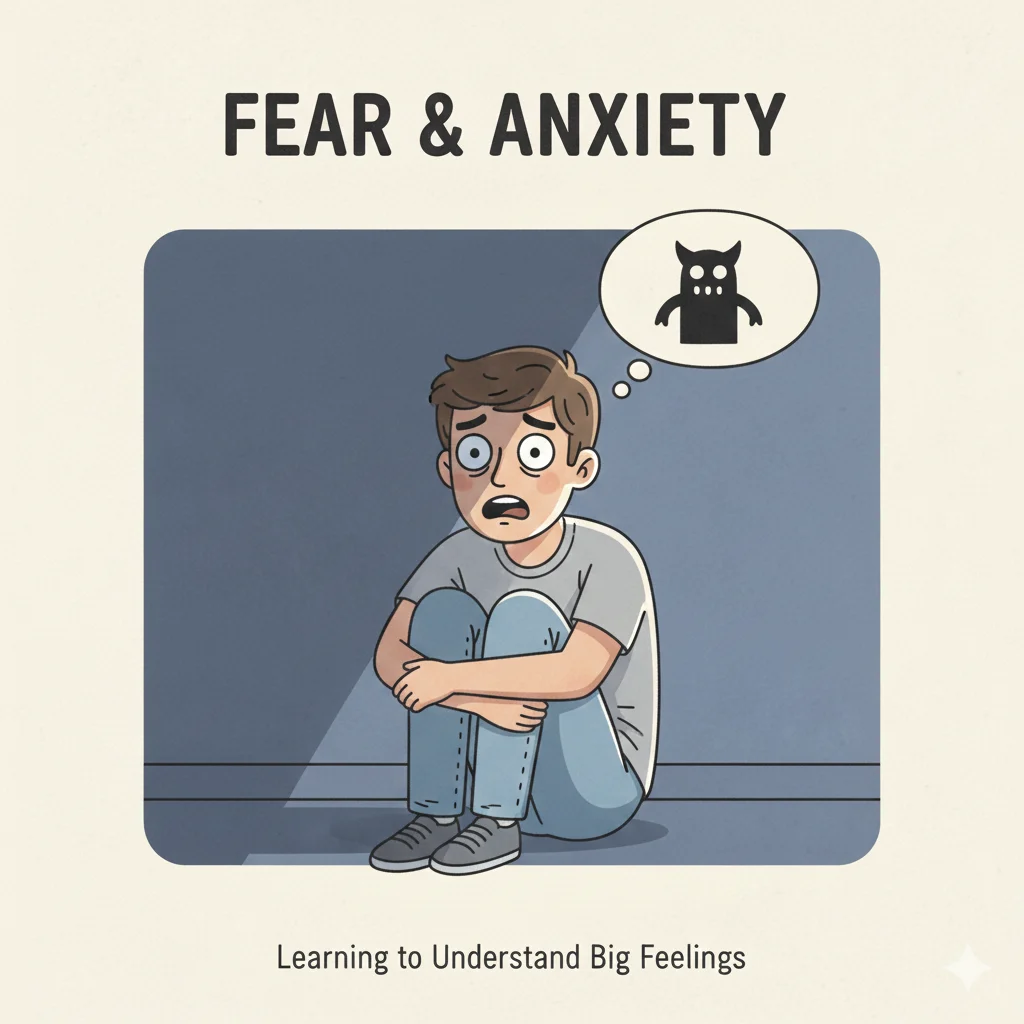
Fear can make your heart race, your hands shake, or your mind go blank—and English has colorful ways to express it. Fear idioms help native speakers describe panic, anxiety, and nervousness in everyday conversations. In this guide, you’ll learn the most famous fear idioms with clear meanings, examples, and usage tips so you can sound confident, not scared, while speaking English.
Scared to Death
Word-by-Word Meaning
Scared = afraid
Death = dying
Idiomatic Meaning
Extremely frightened (not literal death).
Example Sentences
- I was scared to death when I heard the loud noise.
- She’s scared to death of snakes.
Common Error
❌ Using it for mild fear
✔ Use it only for extreme fear.
Usage Note
Often used in casual spoken English.
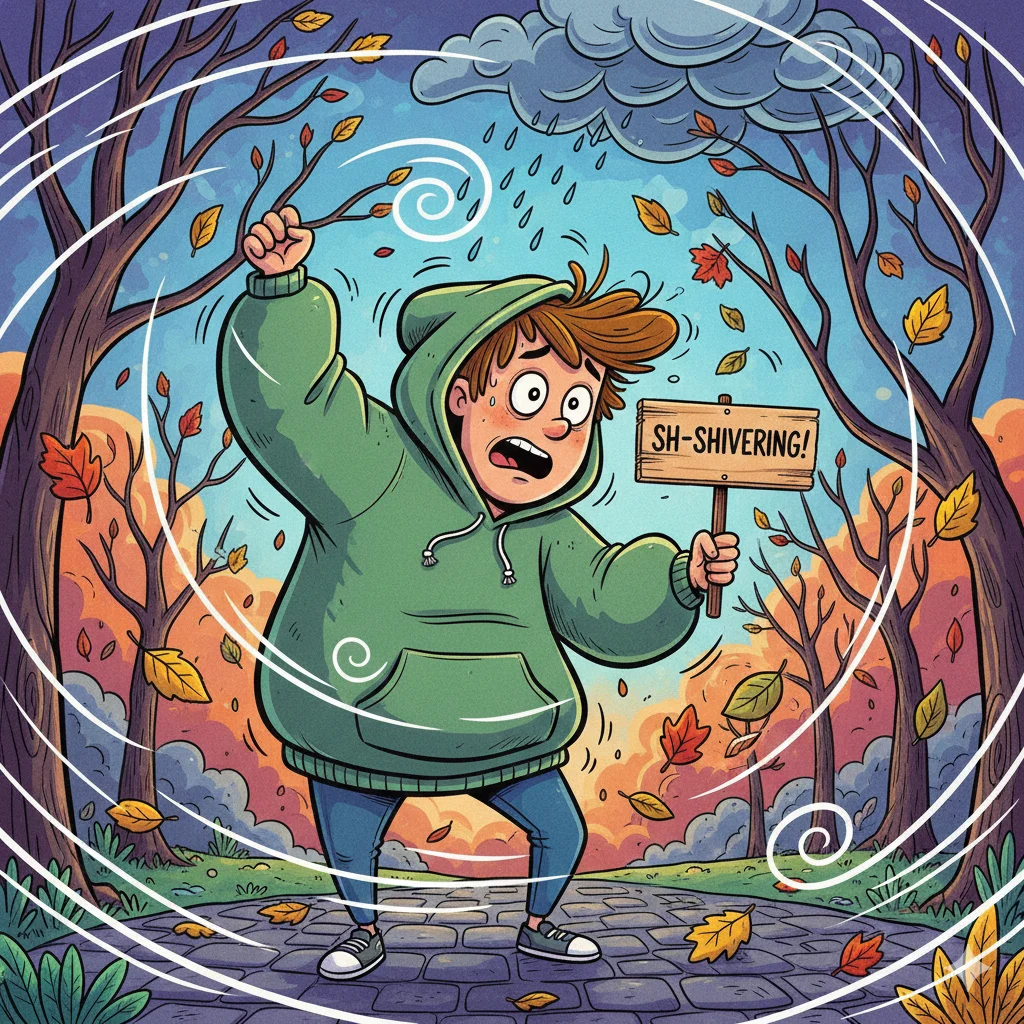
Shake Like a Leaf
Word-by-Word Meaning
Shake = tremble
Leaf = a tree leaf
Idiomatic Meaning
To tremble badly because of fear or cold.
Example Sentences
- He was shaking like a leaf before the interview.
- The child shook like a leaf during the storm.
Common Error
❌ Using for excitement
✔ Use only for fear or cold.
Usage Note
Creates a strong visual image.
Get Cold Feet
Word-by-Word Meaning
Cold = no warmth
Feet = foot
Idiomatic Meaning
To suddenly feel afraid before doing something.
Example Sentences
- She got cold feet before her wedding.
- Don’t get cold feet now.
Common Error
❌ Using after an action
✔ Used before an action.
Usage Note
Common in decision-making contexts.
Jump Out of One’s Skin
Word-by-Word Meaning
Jump = leap
Skin = body
Idiomatic Meaning
To be badly startled.
Example Sentences
- I jumped out of my skin when the phone rang.
- The bang made him jump out of his skin.
Common Error
❌ Using for long fear
✔ Used for sudden fear.

Usage Note
Great for surprise situations.
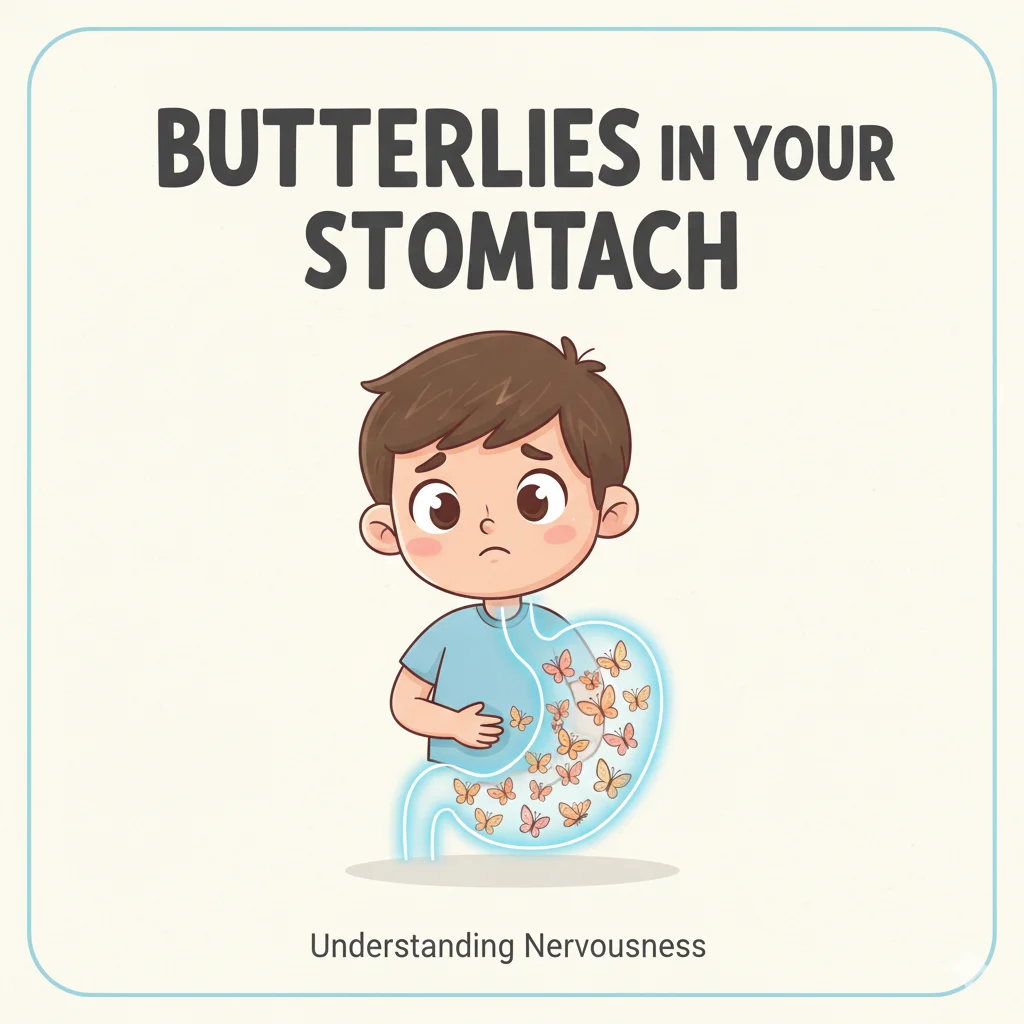
Have Butterflies in One’s Stomach
Word-by-Word Meaning
Butterflies = insects
Stomach = belly
Idiomatic Meaning
Nervous fear or excitement.
Example Sentences
- I had butterflies in my stomach before the exam.
- She always gets butterflies before speaking.
Common Error
❌ Only fear
✔ Can also mean excitement.
Usage Note
Very common in daily English.
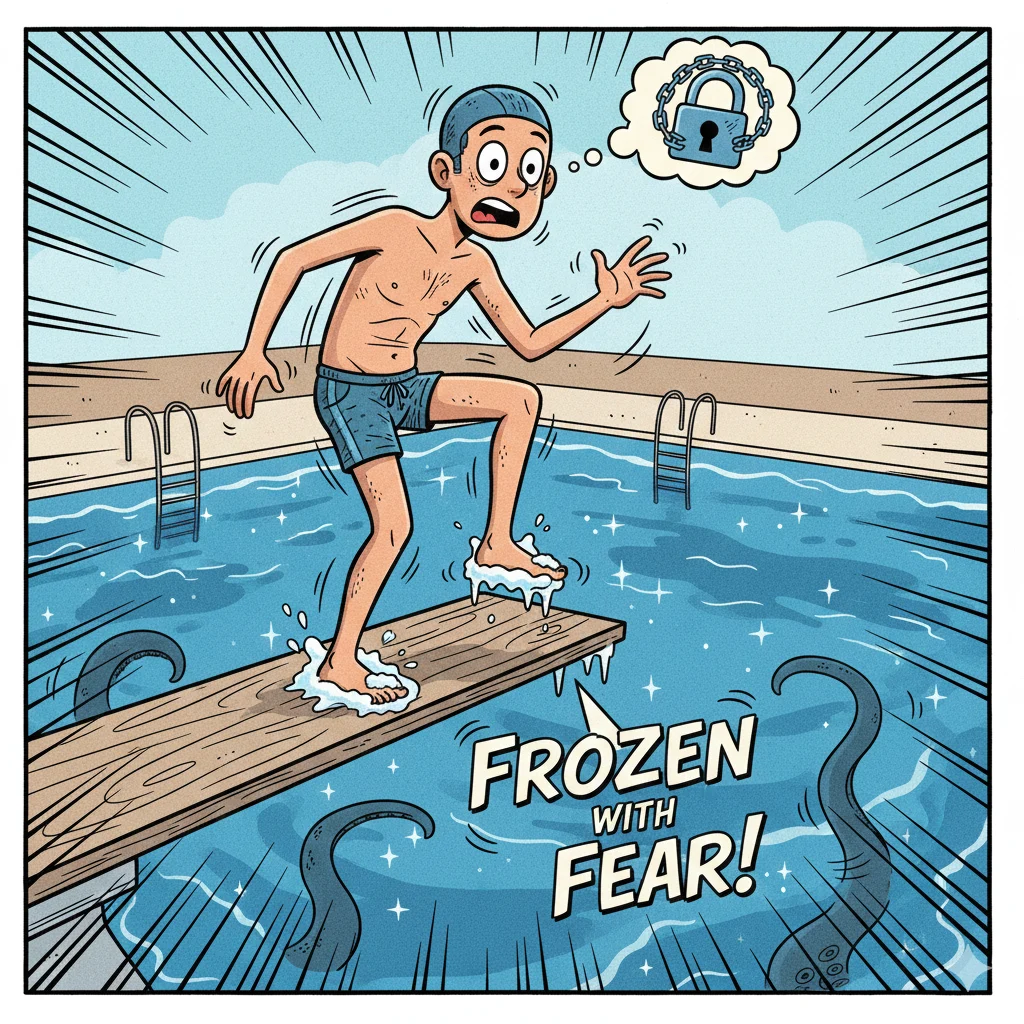
Freeze with Fear
Word-by-Word Meaning
Freeze = stop moving
Fear = fright
Idiomatic Meaning
Unable to move due to fear.
Example Sentences
- I froze with fear when I saw the dog.
- She froze during the robbery.
Common Error
❌ Using for laziness
✔ Only intense fear.
Usage Note
Often used in storytelling.
Break Out in a Cold Sweat
Word-by-Word Meaning
Break out = suddenly start
Cold sweat = fear sweat
Idiomatic Meaning
Sudden fear or anxiety.
Example Sentences
- He broke out in a cold sweat before the test.
- The thought made her sweat.
Common Error
❌ Using for heat
✔ Used for fear/stress.
Usage Note
Formal and informal contexts.
Have One’s Heart in One’s Mouth
Word-by-Word Meaning
Heart = organ
Mouth = lips
Idiomatic Meaning
Extreme fear or anxiety.
Example Sentences
- My heart was in my mouth during the result.
- She waited nervously.
Common Error
❌ Using casually
✔ Use for tense moments.
Usage Note
British English favorite.
Scared Stiff
Word-by-Word Meaning
Scared = afraid
Stiff = unable to move
Idiomatic Meaning
Frozen due to fear.
Example Sentences
- I was scared stiff watching the movie.
- He stood scared stiff.
Common Error
❌ Using for boredom
✔ Fear only.
Usage Note
Very expressive idiom.
A Bundle of Nerves
Word-by-Word Meaning
Bundle = group
Nerves = anxiety
Idiomatic Meaning
Extremely nervous person.
Example Sentences
- She was a bundle of nerves before surgery.
- He’s always nervous.
Common Error
❌ Using for anger
✔ Only nervous fear.
Usage Note
Describes people, not events.
Lose One’s Nerve
Word-by-Word Meaning
Lose = fail
Nerve = courage
Idiomatic Meaning
To become afraid and quit.
Example Sentences
- He lost his nerve before jumping.
- Don’t lose confidence.
Common Error
❌ Using after success
✔ Used before or during action.
Usage Note
Common in sports.
Be in a Panic
Word-by-Word Meaning
Panic = fear
Idiomatic Meaning
Sudden uncontrolled fear.
Example Sentences
- She was in a panic.
- Everyone panicked.
Common Error
❌ Using casually
✔ Strong fear situation.
Usage Note
Formal and informal.
Tremble with Fear
Word-by-Word Meaning
Tremble = shake
Fear = fright
Idiomatic Meaning
Physical shaking from fear.
Example Sentences
- The dog made me tremble with fear.
- He couldn’t stop shaking.
Common Error
❌ Using metaphorically
✔ Often literal shaking.
Usage Note
Formal tone.
Be Afraid of One’s Own Shadow
Word-by-Word Meaning
Shadow = reflection
Idiomatic Meaning
Very easily frightened person.
Example Sentences
- He’s afraid of his own shadow.
- She overreacts.
Common Error
❌ Using for brave people
✔ Means cowardly.
Usage Note
Humorous idiom.
Have the Creeps
Word-by-Word Meaning
Creeps = uncomfortable feeling
Idiomatic Meaning
Sudden fear or unease.
Example Sentences
- That place gives me the creeps.
- Spiders give me chills.
Common Error
❌ Using for excitement
✔ Fear/discomfort only.
Usage Note
Informal English.
Scare the Life Out of Someone
Word-by-Word Meaning
Scare = fright
Life = living
Idiomatic Meaning
To frighten badly.
Example Sentences
- You scared the life out of me!
- That movie terrified her.
Common Error
❌ Literal meaning
✔ Figurative only.
Usage Note
Common spoken phrase.
Be on Edge
Word-by-Word Meaning
Edge = nervous state
Idiomatic Meaning
Feeling tense and fearful.
Example Sentences
- I’m on edge today.
- Exams make me nervous.
Common Error
❌ Using for excitement
✔ Stress-related fear.
Usage Note
Daily conversation.
Fear for One’s Life
Word-by-Word Meaning
Fear = worry
Life = survival
Idiomatic Meaning
Believing death is possible.
Example Sentences
- I feared for my life.
- The storm was dangerous.
Common Error
❌ Casual use
✔ Serious situations only.
Usage Note
Strong dramatic idiom.
White as a Ghost
Word-by-Word Meaning
White = pale
Ghost = spirit
Idiomatic Meaning
Face pale from fear.
Example Sentences
- She turned white as a ghost.
- He looked terrified.
Common Error
❌ Using for illness only
✔ Fear or shock.
Usage Note
Visual description.
Jump at One’s Own Shadow
Word-by-Word Meaning
Jump = startle
Shadow = reflection
Idiomatic Meaning
Easily frightened.
Example Sentences
- He jumps at his own shadow.
- She’s overly nervous.
Common Error
❌ Confusing with bravery
✔ Means fearfulness.
Usage Note
Humorous tone.
FAQs About Fear Idioms
Q1: What are fear idioms?
Fear idioms are expressions used to describe fear, anxiety, or nervousness figuratively.
Q2: Are fear idioms formal English?
Most are informal, but some are used in writing and storytelling.
Q3: Can fear idioms be used in exams?
Yes, but choose neutral ones like on edge or tremble with fear.
Q4: How can I remember fear idioms easily?
Use them in sentences from real-life situations.
Conclusion
Learning fear idioms helps you express emotions naturally and sound more fluent in English. Instead of saying “I am very scared,” you now have powerful, native-like expressions to use. Practice these idioms in daily conversations, writing, or speaking exercises—and soon, fear won’t stop your English progress.

Anita Brookner, author at SeekIdiom, shares easy explanations of English idioms with examples to help learners expand vocabulary and speak more confidently.