Idioms make English sound natural and expressive—especially ones about the heart, which often describe emotions, love, courage, kindness, and sincerity. For example, if someone says “She has a heart of gold,” they don’t mean real gold—they mean she’s kind and generous.
This guide lists 20 essential idioms about heart, each explained with simple meaning, one-by-one interpretation, examples, mistakes to avoid, and usage notes. Perfect for learners, writers, and teachers.
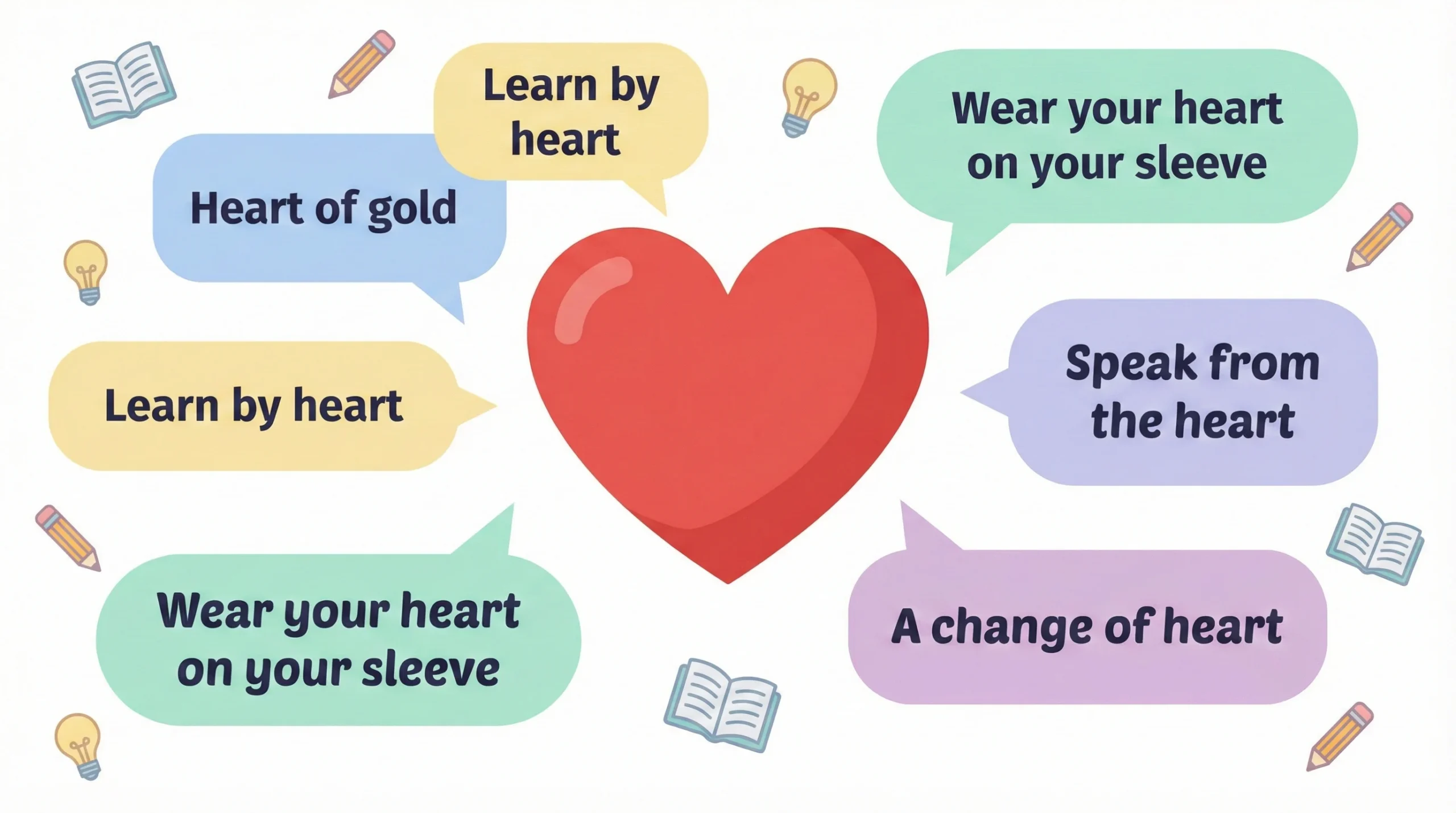
1. Have a change of heart
Word-by-word meaning:
Change = switch | Heart = feelings/decision
Idiomatic meaning:
To change one’s opinion or decision.
Examples:
- She wanted to quit, but later had a change of heart.
- I planned to go, but I had a change of heart at the last moment.
Common mistake:
❌ change heart
Usage note:
Used for decisions or opinions that change due to emotion.
2. Learn by heart
Word-by-word meaning:
Learn = study | Heart = perfectly
Idiomatic meaning:
To memorize completely.

Examples:
- I learned the poem by heart.
- Students must know the rules by heart.
Common mistake:
❌ learn with heart
Usage note:
Used for memorization—poems, speeches, quotes, formulas.
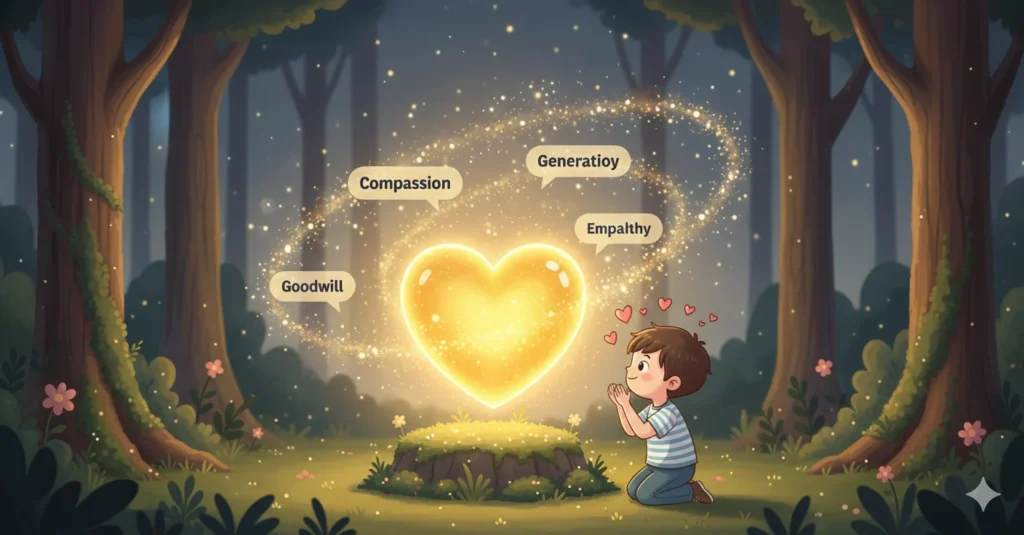
3. Heart of gold
Word-by-word meaning:
Gold = precious, pure
Idiomatic meaning:
A very kind and generous person.
Examples:
- My grandmother has a heart of gold.
- He looks strict, but he has a heart of gold inside.
Common mistake:
❌ gold heart
Usage note:
Used to praise someone’s good character.
4. Break someone’s heart
Word-by-word meaning:
Break = damage | Heart = emotions
Idiomatic meaning:
To deeply hurt or disappoint someone emotionally.

Examples:
- Her words broke my heart.
- The movie’s ending broke many hearts.
Common mistake:
Literal meaning does not apply. It is emotional.
Usage note:
Mostly used in love, sadness, and emotional pain.
5. Cross my heart
Word-by-word meaning:
A heartfelt promise
Idiomatic meaning:
A sincere promise or strong assurance.
Examples:

- Cross my heart, I won’t tell anyone.
- I promise — cross my heart!
Common mistake:
Avoid adding “hope to die” in formal settings.
Usage note:
Used to prove honesty.
6. Follow your heart
Word-by-word meaning:
Follow = go after | Heart = feelings/desires
Idiomatic meaning:
To do what feels right emotionally.
Examples:
- I chose art because I followed my heart.
- If you love it, follow your heart!
Common mistake:
❌ follow heart → missing “your”
Usage note:
Often used in motivation and life decisions.
7. From the heart
Word-by-word meaning:
From = sincerely | Heart = emotions
Idiomatic meaning:
Genuine, honest and heartfelt.
Examples:
- His speech was from the heart.
- She thanked them from the heart.
Common mistake:
Don’t confuse with by heart (memorize).
Usage note:
Used for sincere emotions and gratitude.
8. Heart skips a beat
Word-by-word meaning:
Skip = miss | Beat = heartbeat
Idiomatic meaning:
To feel sudden excitement, shock, or fear.
Examples:
- My heart skipped a beat when he smiled at me.
- The loud sound made my heart skip a beat.
Common mistake:
❌ heart beat skips
Usage note:
Often used in romantic or surprising situations.
9. Big heart
Word-by-word meaning:
Big = large | Heart = kindness
Idiomatic meaning:
A generous, caring personality.
Examples:
- She has a big heart and loves helping people.
- People with big hearts give without expecting.
Common mistake:
Does not refer to physical size.
Usage note:
A compliment for kindness.
10. Wear your heart on your sleeve
Word-by-word meaning:
Heart = emotions | Sleeve = visible
Idiomatic meaning:
To show emotions openly.
Examples:
- She wears her heart on her sleeve.
- You always know how he feels — he wears his heart on his sleeve.
Common mistake:
Verb wear is essential.
Usage note:
Used for emotional, expressive people.
11. Heart-to-heart
Word-by-word meaning:
Heart to heart = open emotional talk
Idiomatic meaning:
A sincere and private conversation.
Examples:
- We had a heart-to-heart about our future.
- A heart-to-heart talk can heal relationships.
Common mistake:
Hyphen is important.
Usage note:
Used in close friendships, family, couples.
12. Lose heart
Word-by-word meaning:
Lose = lose hope | Heart = courage
Idiomatic meaning:
To become discouraged.
Examples:
- Don’t lose heart—keep trying.
- He lost heart after many failures.
Common mistake:
❌ Lost my heart = fall in love (different idiom)
Usage note:
Used in motivation and encouragement.
13. Take to heart
Word-by-word meaning:
Take = accept | Heart = emotionally
Idiomatic meaning:
To be deeply affected by something.
Examples:
- She took his words to heart.
- Don’t take criticism to heart.
Common mistake:
❌ take on heart
Usage note:
Used for emotional reactions.
14. Warm someone’s heart
Word-by-word meaning:
Warm = comfort | Heart = feelings
Idiomatic meaning:
To make someone feel happy and loved.
Examples:
- Your smile warms my heart.
- The gift truly warmed her heart.
Common mistake:
Order must be correct.
Usage note:
Used in positive emotional situations.
15. Know something by heart
Word-by-word meaning:
By heart = perfectly
Idiomatic meaning:
To memorize completely (same as learn by heart).
Examples:
- He knows the anthem by heart.
Usage note:
Used for memorized information.
16. Heart of stone
Word-by-word meaning:
Stone = hard, cold
Idiomatic meaning:
A person with no sympathy or emotion.
Examples:
- He showed no mercy — a heart of stone.
- Some people seem to have a heart of stone.
Common mistake:
❌ stone heart
Usage note:
Used for cold or unkind personalities.
17. Put your heart into something
Word-by-word meaning:
Heart = passion | Put into = invest effort
Idiomatic meaning:
To work hard with passion and dedication.
Examples:
- She put her heart into the project.
- You succeed when you put your heart into it.
Common mistake:
Missing “your” weakens meaning.
Usage note:
Encouraging and motivational.
18. Heart is in the right place
Word-by-word meaning:
Right place = good intention
Idiomatic meaning:
A person with good intentions, even if imperfect.
Examples:
- He makes mistakes, but his heart is in the right place.
- Her plans were messy, but heart was in the right place.
Common mistake:
❌ heart in right place → missing is
19. Heavy heart
Word-by-word meaning:
Heavy = burdened | Heart = emotions
Idiomatic meaning:
A feeling of sadness.
Examples:
- She left with a heavy heart.
- It was with a heavy heart we said goodbye.
Usage note:
Linked to sorrow or farewell.
20. Heart and soul
Word-by-word meaning:
Heart + soul = complete effort
Idiomatic meaning:
With full dedication and passion.
Examples:
- They worked heart and soul to win.
- She puts heart and soul into her art.
Usage note:
Shows effort, love and dedication.
FAQs
Q1. Why are heart idioms common in English?
Because the heart represents emotions and feelings, making expressions more vivid and human.
Q2. How can I remember idioms easily?
Use them in your daily sentences, write examples, and practice speaking them.
Q3. Can I use idioms in formal writing?
Yes—when tone fits. Use moderately in essays and creatively in storytelling.
Q4. Are these idioms useful for daily conversation?
Absolutely! Most of them appear frequently in movies, books and speech.
Q5. How many idioms should I learn per day?
2–3 idioms daily with usage in sentences builds natural fluency.
Conclusion
You now have a complete list of 20 idioms about heart with meaning, examples and usage notes. Try using them in conversations, captions, writing or storytelling. The more you practice, the more natural and expressive your English will become. Save this guide, revisit often, and speak with heart and confidence! ❤️

Anita Brookner, author at SeekIdiom, shares easy explanations of English idioms with examples to help learners expand vocabulary and speak more confidently.