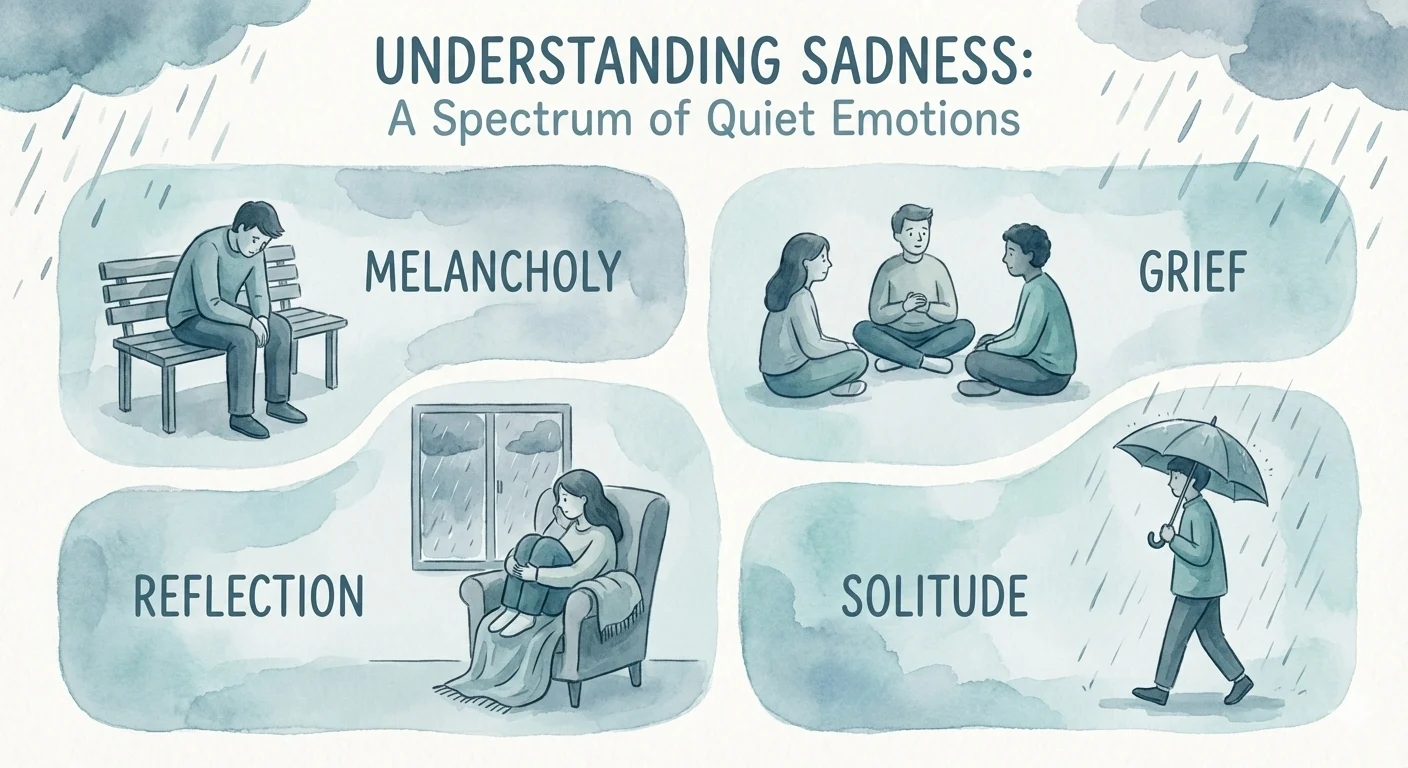
Feeling low, heartbroken, or emotionally drained? Idioms about sadness help express deep emotions naturally in English. In this guide, you’ll learn the most famous sadness idioms with clear meanings, examples, and usage tips—so you can sound fluent, not forced.
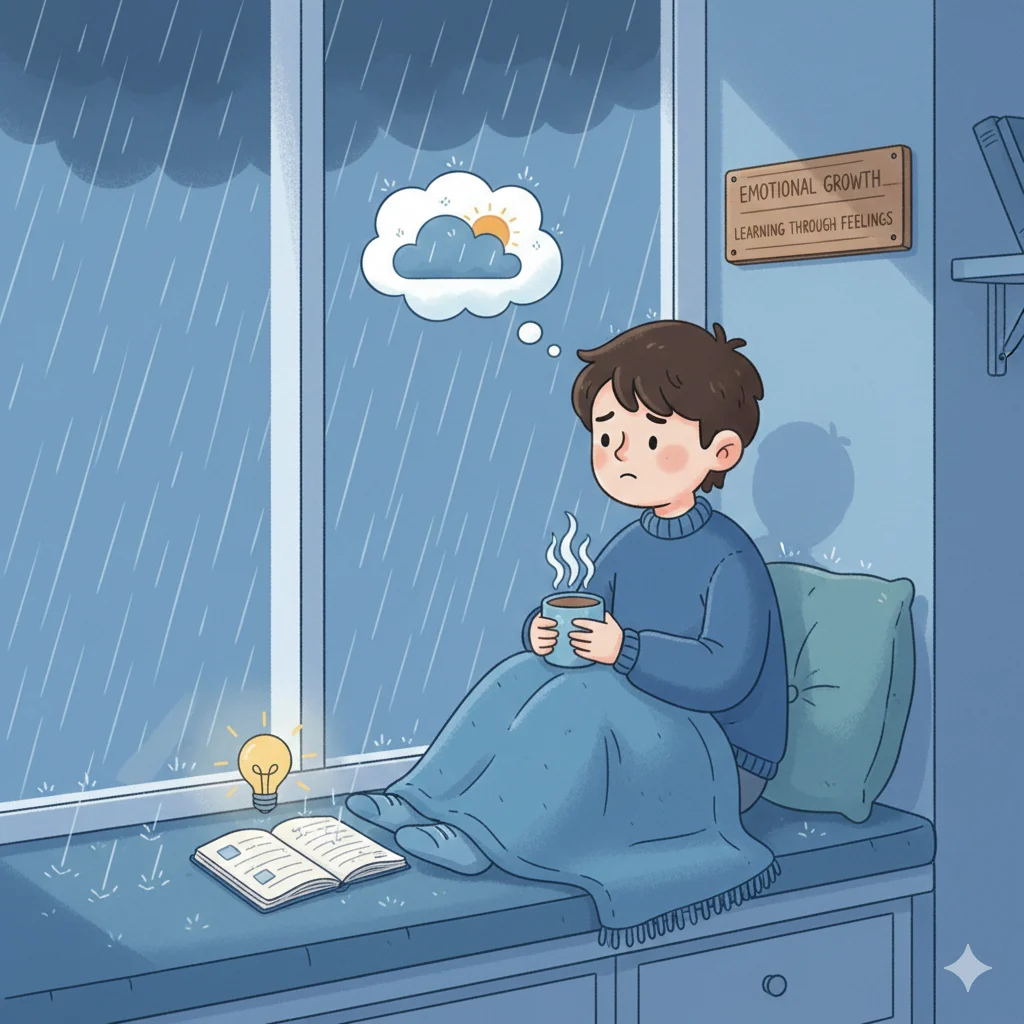
1. Feeling Blue
Word-by-word Meaning
Feeling + Blue (a color)
Idiomatic / Figurative Meaning
To feel sad or depressed without a clear reason.
Example Sentences
- I’ve been feeling blue since the weekend.
- She felt blue after moving to a new city.
Common Error
❌ Feeling sad blue
✅ Feeling blue
Usage Note
Very common in spoken and written English; informal but safe to use.
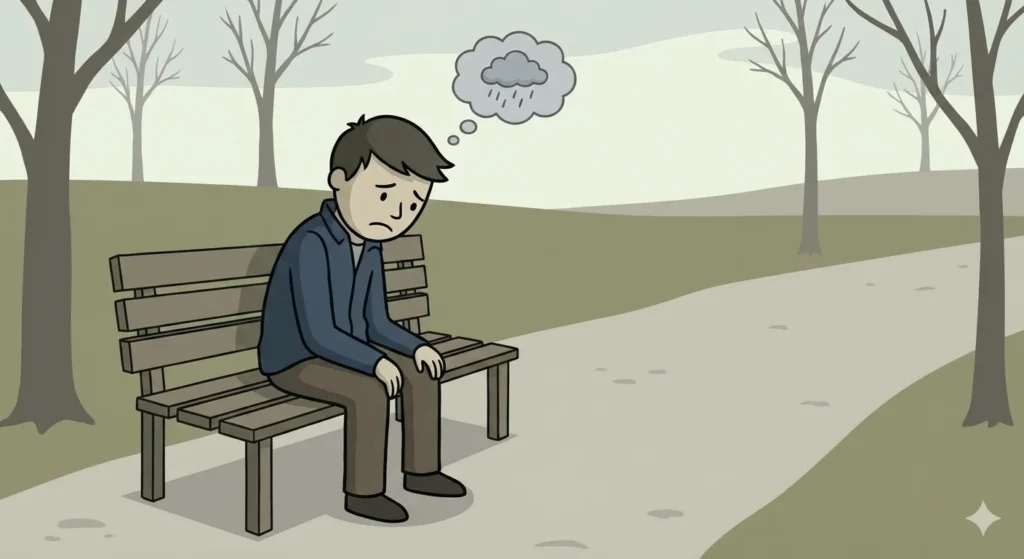
2. Down in the Dumps
Word-by-word Meaning
Down + Dumps (trash area)
Idiomatic / Figurative Meaning
To feel very unhappy or depressed.
Example Sentences
- He’s been down in the dumps since he lost his job.
- Exams always make me feel down in the dumps.
Common Error
❌ Down at the dumps
✅ Down in the dumps
Usage Note
Casual expression, often used to describe temporary sadness.
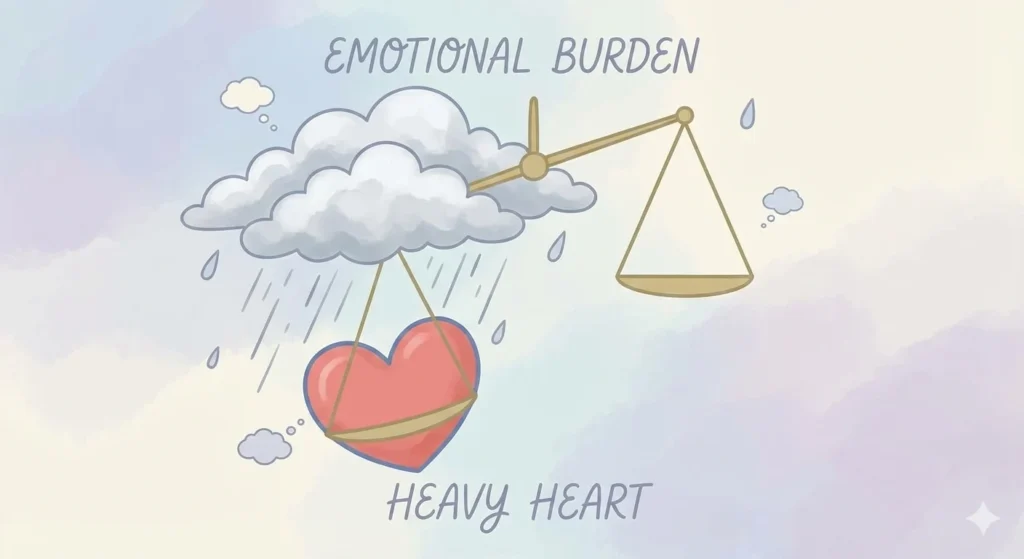
3. Heavy Heart
Word-by-word Meaning
Heavy + Heart
Idiomatic / Figurative Meaning
Deep emotional sadness or sorrow.
Example Sentences
- She left her hometown with a heavy heart.
- He spoke with a heavy heart.
Common Error
❌ Heavy mind
✅ Heavy heart
Usage Note
Often used in emotional or serious contexts.
4. Lump in One’s Throat
Word-by-word Meaning
Lump + Throat
Idiomatic / Figurative Meaning
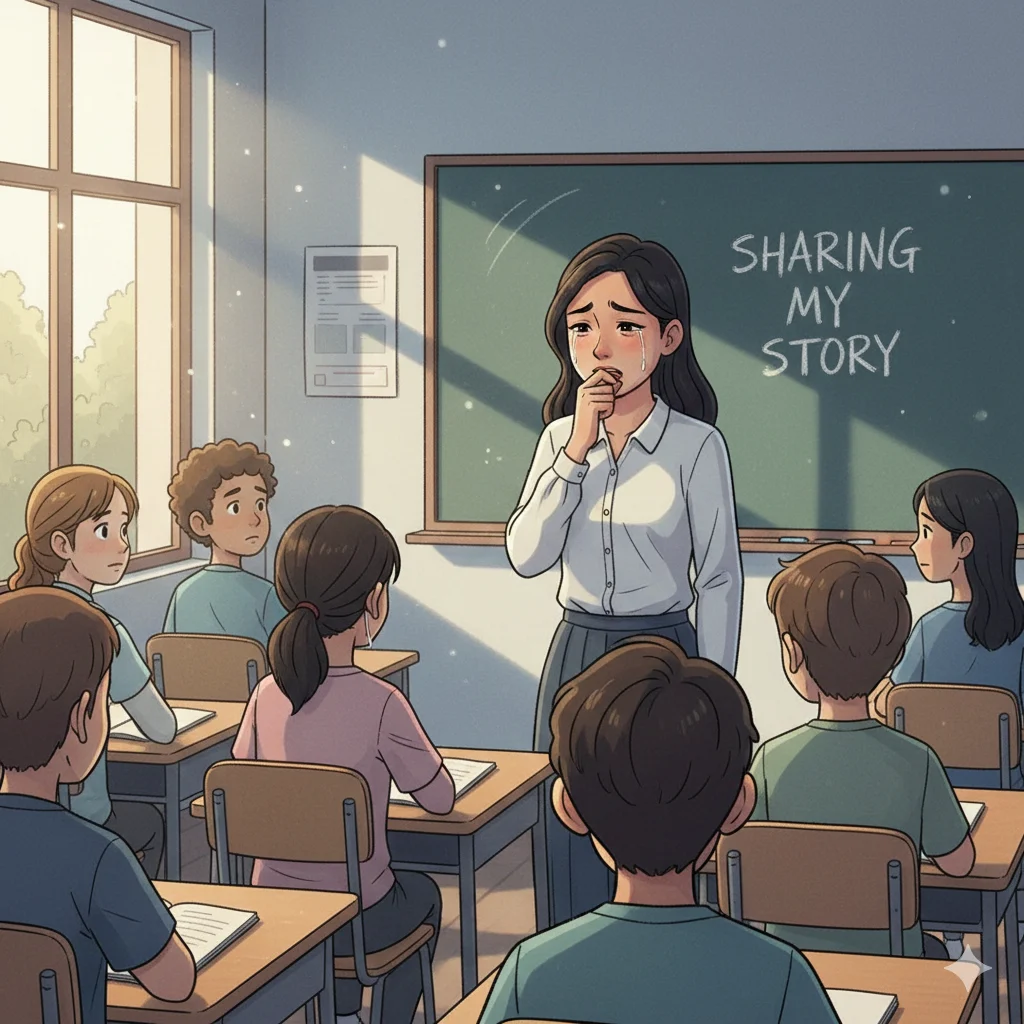
Feeling emotional sadness that makes it hard to speak.
Example Sentences
- I had a lump in my throat while saying goodbye.
- His story gave me a lump in my throat.
Common Error
❌ Pain in throat
✅ Lump in my throat
Usage Note
Used for emotional moments, not physical illness.
5. Break Someone’s Heart
Word-by-word Meaning
Break + Heart
Idiomatic / Figurative Meaning
To cause deep emotional pain.
Example Sentences
- The news broke her heart.
- He broke my heart by leaving.

Common Error
❌ Break heart
✅ Break someone’s heart
Usage Note
Common in relationships and emotional storytelling.
6. Cry One’s Eyes Out
Word-by-word Meaning
Cry + Eyes out
Idiomatic / Figurative Meaning
To cry intensely for a long time.
Example Sentences
- She cried her eyes out after the argument.
- I cried my eyes out during the movie.
Common Error
❌ Cry eyes
✅ Cry one’s eyes out
Usage Note
Informal and expressive.
7. In Low Spirits
Word-by-word Meaning
Low + Spirits
Idiomatic / Figurative Meaning
Feeling unhappy or discouraged.
Example Sentences
- He’s been in low spirits lately.
- Bad weather keeps me in low spirits.
Common Error
❌ Low mood spirit
✅ In low spirits
Usage Note
Polite and suitable for formal writing.
8. Broken-Hearted
Word-by-word Meaning
Broken + Heart
Idiomatic / Figurative Meaning
Extremely sad, especially after loss or breakup.
Example Sentences
- She felt broken-hearted after the breakup.
- He was broken-hearted by the news.
Common Error
❌ Break-hearted
✅ Broken-hearted
Usage Note
Often used as an adjective.
9. Tearful Goodbye
Word-by-word Meaning
Tearful + Goodbye
Idiomatic / Figurative Meaning
A sad farewell filled with emotion.
Example Sentences
- They shared a tearful goodbye at the airport.
- It was a tearful goodbye after graduation.
Common Error
❌ Crying goodbye
✅ Tearful goodbye
Usage Note
Used in emotional narratives.
10. On the Verge of Tears
Word-by-word Meaning
Verge + Tears
Idiomatic / Figurative Meaning
Almost about to cry.
Example Sentences
- She was on the verge of tears.
- His voice showed he was on the verge of tears.
Common Error
❌ Near tears
✅ On the verge of tears
Usage Note
Neutral tone, widely used.
11. Sorrowful Mood
Word-by-word Meaning
Sorrowful + Mood
Idiomatic / Figurative Meaning
A deep, reflective sadness.
Example Sentences
- He was in a sorrowful mood all day.
- The rainy evening felt sorrowful.
Common Error
❌ Sad moodful
✅ Sorrowful mood
Usage Note
Formal and literary.
12. Heart Sinks
Word-by-word Meaning
Heart + Sinks
Idiomatic / Figurative Meaning
Sudden feeling of sadness or disappointment.
Example Sentences
- My heart sank when I heard the news.
- Her heart sank instantly.
Common Error
❌ Heart falls
✅ Heart sinks
Usage Note
Often used in past tense.
13. In Tears
Word-by-word Meaning
In + Tears
Idiomatic / Figurative Meaning
Crying or extremely upset.
Example Sentences
- She was in tears after the call.
- He arrived home in tears.
Common Error
❌ With tears
✅ In tears
Usage Note
Short and very common.
14. Tear One’s Hair Out
Word-by-word Meaning
Tear + Hair
Idiomatic / Figurative Meaning
Extreme frustration mixed with sadness.
Example Sentences
- I’m tearing my hair out over this problem.
- She tore her hair out worrying.
Common Error
❌ Pull hair
✅ Tear one’s hair out
Usage Note
Exaggerated but expressive.
15. Wear a Long Face
Word-by-word Meaning
Wear + Long face
Idiomatic / Figurative Meaning
To look visibly sad.
Example Sentences
- Why are you wearing a long face?
- He wore a long face all evening.
Common Error
❌ Long sad face
✅ Wear a long face
Usage Note
Often used as a question.
16. Feel Empty Inside
Word-by-word Meaning
Empty + Inside
Idiomatic / Figurative Meaning
Emotional numbness or sadness.
Example Sentences
- After the loss, she felt empty inside.
- I felt empty inside despite success.
Common Error
❌ Empty heart
✅ Empty inside
Usage Note
Modern and emotional.
17. Mourn One’s Loss
Word-by-word Meaning
Mourn + Loss
Idiomatic / Figurative Meaning
To grieve deeply after losing someone or something.
Example Sentences
- He’s still mourning his loss.
- Families mourned their loss together.
Common Error
❌ Cry loss
✅ Mourn one’s loss
Usage Note
Formal and serious tone.
18. Tear-Stained Face
Word-by-word Meaning
Tear + Stained
Idiomatic / Figurative Meaning
Face showing signs of crying.
Example Sentences
- She had a tear-stained face.
- His tear-stained face worried me.
Common Error
❌ Wet face
✅ Tear-stained face
Usage Note
Descriptive and emotional.
19. Emotional Wreck
Word-by-word Meaning
Emotional + Wreck
Idiomatic / Figurative Meaning
Mentally and emotionally overwhelmed by sadness.
Example Sentences
- He was an emotional wreck after the accident.
- She became an emotional wreck.
Common Error
❌ Emotion broken
✅ Emotional wreck
Usage Note
Informal and strong expression.
20. Carry a Heavy Burden
Word-by-word Meaning
Carry + Heavy burden
Idiomatic / Figurative Meaning
Living with emotional pain or sadness.
Example Sentences
- She carries a heavy emotional burden.
- He carried a heavy burden silently.
Common Error
❌ Heavy pressure
✅ Heavy burden
Usage Note
Metaphorical and thoughtful.
FAQs About Idioms About Sadness
Q1: Why should I learn idioms about sadness?
They help express emotions naturally and sound fluent.
Q2: Are sadness idioms formal or informal?
Most are informal, but some work well in writing.
Q3: Can idioms about sadness be used in exams?
Yes, if used correctly and naturally.
Q4: Are these idioms used in daily conversation?
Absolutely—native speakers use them often.
Conclusion: Practice to Feel the Language
Learning idioms about sadness helps you express emotions with depth and confidence. Practice using 2–3 idioms daily in sentences or conversations, and soon they’ll feel natural. Emotions are universal—language just gives them voice

Anita Brookner, author at SeekIdiom, shares easy explanations of English idioms with examples to help learners expand vocabulary and speak more confidently.