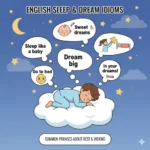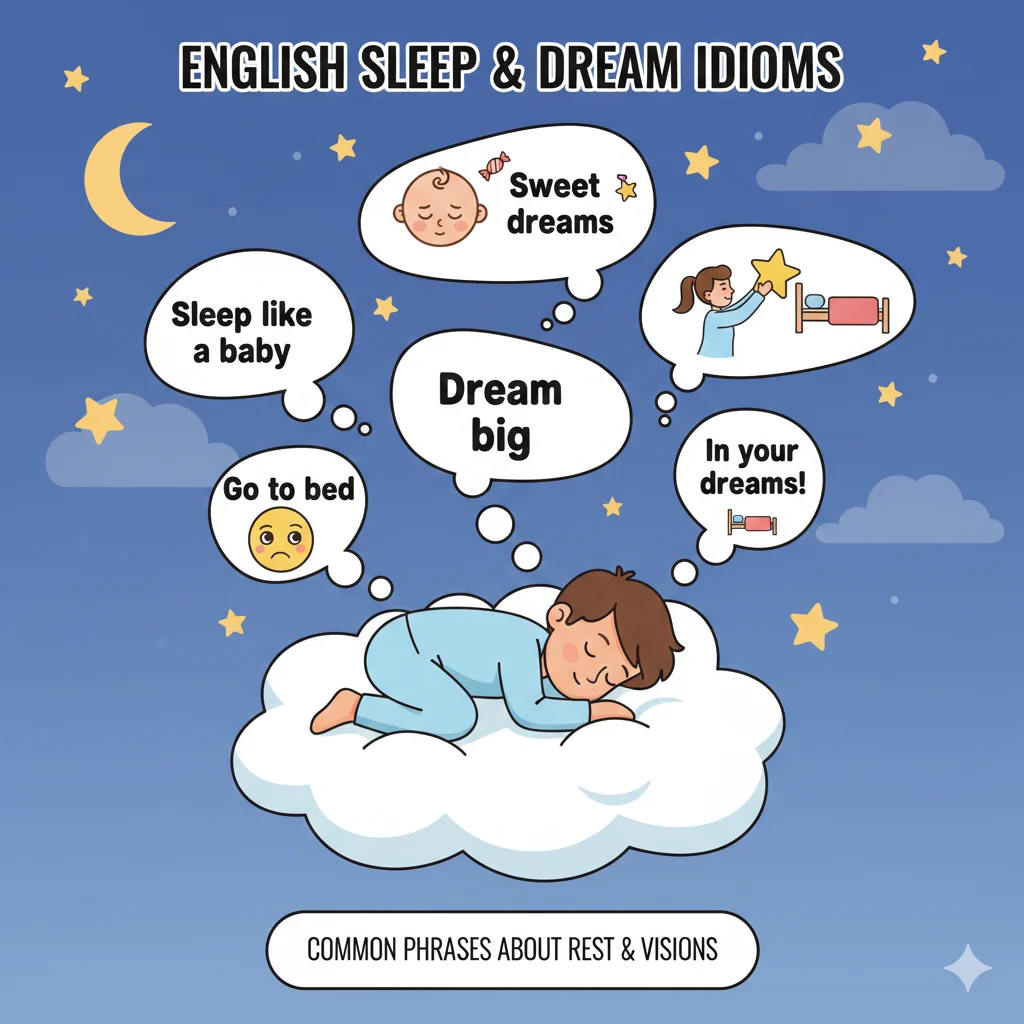
Have you ever said, “I slept like a baby” or “In your dreams!” without thinking twice? These idioms about sleep and dream are everywhere in daily English. From casual chats to movies, they help you express feelings in a colorful and natural way.
In this complete guide, you’ll learn 20 of the most famous sleep- and dream-related idioms, with clear meanings, examples, common mistakes, and usage notes. Let’s dive in!
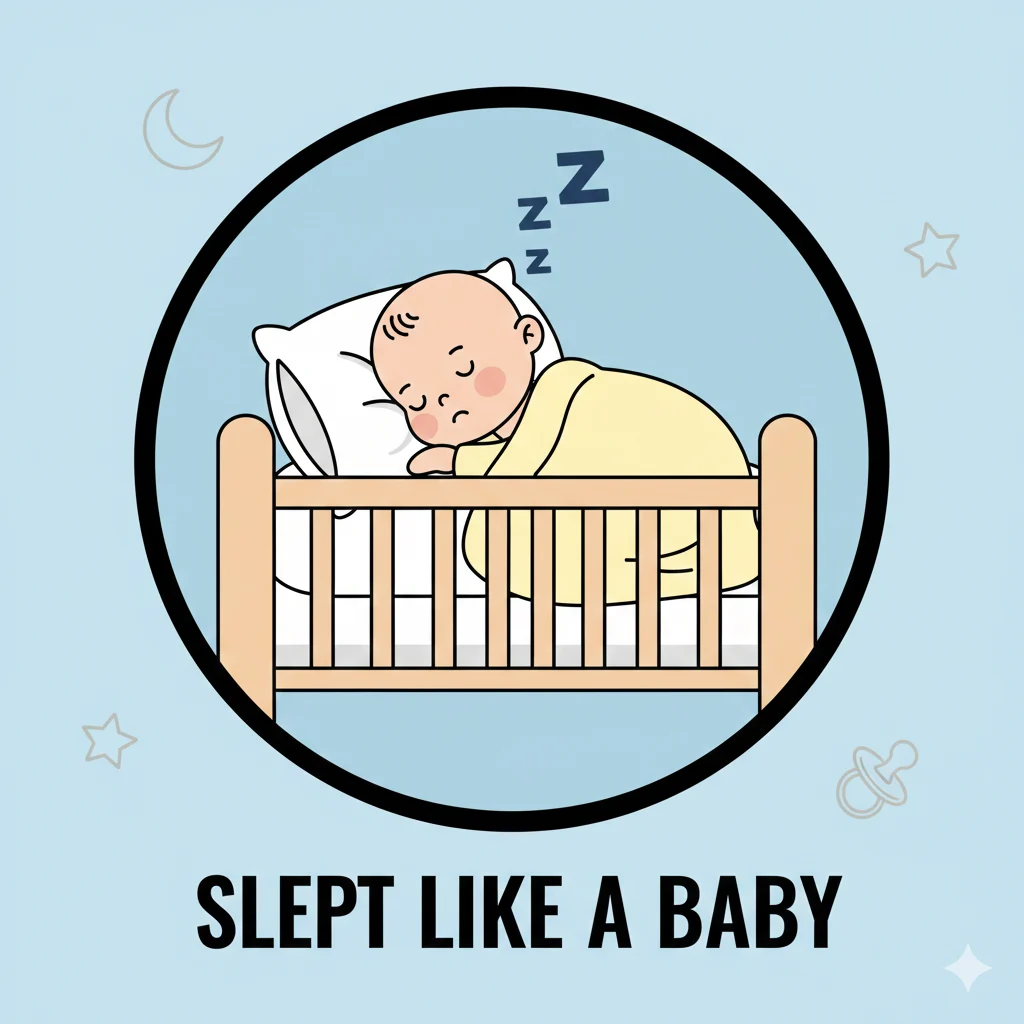
Sleep Like a Baby
Word-by-Word Meaning
- Sleep = rest
- Like = similar to
- A baby = a small child
Idiomatic Meaning
To sleep very peacefully and deeply.
Example Sentences
- After the long trip, I slept like a baby.
- The cool weather helped me sleep like a baby.
Common Error
❌ “Sleep like baby” (Missing article “a”)
✔ “Sleep like a baby”
Usage Note
Used in past tense most commonly: slept like a baby.
In Your Dreams
Word-by-Word Meaning
- In = inside
- Your dreams = your imagination
Idiomatic Meaning
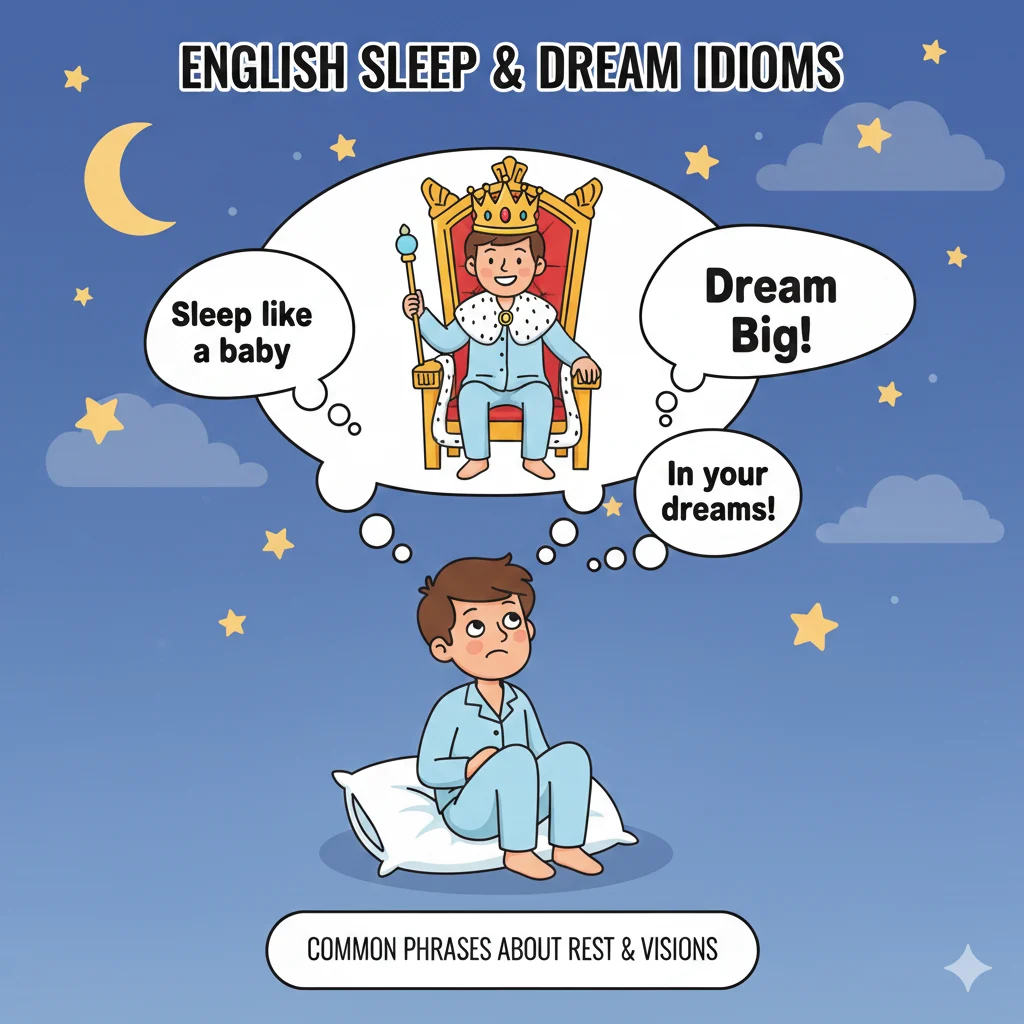
Used to say something will never happen.
Example Sentences
- You think you’ll beat me? In your dreams!
- He believes he’ll become rich overnight— in his dreams!
Common Error
❌ Taking it literally
✔ It’s usually sarcastic.
Usage Note
Often used as a short exclamation.
Sweet Dreams
Word-by-Word Meaning
- Sweet = pleasant
- Dreams = thoughts during sleep
Idiomatic Meaning
A kind wish for someone to have pleasant dreams.
Example Sentences
- Good night! Sweet dreams.
- She kissed her child and said, “Sweet dreams.”
Common Error
❌ Using it in the morning
✔ Only used before sleep.
Usage Note
Common in informal settings.
A Dream Come True
Word-by-Word Meaning
- Dream = desire
- Come true = become real
Idiomatic Meaning
Something you wished for has happened.
Example Sentences

- Getting this job is a dream come true.
- Visiting Paris was a dream come true.
Common Error
❌ “Dream became true”
✔ “Dream come true”
Usage Note
Often used with “is/was.”
Living the Dream
Word-by-Word Meaning
- Living = experiencing
- The dream = ideal life
Idiomatic Meaning
Enjoying an ideal or successful life (sometimes sarcastic).
Example Sentences
- Working on the beach? I’m living the dream!
- Another Monday at the office— living the dream (sarcastic).

Common Error
❌ Misunderstanding sarcasm
✔ Tone matters.
Usage Note
Popular in casual conversation.
Dream On
Word-by-Word Meaning
- Dream = imagine
- On = continue
Idiomatic Meaning
Used to dismiss unrealistic ideas.
Example Sentences
- You think I’ll lend you money? Dream on!
Common Error
❌ Using politely
✔ It can sound rude.
Usage Note
Best used among friends.
Sleep on It
Word-by-Word Meaning
- Sleep = rest
- On it = about something
Idiomatic Meaning
Think about a decision overnight.
Example Sentences
- I’ll sleep on it before deciding.
Common Error
❌ “Sleep it”
✔ “Sleep on it”
Usage Note
Common in decision-making contexts.
Not Lose Sleep Over
Word-by-Word Meaning
- Lose sleep = worry
Idiomatic Meaning
Not worry too much.
Example Sentences
- I won’t lose sleep over small mistakes.
Common Error
❌ “Don’t lose sleep for”
✔ “Lose sleep over”
Usage Note
Used in negative form mostly.
Daydream
Word-by-Word Meaning
- Day = daytime
- Dream = imagine
Idiomatic Meaning
Think pleasant thoughts while awake.
Example Sentences
- She was daydreaming in class.
Common Error
❌ Spelling as two words
✔ One word: daydream
Usage Note
Verb or noun.
Nightmare
Word-by-Word Meaning
- Night = dark time
- Mare = evil spirit (old meaning)
Idiomatic Meaning
A very bad dream or terrible experience.
Example Sentences
- That exam was a nightmare.
Common Error
❌ Only literal meaning
✔ Can describe situations.
Usage Note
Common in daily speech.
Catch Some Z’s
Word-by-Word Meaning
- Z’s = sound of snoring
Idiomatic Meaning
To sleep.
Example Sentences
- I need to catch some Z’s.
Common Error
❌ Formal use
✔ Informal only.
Usage Note
Casual expression.
Out Like a Light
Word-by-Word Meaning
- Out = unconscious
- Light = lamp
Idiomatic Meaning
Fall asleep quickly.
Example Sentences
- He was out like a light after dinner.
Common Error
❌ Using for fainting
✔ Mainly sleep.
Usage Note
Past tense common.
Toss and Turn
Word-by-Word Meaning
- Toss = move
- Turn = rotate
Idiomatic Meaning
Move restlessly in sleep.
Example Sentences
- I tossed and turned all night.
Common Error
❌ Missing “and”
✔ Toss and turn
Usage Note
Used for insomnia.
Fast Asleep
Word-by-Word Meaning
- Fast = deep
- Asleep = sleeping
Idiomatic Meaning
Deeply sleeping.
Example Sentences
- The baby is fast asleep.
Common Error
❌ “Very asleep”
✔ Fast asleep
Usage Note
Adjective phrase.
Wide Awake
Word-by-Word Meaning
- Wide = fully
- Awake = not sleeping
Idiomatic Meaning
Fully alert.
Example Sentences
- I’m wide awake at midnight.
Common Error
❌ “Fully awake wide”
✔ Wide awake
Usage Note
Opposite of asleep.
Beauty Sleep
Word-by-Word Meaning
- Beauty = attractiveness
- Sleep = rest
Idiomatic Meaning
Sleep believed to improve appearance.
Example Sentences
- I need my beauty sleep.
Common Error
❌ Literal belief only
✔ Often playful.
Usage Note
Informal phrase.
Sleep Tight
Word-by-Word Meaning
- Sleep = rest
- Tight = securely
Idiomatic Meaning
Wish someone good sleep.
Example Sentences
- Good night, sleep tight.
Common Error
❌ Using in morning
✔ Used at night.
Usage Note
Often paired with “Sweet dreams.”
Walking in Your Sleep
Word-by-Word Meaning
- Walking = moving
- Sleep = unconscious
Idiomatic Meaning
Doing something automatically without thinking.
Example Sentences
- I answered the question like I was walking in my sleep.
Common Error
❌ Confusing with medical sleepwalking
✔ Can be figurative.
Usage Note
Context matters.
Dream Big
Word-by-Word Meaning
- Dream = hope
- Big = large
Idiomatic Meaning
Have big ambitions.
Example Sentences
- Always dream big and work hard.
Common Error
❌ Only about sleep
✔ About goals.
Usage Note
Motivational tone.
Beyond Your Wildest Dreams
Word-by-Word Meaning
- Beyond = more than
- Wildest dreams = biggest imagination
Idiomatic Meaning
Better than you imagined.
Example Sentences
- The success was beyond my wildest dreams.
Common Error
❌ “Most wild dreams”
✔ Wildest dreams
Usage Note
Used for positive surprises.
FAQs About Idioms About Sleep and Dream
1. Why are idioms about sleep and dream common in English?
Because sleep and dreams are universal experiences, making them relatable.
2. Are sleep idioms used in formal writing?
Some are informal (like “catch some Z’s”), while others (like “a dream come true”) are acceptable formally.
3. What’s the difference between literal and idiomatic meaning?
Literal meaning is word-by-word. Idiomatic meaning is the figurative expression.
4. How can I remember these idioms easily?
Use them in daily conversations and write short example sentences.
5. Are dream idioms always positive?
No. Some are positive (“dream big”), others are negative (“in your dreams”).
Conclusion
Learning idioms about sleep and dream makes your English more natural and expressive. Instead of basic phrases, you’ll sound fluent and confident.
Try using at least 3 of these idioms today in conversation or writing. Practice daily, and soon you’ll be speaking English like it’s second nature!

Shirley Jackson, author at SeekIdiom, writes clear explanations of English idioms with examples to help learners improve vocabulary and communication skills.