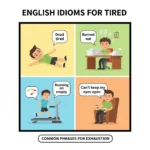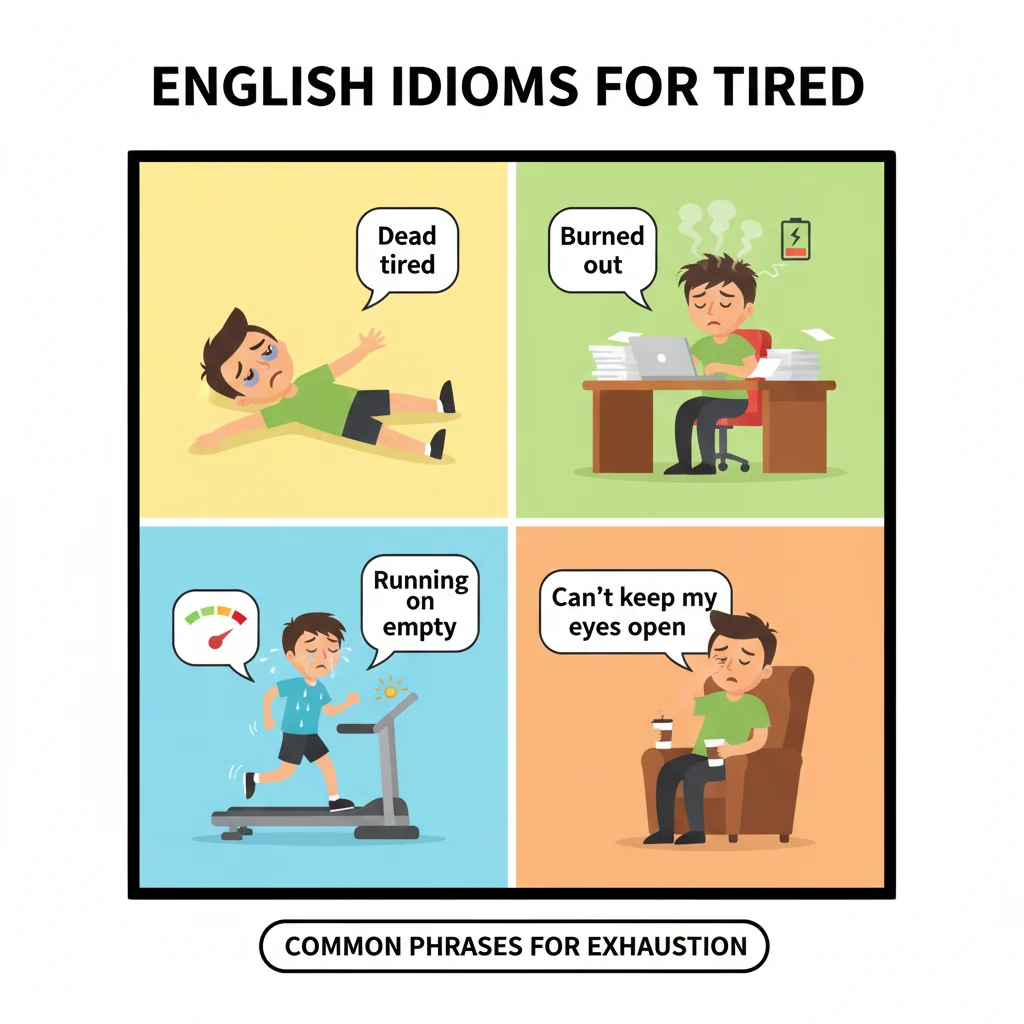
Ever felt so exhausted that “tired” just wasn’t enough? That’s where idioms for tired come in. Whether you’ve worked all night, studied for exams, or chased kids around all day, these expressions help you sound more natural and fluent in English.
Let’s explore 20 of the most common idioms for tired — explained in a simple, learner-friendly way.
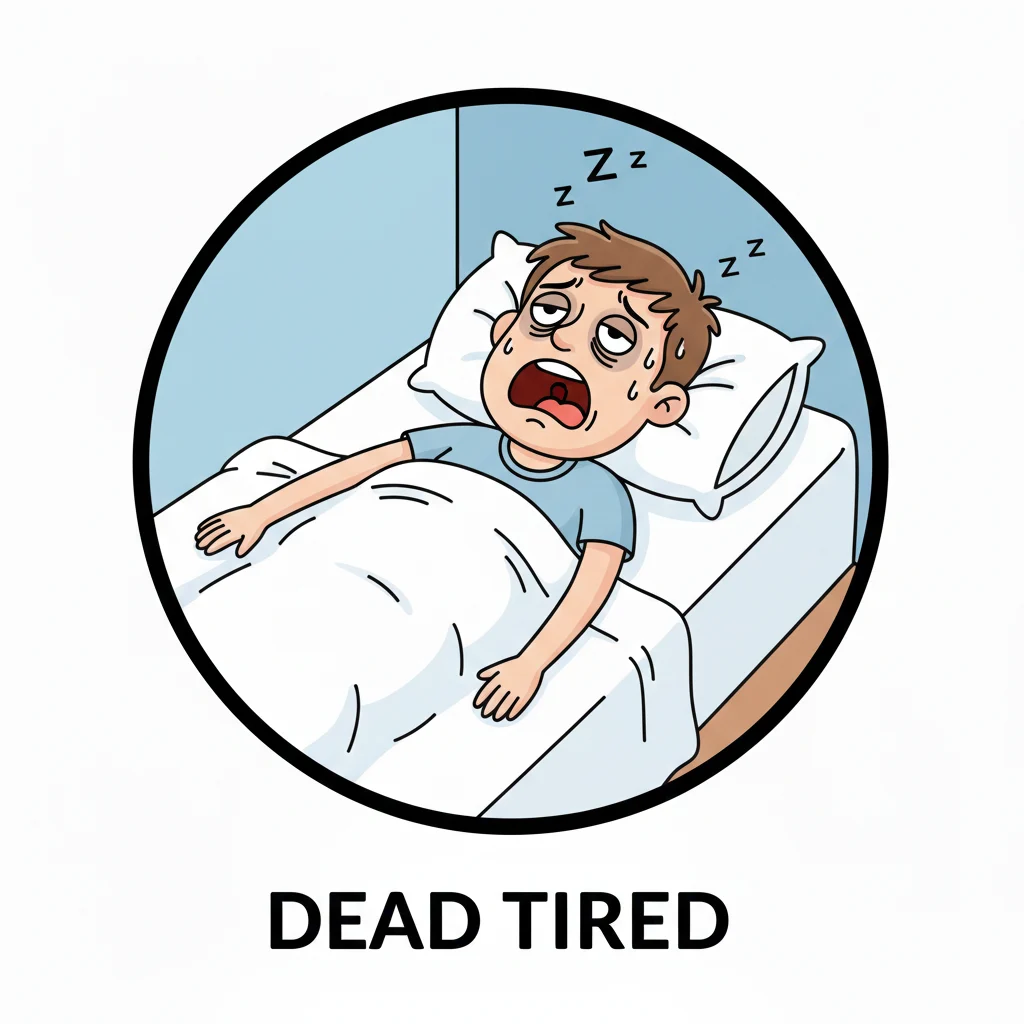
Dead Tired
Word-by-word meaning
- Dead = not alive
- Tired = exhausted
Idiomatic Meaning
Extremely exhausted.
Example Sentences
- I was dead tired after finishing the project.
- She felt dead tired after the long flight.
Common Error
❌ Don’t say “death tired”
✅ Correct: dead tired
Usage Note
Very common in informal conversation.
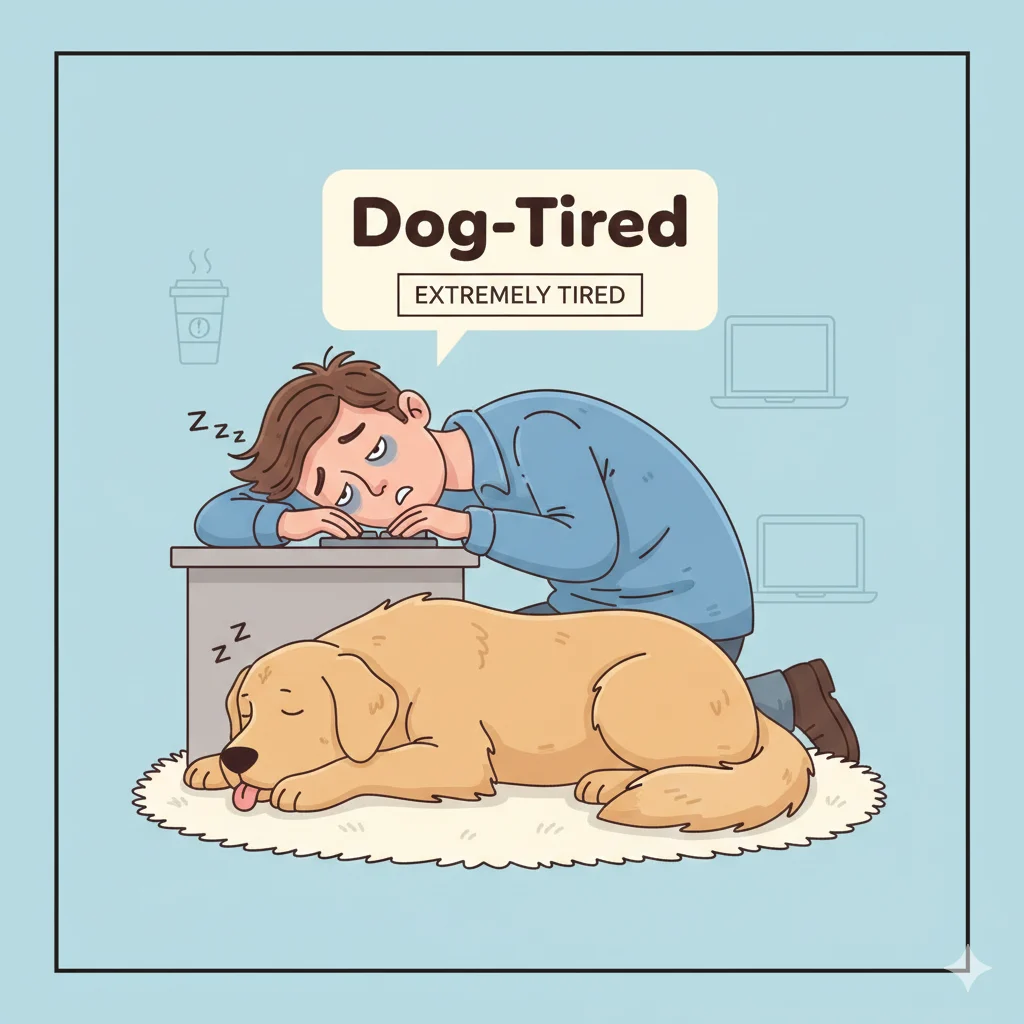
Dog-Tired
Word-by-word meaning
- Dog = animal
- Tired = exhausted
Idiomatic Meaning
Very physically tired.
Example Sentences
- I’m dog-tired after cleaning the house.
- He was dog-tired after football practice.
Common Error
Don’t confuse it with being lazy — it only means exhausted.
Usage Note
Casual and friendly expression.
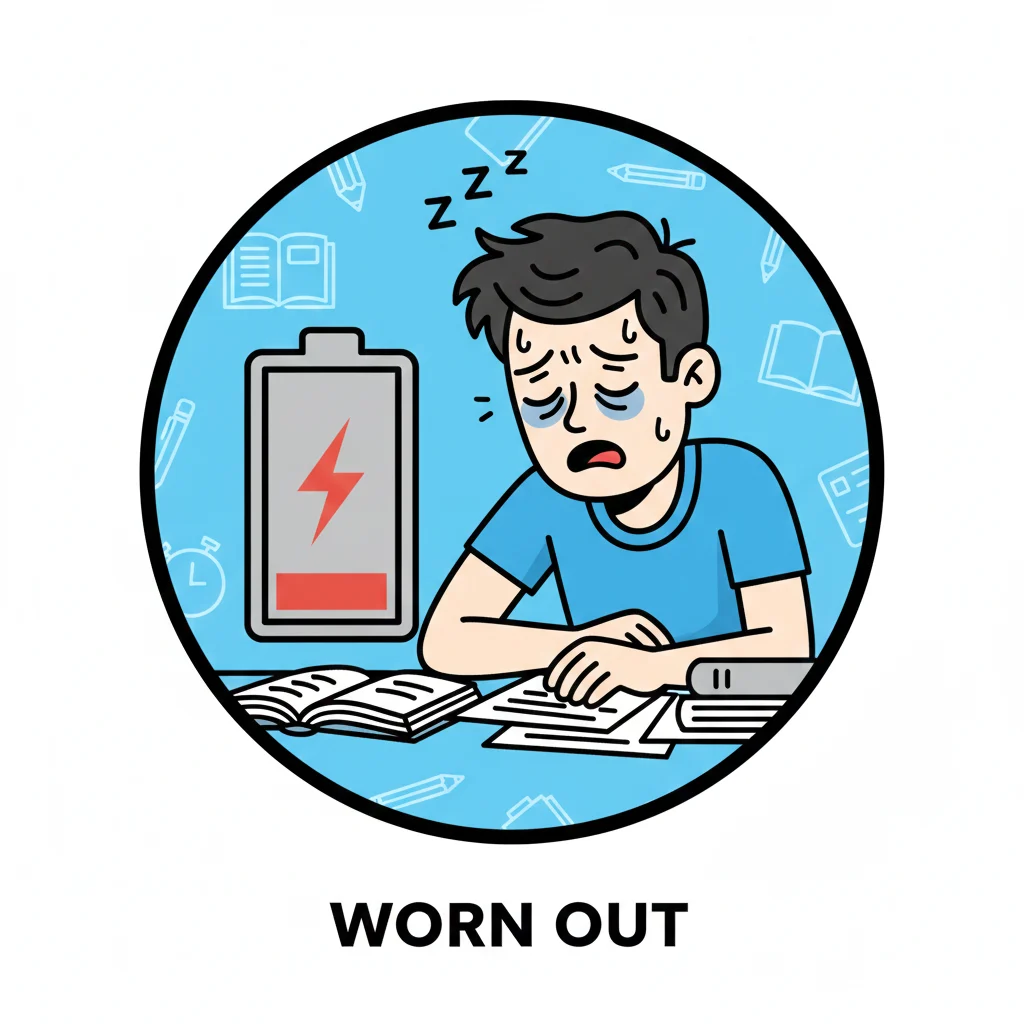
Worn Out
Word-by-word meaning
- Worn = used too much
- Out = completely
Idiomatic Meaning
Extremely tired or exhausted.
Example Sentences
- I’m completely worn out today.
- The kids were worn out after playing outside.
Common Error
Not “wear out” when describing yourself.
❌ I am wear out
✅ I am worn out
Usage Note
Can describe people or objects.
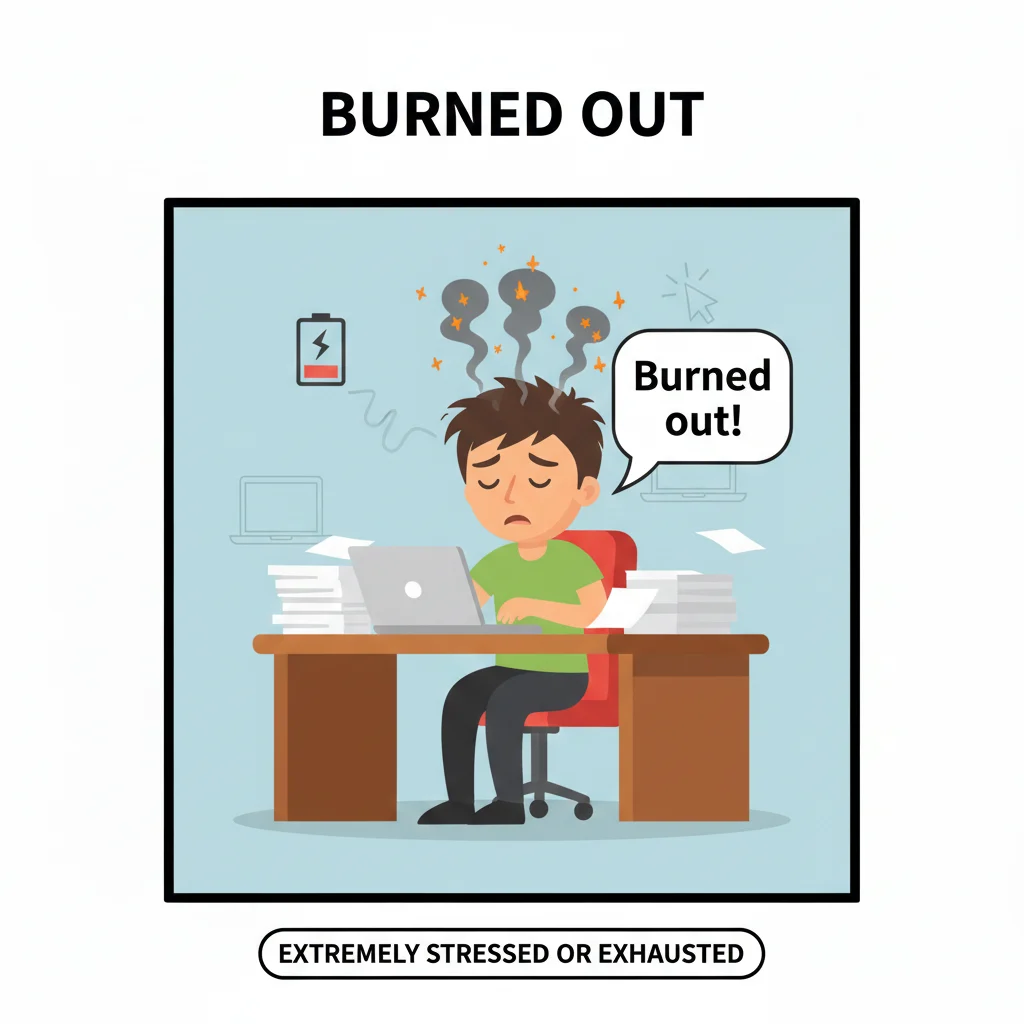
Burned Out
Word-by-word meaning
- Burned = destroyed by fire
- Out = finished
Idiomatic Meaning
Mentally or emotionally exhausted due to stress.
Example Sentences
- She felt burned out after months of overtime.
- Students often feel burned out during exams.
Common Error
Not the same as just physical tiredness.
Usage Note
Common in work or academic contexts.
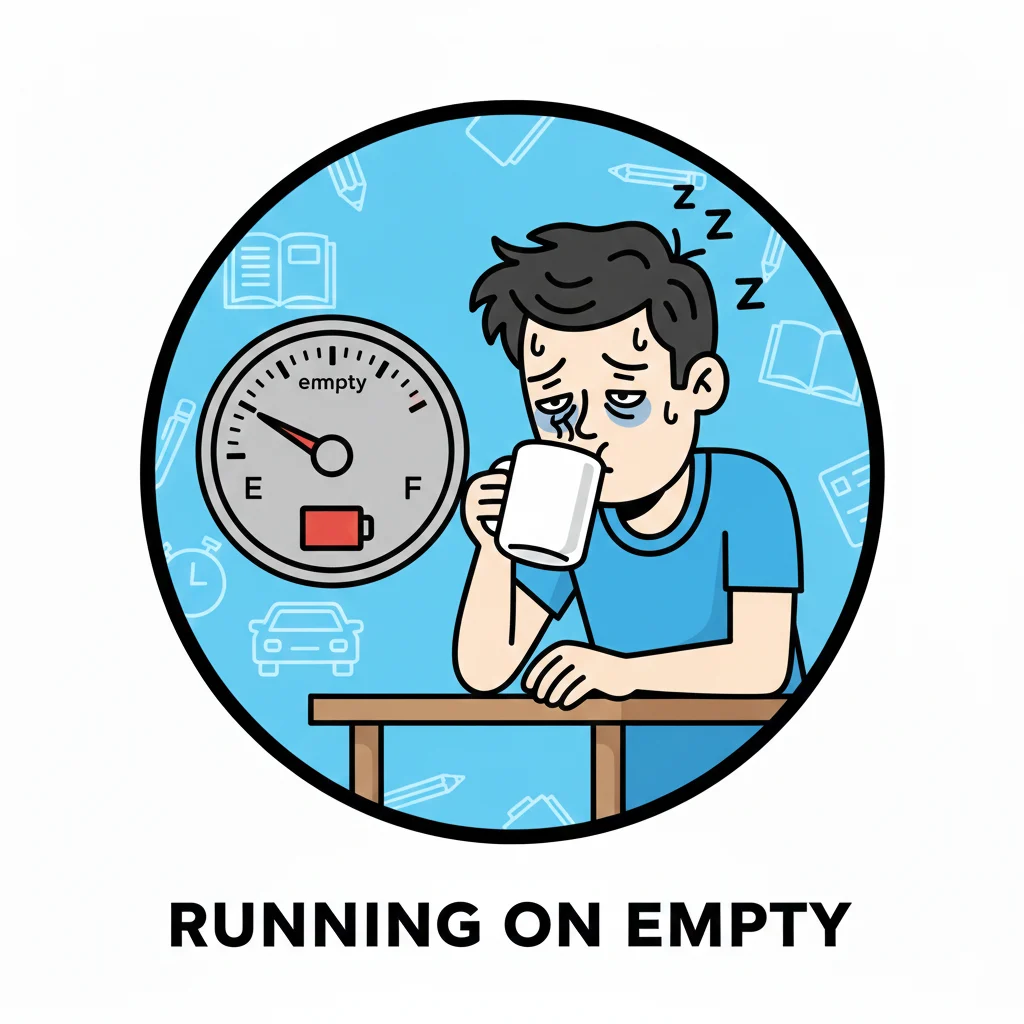
Running on Empty
Word-by-word meaning
- Running = operating
- Empty = nothing left
Idiomatic Meaning
Having no energy left.
Example Sentences
- I’m running on empty after only 3 hours of sleep.
- He kept working even though he was running on empty.
Common Error
Don’t use for machines only — it works for people too.
Usage Note
Often used metaphorically about energy levels.
Out Like a Light
Word-by-word meaning
- Out = off
- Light = lamp
Idiomatic Meaning
Fall asleep instantly.
Example Sentences
- I was out like a light as soon as I hit the bed.
- The baby was out like a light.
Common Error
It describes sleeping, not general tiredness.
Usage Note
Informal, common in storytelling.
Bone Tired
Word-by-word meaning
- Bone = skeleton
- Tired = exhausted
Idiomatic Meaning
Tired deep inside your body.
Example Sentences
- She felt bone tired after the hike.
- I’m bone tired today.
Common Error
Don’t say “bones tired.”
Usage Note
Expresses deep physical exhaustion.
Beat
Word-by-word meaning
- Beat = defeated
Idiomatic Meaning
Very tired.
Example Sentences
- I’m beat after work.
- He looked beat after the match.
Common Error
Don’t confuse with physical hitting.
Usage Note
Very informal American English.
Ready to Drop
Word-by-word meaning
- Ready = prepared
- Drop = fall
Idiomatic Meaning
So tired you could fall down.
Example Sentences
- I’m ready to drop after this long day.
- She was ready to drop after shopping.
Common Error
Not literal falling.
Usage Note
Common in daily speech.
Flat Out
Word-by-word meaning
- Flat = level
- Out = completely
Idiomatic Meaning
Completely exhausted.
Example Sentences
- I was flat out after the marathon.
- He worked flat out all week.
Common Error
Sometimes also means “at full speed.”
Usage Note
Context matters.
Done In
Word-by-word meaning
- Done = finished
- In = completely
Idiomatic Meaning
Exhausted.
Example Sentences
- That workout really did me in.
- I’m done in after cleaning.
Usage Note
Common in British English.
Like a Zombie
Word-by-word meaning
- Zombie = living dead
Idiomatic Meaning
Extremely tired and lacking energy.
Example Sentences
- I feel like a zombie today.
- He walked around like a zombie.
Usage Note
Describes appearance and behavior.
Running on Fumes
Word-by-word meaning
- Fumes = gas vapor
Idiomatic Meaning
Almost no energy left.
Example Sentences
- I’m running on fumes this week.
- She finished the shift running on fumes.
Usage Note
Similar to running on empty.
Drained
Word-by-word meaning
- Drained = emptied
Idiomatic Meaning
Emotionally or physically exhausted.
Example Sentences
- I feel drained after that meeting.
- She was emotionally drained.
Usage Note
Often emotional exhaustion.
Sleep-Deprived
Word-by-word meaning
- Sleep = rest
- Deprived = lacking
Idiomatic Meaning
Not having enough sleep.
Example Sentences
- I’m sleep-deprived this week.
- New parents are usually sleep-deprived.
Usage Note
Common in health discussions.
Knackered
Word-by-word meaning
Slang word (British English).
Idiomatic Meaning
Extremely tired.
Example Sentences
- I’m absolutely knackered!
- She felt knackered after traveling.
Usage Note
Informal British slang.
Pooped
Word-by-word meaning
Slang term.
Idiomatic Meaning
Very tired.
Example Sentences
- I’m pooped after gardening.
- The kids were pooped.
Usage Note
Friendly, casual expression.
Spent
Word-by-word meaning
- Spent = used up
Idiomatic Meaning
No energy left.
Example Sentences
- I feel completely spent.
- He looked spent after the race.
Usage Note
More formal than “pooped.”
At the End of One’s Rope
Word-by-word meaning
- End = finish
- Rope = string
Idiomatic Meaning
Mentally exhausted and frustrated.
Example Sentences
- I’m at the end of my rope.
- She felt at the end of her rope with the noise.
Usage Note
More emotional exhaustion.
Hit the Sack
Word-by-word meaning
- Hit = go to
- Sack = bed
Idiomatic Meaning
Go to sleep because you’re tired.
Example Sentences
- I’m going to hit the sack early.
- He hit the sack at 9 PM.
Usage Note
Informal expression.
FAQs About Idioms for Tired
1. What are idioms for tired?
They are expressions used to describe extreme exhaustion in a more colorful way than just saying “tired.”
2. Are these idioms formal or informal?
Most idioms for tired are informal and used in daily conversation.
3. What’s the difference between “worn out” and “burned out”?
- Worn out = physical exhaustion
- Burned out = mental/emotional exhaustion
4. Can I use these idioms in writing exams?
Use neutral ones like “worn out” or “exhausted” in formal writing.
Final Thoughts
Learning idioms for tired helps you sound natural and expressive in English. Instead of always saying “I’m tired,” try “I’m running on fumes” or “I’m dead tired.” Practice using one new idiom each day in conversation or writing.
The more you use them, the more confident and fluent you’ll become!

Ruskin Bond, author at SeekIdiom, explains English idioms through simple meanings and examples, helping learners improve vocabulary and everyday usage.