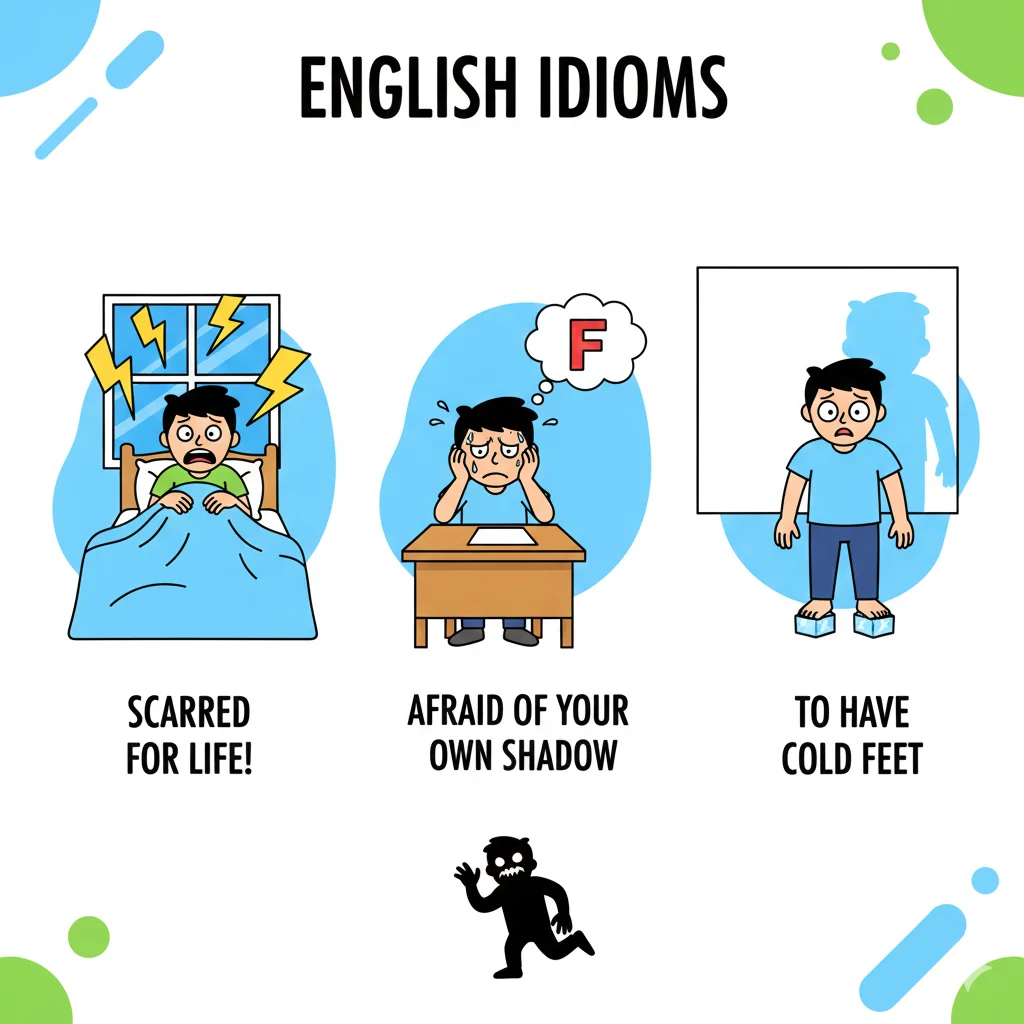
Scared idioms are everyday English expressions used to describe fear, nervousness, or shock in a natural, native-like way.
Have you ever felt so scared your heart raced or your hands shook? English has colorful idioms for exactly those moments.
In this guide, you’ll learn 20 famous scared idioms, explained simply with examples, mistakes to avoid, and usage tips.
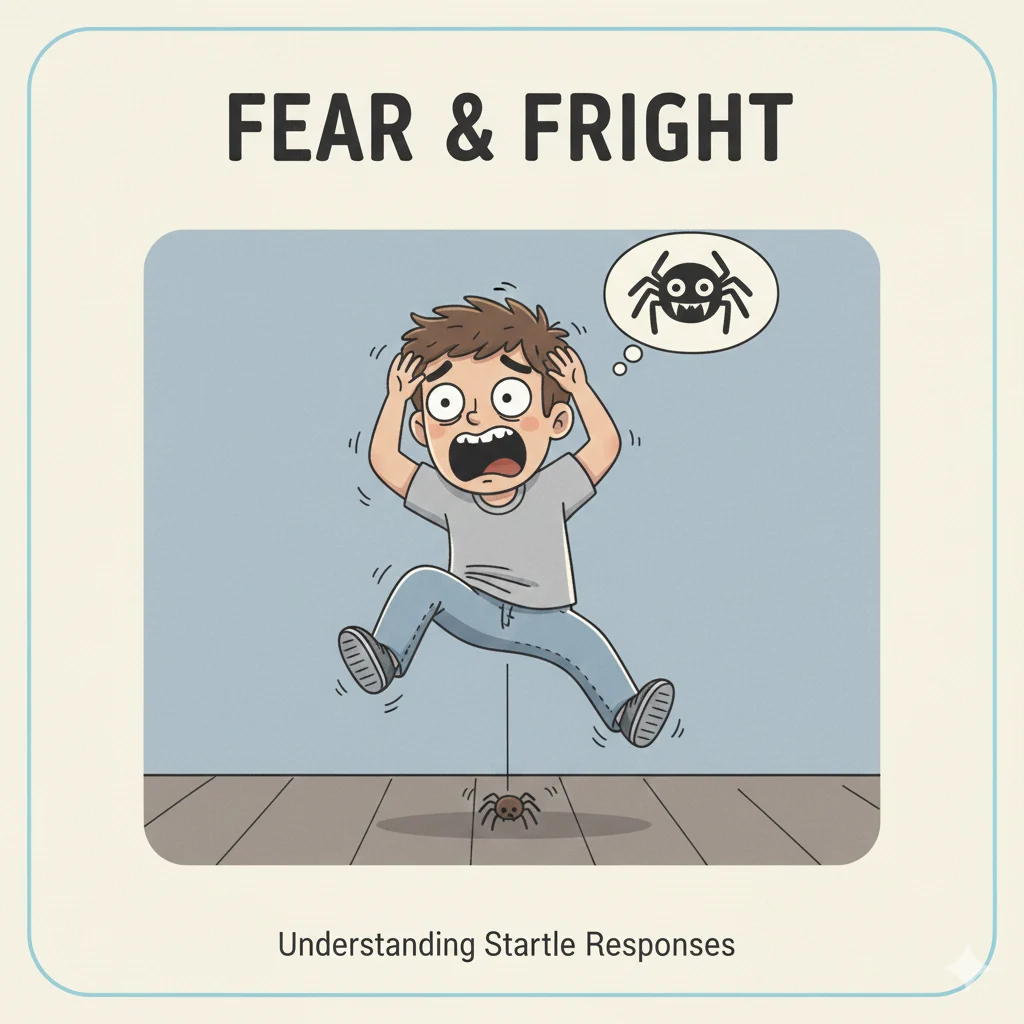
Scared to Death
Word-by-Word Meaning
- Scared = afraid
- Death = dying
Idiomatic / Figurative Meaning
To be extremely frightened (not literally dying).
Example Sentences
- I was scared to death when I heard the loud bang.
- She’s scared to death of spiders.
Common Error
❌ Using it for mild fear
✔ Use it only for very strong fear
Usage Note
Often used in casual spoken English to exaggerate fear.
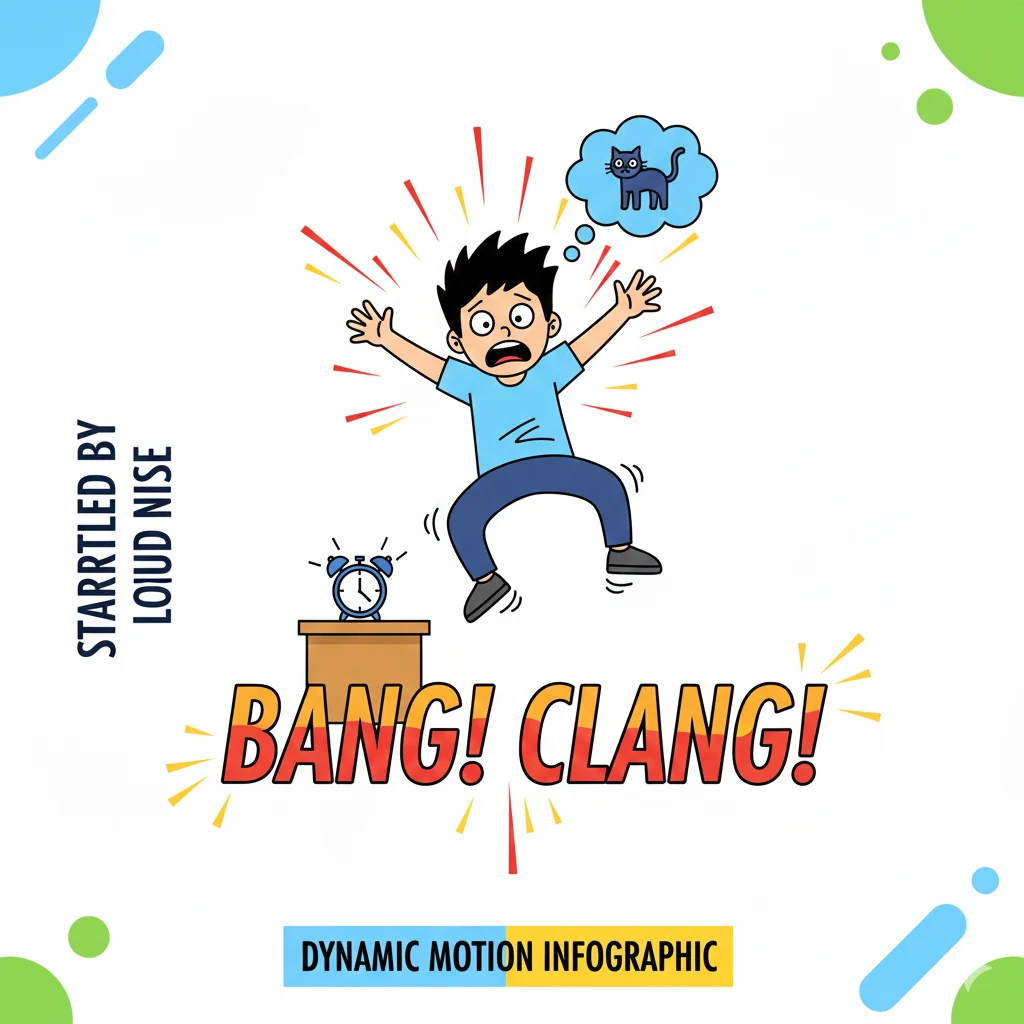
Jump Out of One’s Skin
Word-by-Word Meaning
- Jump = leap suddenly
- Skin = body
Idiomatic Meaning
To react suddenly because of fear or surprise.
Example Sentences
- I nearly jumped out of my skin when the phone rang.
- The thunder made the kids jump out of their skin.
Common Error
❌ Using without sudden action
✔ Must involve shock or surprise
Usage Note
Very common in storytelling.
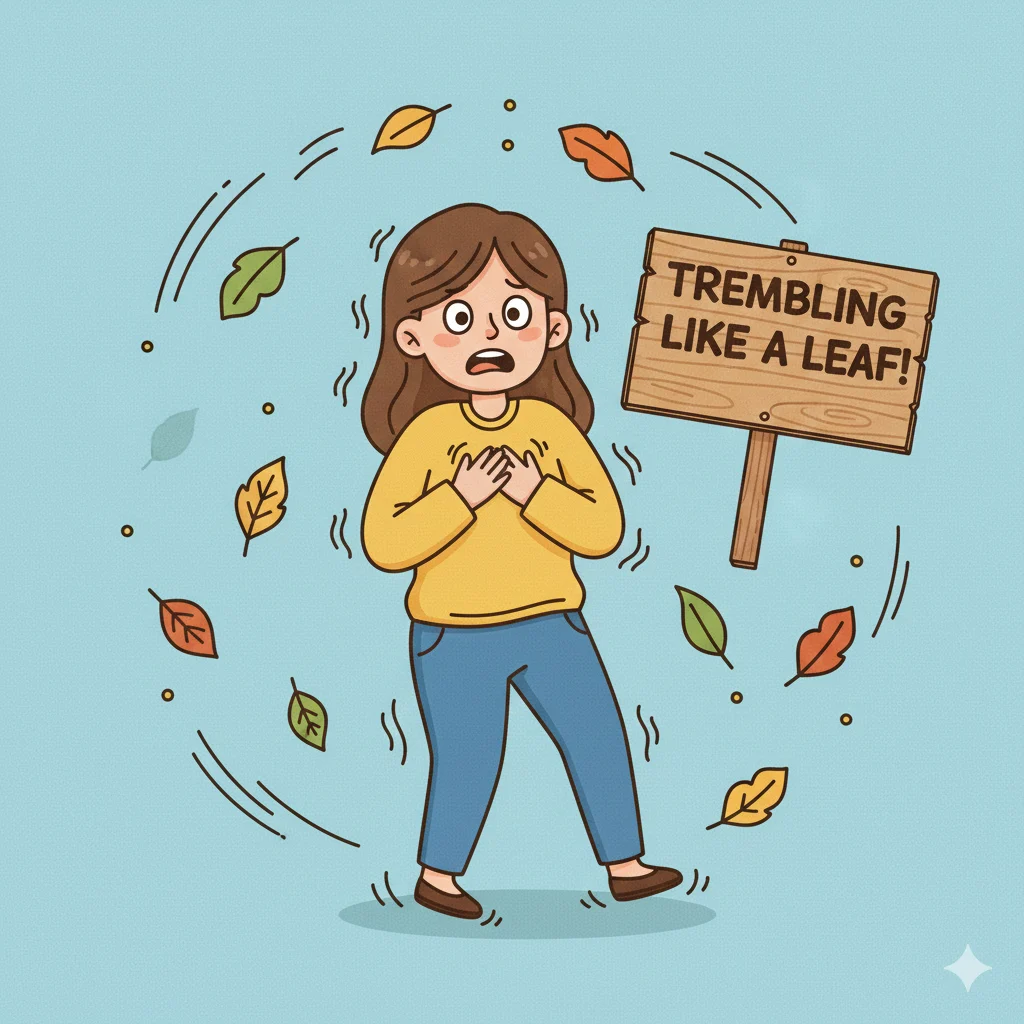
Shake Like a Leaf
Word-by-Word Meaning
- Shake = tremble
- Leaf = thin plant leaf
Idiomatic Meaning
To tremble badly because of fear.
Example Sentences
- He was shaking like a leaf before the exam.
- She shook like a leaf during the storm.
Common Error
❌ Using for excitement
✔ Mostly used for fear or nervousness
Usage Note
Describes visible physical fear.
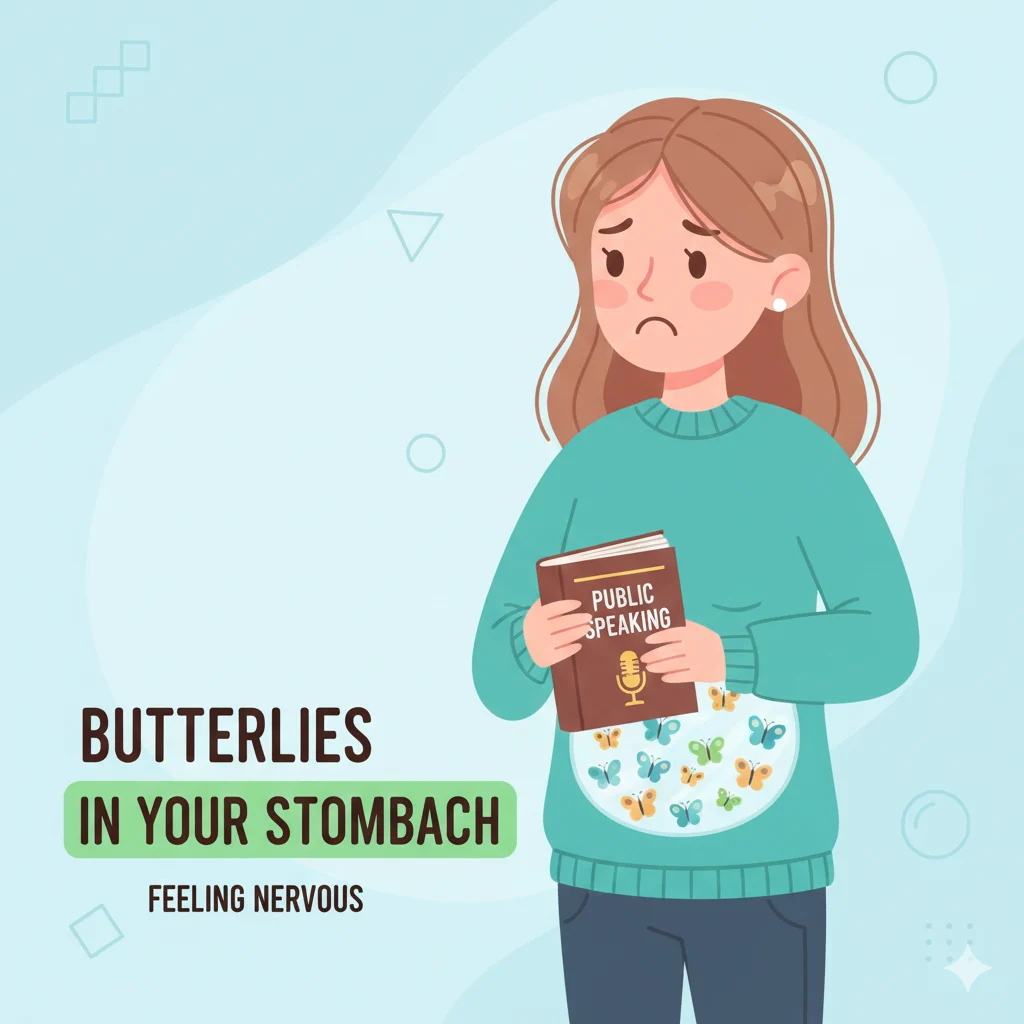
Have Butterflies in One’s Stomach
Word-by-Word Meaning
- Butterflies = flying insects
- Stomach = belly
Idiomatic Meaning
To feel nervous or anxious.
Example Sentences
- I had butterflies in my stomach before my interview.
- She always gets butterflies before speaking.
Common Error
❌ Using for fear only
✔ Can mean nervous excitement too
Usage Note
Often used before events or performances.
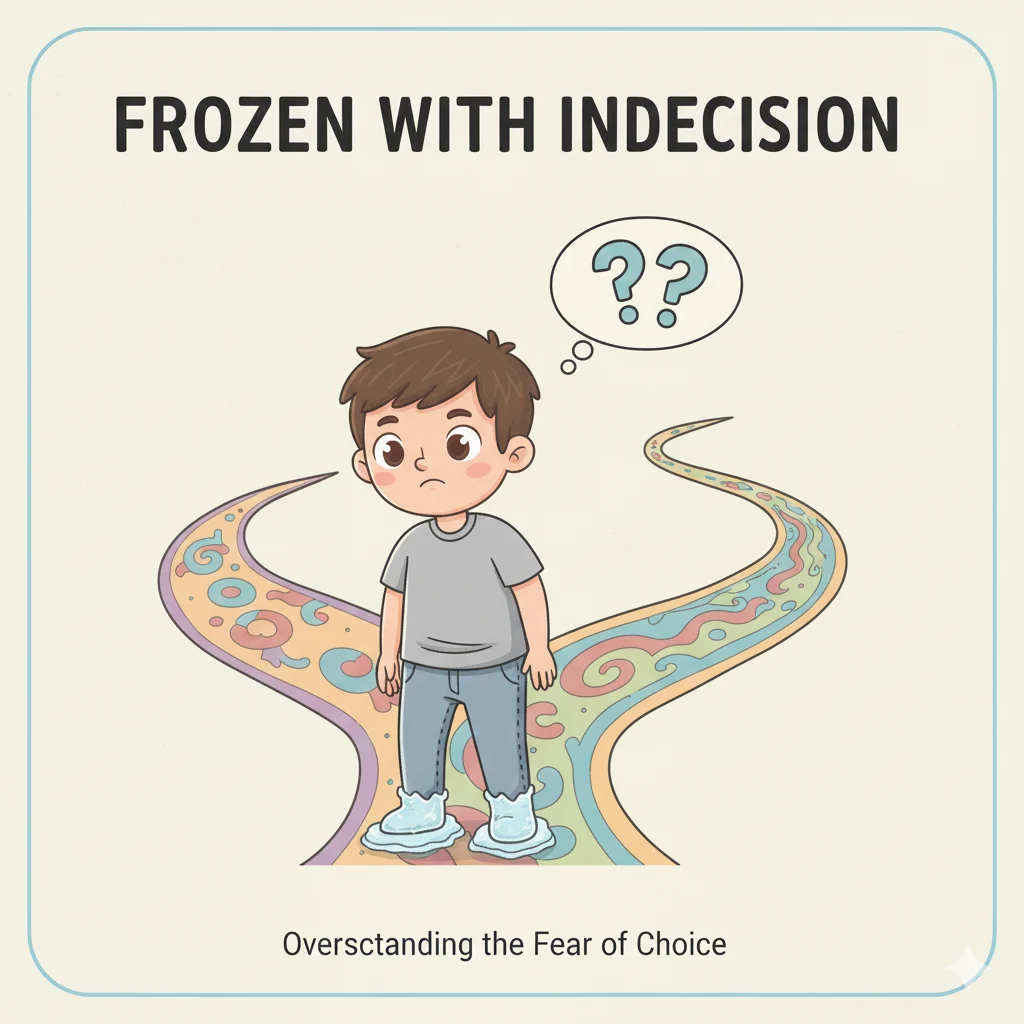
Get Cold Feet
Word-by-Word Meaning
- Cold = lacking warmth
- Feet = body part
Idiomatic Meaning
To suddenly become afraid and back out.
Example Sentences
- He got cold feet before the wedding.
- Don’t get cold feet now!
Common Error
❌ Using after action
✔ Used before doing something
Usage Note
Common in relationships and decisions.
Freeze with Fear
Word-by-Word Meaning
- Freeze = stop moving
- Fear = fright
Idiomatic Meaning
To be unable to move due to fear.
Example Sentences
- I froze with fear when I saw the snake.
- She froze with fear during the accident.
Common Error
❌ Using for calm moments
✔ Used only for intense fear
Usage Note
Great for dramatic situations.
Heart in One’s Mouth
Word-by-Word Meaning
- Heart = emotional center
- Mouth = face opening
Idiomatic Meaning
To feel extreme fear or anxiety.
Example Sentences
- My heart was in my mouth during the results.
- His heart jumped into his mouth.
Common Error
❌ Mixing with happiness
✔ Mainly used for tension or fear
Usage Note
Often used in British English.
Scared Stiff
Word-by-Word Meaning
- Scared = afraid
- Stiff = unable to move
Idiomatic Meaning
So frightened that you can’t move.
Example Sentences
- I was scared stiff in the dark room.
- She stood scared stiff.
Common Error
❌ Using for mild fear
✔ Indicates paralyzing fear
Usage Note
Similar to “freeze with fear.”
Make One’s Blood Run Cold
Word-by-Word Meaning
- Blood = body fluid
- Cold = freezing
Idiomatic Meaning
To cause sudden fear or horror.
Example Sentences
- The story made my blood run cold.
- His voice made her blood run cold.
Common Error
❌ Using for happiness
✔ Used for horror or dread
Usage Note
Often used in scary storytelling.
Break Out in a Cold Sweat
Word-by-Word Meaning
- Break out = suddenly appear
- Cold sweat = nervous sweating
Idiomatic Meaning
To sweat from fear or stress.
Example Sentences
- I broke out in a cold sweat before speaking.
- He broke out in a cold sweat during the test.
Common Error
❌ Confusing with exercise
✔ Related to fear or anxiety
Usage Note
Used for stressful situations.
Lose One’s Nerve
Word-by-Word Meaning
- Lose = fail to keep
- Nerve = courage
Idiomatic Meaning
To become afraid and lose confidence.
Example Sentences
- She lost her nerve before the jump.
- Don’t lose your nerve now.
Common Error
❌ Using after success
✔ Used before or during fear
Usage Note
Common in sports and challenges.
Be Afraid of One’s Own Shadow
Word-by-Word Meaning
- Shadow = reflection
- Afraid = scared
Idiomatic Meaning
To be extremely timid or fearful.
Example Sentences
- He’s afraid of his own shadow.
- She won’t take risks at all.
Common Error
❌ Using for brave people
✔ Describes very fearful personalities
Usage Note
Often humorous.
Scare the Life Out of Someone
Word-by-Word Meaning
- Scare = frighten
- Life = existence
Idiomatic Meaning
To frighten someone badly.
Example Sentences
- You scared the life out of me!
- That movie scared the life out of her.
Common Error
❌ Literal interpretation
✔ Always figurative
Usage Note
Very common in spoken English.
Get the Jitters
Word-by-Word Meaning
- Jitters = nervous movements
Idiomatic Meaning
To feel nervous or uneasy.
Example Sentences
- I got the jitters before the exam.
- Public speaking gives him the jitters.
Common Error
❌ Using for fear only
✔ Can mean general nervousness
Usage Note
Informal and conversational.
Have a Cow
Word-by-Word Meaning
- Cow = animal
Idiomatic Meaning
To panic or overreact.
Example Sentences
- Don’t have a cow over nothing.
- She had a cow when she lost her phone.
Common Error
❌ Using in formal writing
✔ Very informal idiom
Usage Note
American English slang.
Be in a Panic
Word-by-Word Meaning
- Panic = sudden fear
Idiomatic Meaning
To feel overwhelmed by fear.
Example Sentences
- Everyone was in a panic.
- He’s in a panic about the deadline.
Common Error
❌ Using without stress
✔ Requires fear or urgency
Usage Note
Neutral, widely used.
Be Shaking in One’s Boots
Word-by-Word Meaning
- Shaking = trembling
- Boots = shoes
Idiomatic Meaning
To be very scared.
Example Sentences
- He was shaking in his boots.
- The threat left them shaking in their boots.
Common Error
❌ Missing possessive
✔ Use his/her/their
Usage Note
Strong visual idiom.
Get a Fright
Word-by-Word Meaning
- Fright = scare
Idiomatic Meaning
To become suddenly scared.
Example Sentences
- I got a fright from the noise.
- She got a fright watching the movie.
Common Error
❌ Using continuously
✔ Refers to one sudden moment
Usage Note
Common in British English.
Be Terrified Out of One’s Wits
Word-by-Word Meaning
- Terrified = very scared
- Wits = senses
Idiomatic Meaning
To be extremely frightened.
Example Sentences
- I was terrified out of my wits.
- The kids were terrified out of their wits.
Common Error
❌ Shortening incorrectly
✔ Use full phrase
Usage Note
Dramatic emphasis.
Scare Someone Silly
Word-by-Word Meaning
- Silly = foolish
Idiomatic Meaning
To frighten someone badly, often playfully.
Example Sentences
- You scared me silly!
- That prank scared her silly.
Common Error
❌ Using for serious trauma
✔ Often light-hearted fear
Usage Note
Friendly, informal tone.
FAQs About Scared Idioms
What are scared idioms?
Scared idioms are expressions that describe fear in a figurative, natural English way.
Are scared idioms formal?
Most are informal and used in daily conversation or storytelling.
Can scared idioms be used in writing?
Yes, especially in blogs, stories, and casual articles.
How can I learn idioms faster?
Practice them in sentences and real-life situations.
Conclusion
Learning scared idioms helps you sound more natural, expressive, and confident in English.
Instead of saying “I am afraid,” try using colorful idioms that native speakers love.
👉 Pick 3 idioms today, write your own sentences, and start using them in conversation!

Ruskin Bond, author at SeekIdiom, explains English idioms through simple meanings and examples, helping learners improve vocabulary and everyday usage.