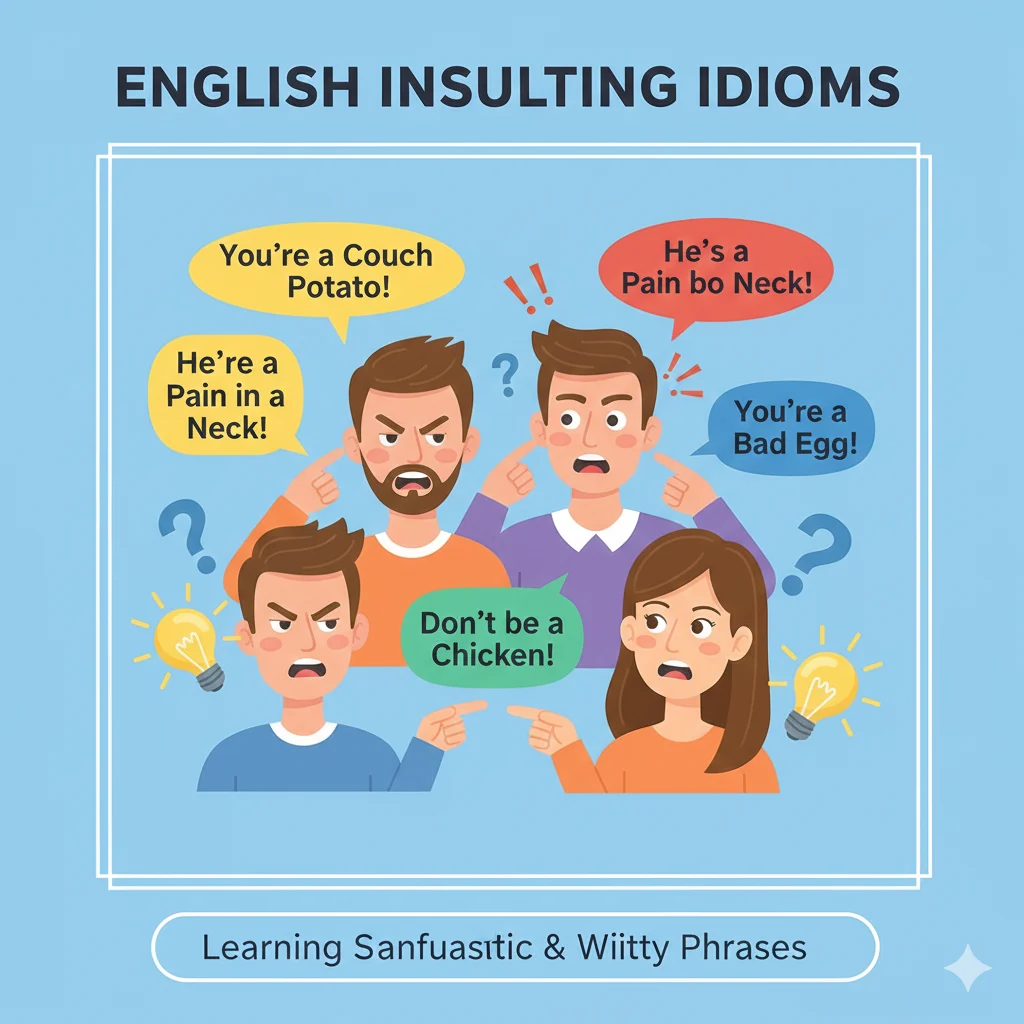
Insulting idioms are a fun yet tricky part of English. They don’t always sound rude, but their meanings can sting! Imagine joking with a friend and accidentally offending them—these idioms help you understand what’s playful and what’s not. In this guide, you’ll learn the 20 most famous insulting idioms, explained clearly with real-life examples so you can use them confidently (or avoid them wisely).
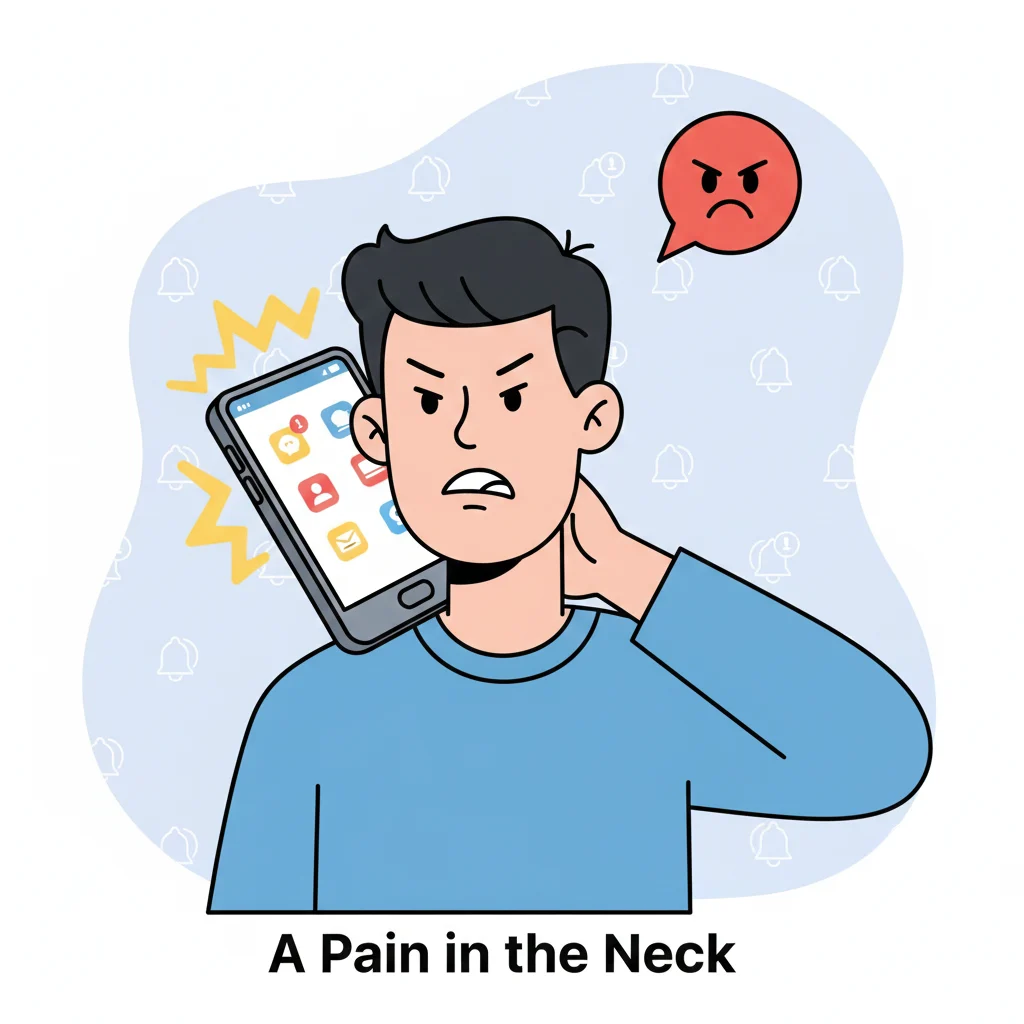
A Pain in the Neck
Word-by-Word Meaning
Pain = discomfort
Neck = part of the body
Idiomatic / Figurative Meaning
Someone or something very annoying.
Example Sentences
- This slow internet is a pain in the neck.
- He’s nice, but he can be a pain in the neck sometimes.
Common Error
❌ Using it for serious harm
✔ Only use it for mild annoyance
Usage Note
Common in casual conversation, not formal writing.
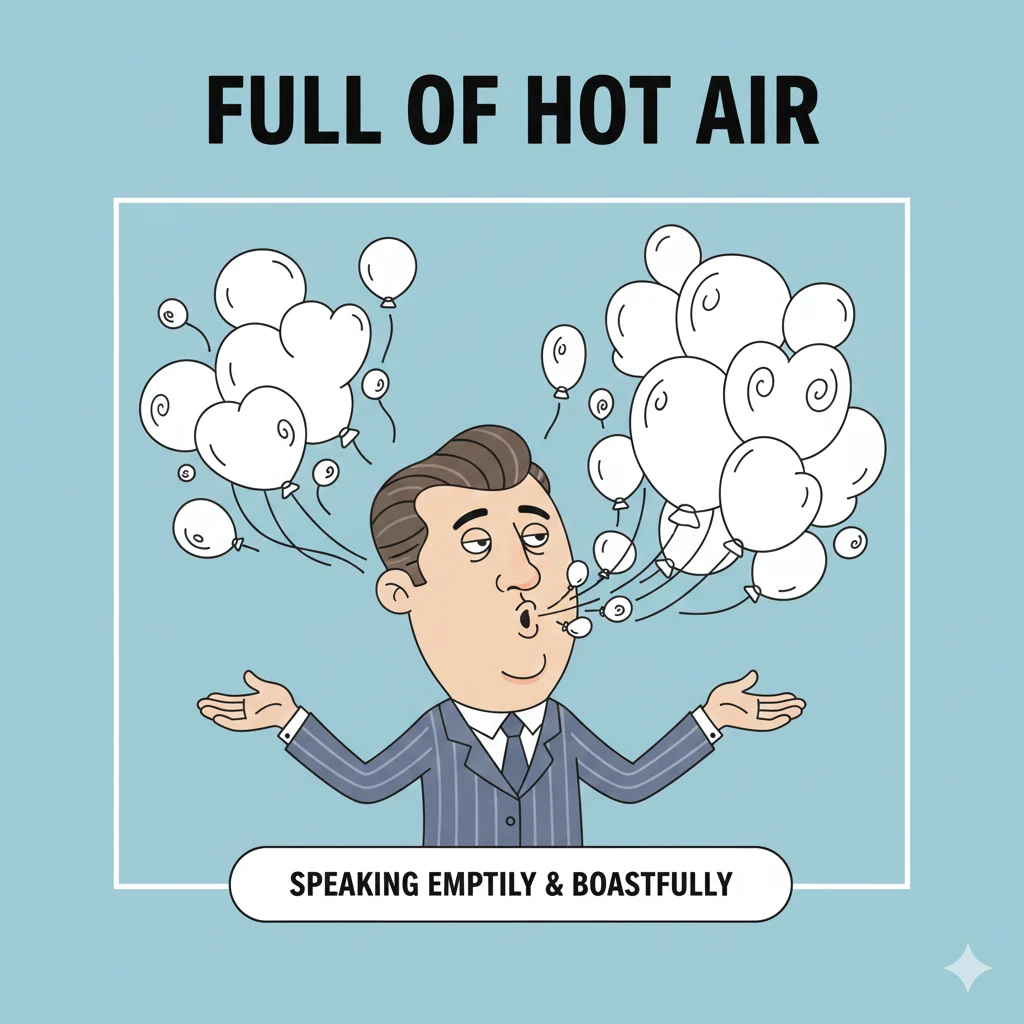
Full of Hot Air
Word-by-Word Meaning
Hot air = empty air
Idiomatic / Figurative Meaning
Someone who talks a lot but says nothing meaningful.
Example Sentences
- Don’t believe him—he’s full of hot air.
- That speech sounded impressive but was full of hot air.
Common Error
❌ Using for shy people
✔ Used for boastful talkers
Usage Note
Often used sarcastically.
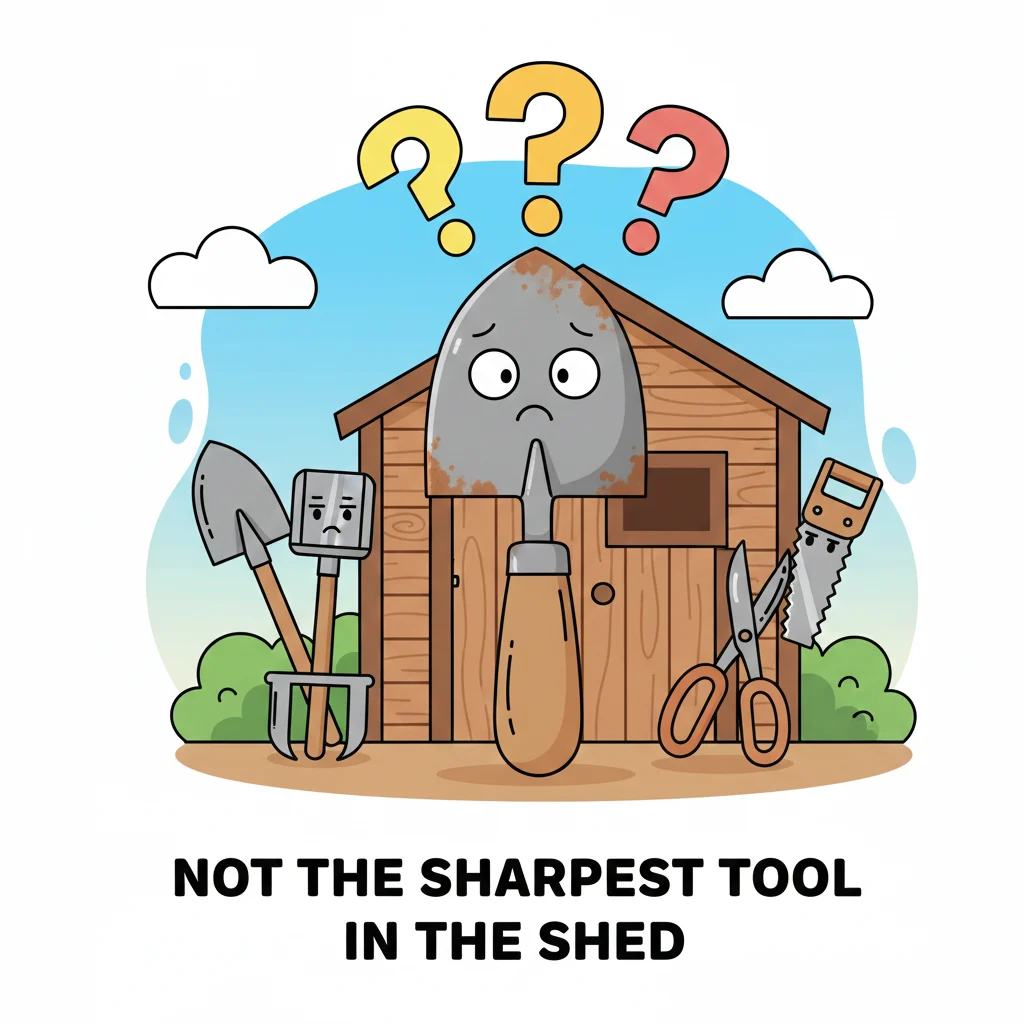
Not the Sharpest Tool in the Shed
Word-by-Word Meaning
Sharp tool = useful tool
Shed = storage place
Idiomatic / Figurative Meaning
Not very intelligent.
Example Sentences
- He’s kind, but not the sharpest tool in the shed.
- She made a silly mistake—not the sharpest tool today.
Common Error
❌ Saying directly to elders
✔ Use carefully to avoid offense
Usage Note
Soft insult, often humorous.
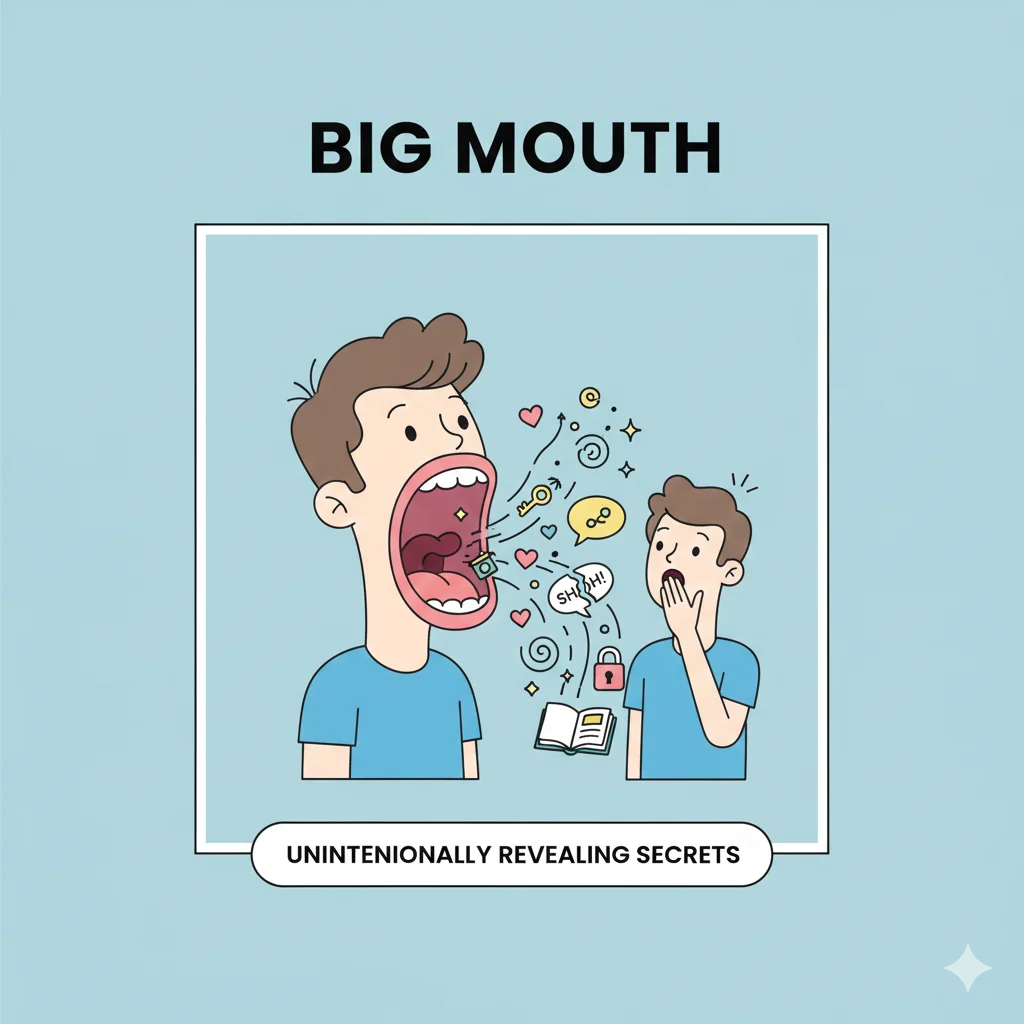
Big Mouth
Word-by-Word Meaning
Big = large
Mouth = used to speak
Idiomatic / Figurative Meaning
Someone who talks too much or reveals secrets.
Example Sentences
- Don’t tell her—she’s a big mouth.
- His big mouth got him in trouble.
Common Error
❌ Confusing with confidence
✔ It’s about oversharing
Usage Note
Very informal.
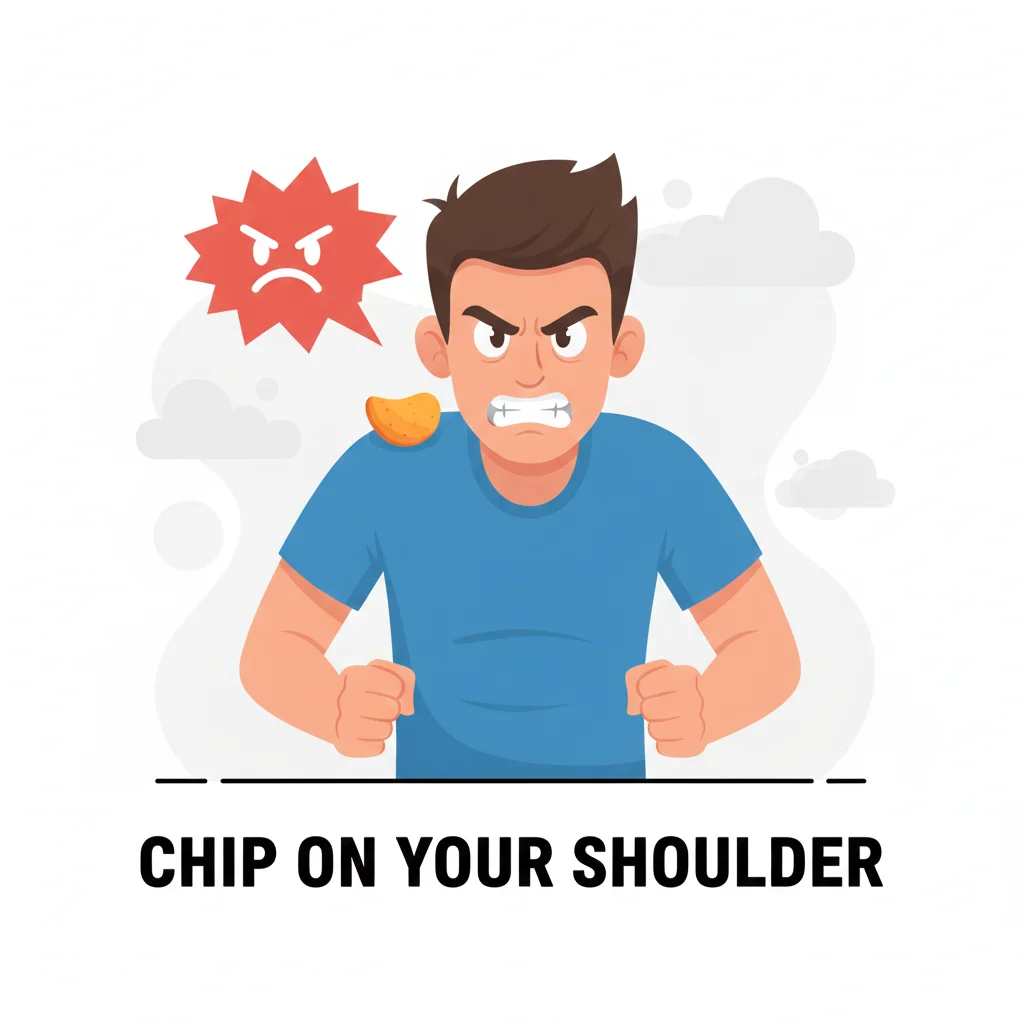
A Chip on Your Shoulder
Word-by-Word Meaning
Chip = small piece
Shoulder = body part
Idiomatic / Figurative Meaning
Being angry or offended easily.
Example Sentences
- He walks around with a chip on his shoulder.
- She always argues—such a chip on her shoulder.
Common Error
❌ Using for sadness
✔ It’s about anger/resentment
Usage Note
Common in American English.
Two-Faced
Word-by-Word Meaning
Two = double
Face = appearance
Idiomatic / Figurative Meaning
Someone who is fake or dishonest.
Example Sentences
- I don’t trust him; he’s two-faced.
- She’s sweet in front of you but two-faced behind.
Common Error
❌ Using for mood swings
✔ It’s about dishonesty
Usage Note
Strong insult—use carefully.
A Know-It-All
Word-by-Word Meaning
Know = knowledge
All = everything
Idiomatic / Figurative Meaning
Someone who thinks they know everything.
Example Sentences
- He’s such a know-it-all in meetings.
- Don’t be a know-it-all.
Common Error
❌ Using for experts
✔ Used when attitude is annoying
Usage Note
Common in spoken English.
All Bark and No Bite
Word-by-Word Meaning
Bark = dog’s sound
Bite = attack
Idiomatic / Figurative Meaning
Someone who threatens but doesn’t act.
Example Sentences
- He shouts a lot but is all bark and no bite.
- The boss looks scary but is all bark and no bite.
Common Error
❌ Using for shy people
✔ Used for fake toughness
Usage Note
Neutral-to-negative tone.
Dumb as a Rock
Word-by-Word Meaning
Dumb = not smart
Rock = stone
Idiomatic / Figurative Meaning
Extremely unintelligent.
Example Sentences
- That idea was dumb as a rock.
- He acted dumb as a rock today.
Common Error
❌ Using in professional settings
✔ Very informal and rude
Usage Note
Avoid in polite company.
Crybaby
Word-by-Word Meaning
Cry = weep
Baby = child
Idiomatic / Figurative Meaning
Someone who complains or cries easily.
Example Sentences
- Stop being a crybaby.
- He’s a crybaby over small issues.
Common Error
❌ Using for emotional honesty
✔ Used for overreacting
Usage Note
Often used teasingly.
Stuck-Up
Word-by-Word Meaning
Stuck = fixed
Up = upward
Idiomatic / Figurative Meaning
Someone who thinks they’re better than others.
Example Sentences
- She acts stuck-up.
- That neighborhood feels stuck-up.
Common Error
❌ Confusing with shyness
✔ It’s about arrogance
Usage Note
Casual insult.
A Loose Cannon
Word-by-Word Meaning
Loose = uncontrolled
Cannon = weapon
Idiomatic / Figurative Meaning
Someone unpredictable and risky.
Example Sentences
- He’s a loose cannon in meetings.
- That player is a loose cannon.
Common Error
❌ Using for quiet people
✔ Used for reckless behavior
Usage Note
Often used at work.
Smart Mouth
Word-by-Word Meaning
Smart = clever
Mouth = speech
Idiomatic / Figurative Meaning
Someone who talks back disrespectfully.
Example Sentences
- Don’t get a smart mouth with me.
- He has a smart mouth.
Common Error
❌ Confusing with intelligence
✔ It’s about rude speech
Usage Note
Common in American English.
Dead Weight
Word-by-Word Meaning
Dead = lifeless
Weight = burden
Idiomatic / Figurative Meaning
Someone useless in a group.
Example Sentences
- He’s dead weight on the team.
- That project feels like dead weight.
Common Error
❌ Using for sick people
✔ Use metaphorically only
Usage Note
Strong insult—be careful.
Lazybones
Word-by-Word Meaning
Lazy = unwilling to work
Bones = body
Idiomatic / Figurative Meaning
A very lazy person.
Example Sentences
- Get up, you lazybones!
- He’s a friendly lazybones.
Common Error
❌ Using formally
✔ Playful insult
Usage Note
Often humorous.
Airhead
Word-by-Word Meaning
Air = empty
Head = mind
Idiomatic / Figurative Meaning
Someone foolish or not serious.
Example Sentences
- She’s not an airhead, just distracted.
- Stop acting like an airhead.
Common Error
❌ Using for beginners
✔ It’s about carelessness
Usage Note
Casual speech.
Big Ego
Word-by-Word Meaning
Big = large
Ego = self-importance
Idiomatic / Figurative Meaning
Someone overly proud.
Example Sentences
- Fame gave him a big ego.
- Her big ego ruins teamwork.
Common Error
❌ Confusing with confidence
✔ It’s excessive pride
Usage Note
Common in modern English.
Sourpuss
Word-by-Word Meaning
Sour = unpleasant
Puss = face
Idiomatic / Figurative Meaning
Someone always in a bad mood.
Example Sentences
- Don’t be such a sourpuss.
- He looks like a sourpuss today.
Common Error
❌ Using for serious sadness
✔ It’s about grumpiness
Usage Note
Light-hearted insult.
Stick in the Mud
Word-by-Word Meaning
Stick = trapped
Mud = dirt
Idiomatic / Figurative Meaning
Someone boring or resistant to fun.
Example Sentences
- Come on, don’t be a stick in the mud.
- He never parties—stick in the mud.
Common Error
❌ Using for introverts
✔ It’s about refusal to enjoy
Usage Note
Friendly teasing.
Dead from the Neck Up
Word-by-Word Meaning
Dead = lifeless
Neck up = head
Idiomatic / Figurative Meaning
Someone extremely unintelligent.
Example Sentences
- He forgot again—dead from the neck up.
- That decision was neck-up dead.
Common Error
❌ Using publicly
✔ Very strong insult
Usage Note
Avoid formal contexts.
FAQs About Insulting Idioms
Are insulting idioms always rude?
No. Many are playful or humorous depending on tone and relationship.
Can I use insulting idioms at work?
Use mild ones carefully. Avoid strong insults in professional settings.
Are insulting idioms common in spoken English?
Yes, especially in casual conversations and movies.
How can I learn to use them naturally?
Watch English shows, note context, and practice with examples.
Conclusion
Mastering insulting idioms helps you understand real English—not just textbook language. Whether you want to joke with friends, understand movies, or avoid awkward moments, learning these expressions gives you confidence and clarity. Start by recognizing them, then practice using the softer ones naturally. The more you read and listen, the more fluent you’ll sound!

Ruskin Bond, author at SeekIdiom, explains English idioms through simple meanings and examples, helping learners improve vocabulary and everyday usage.