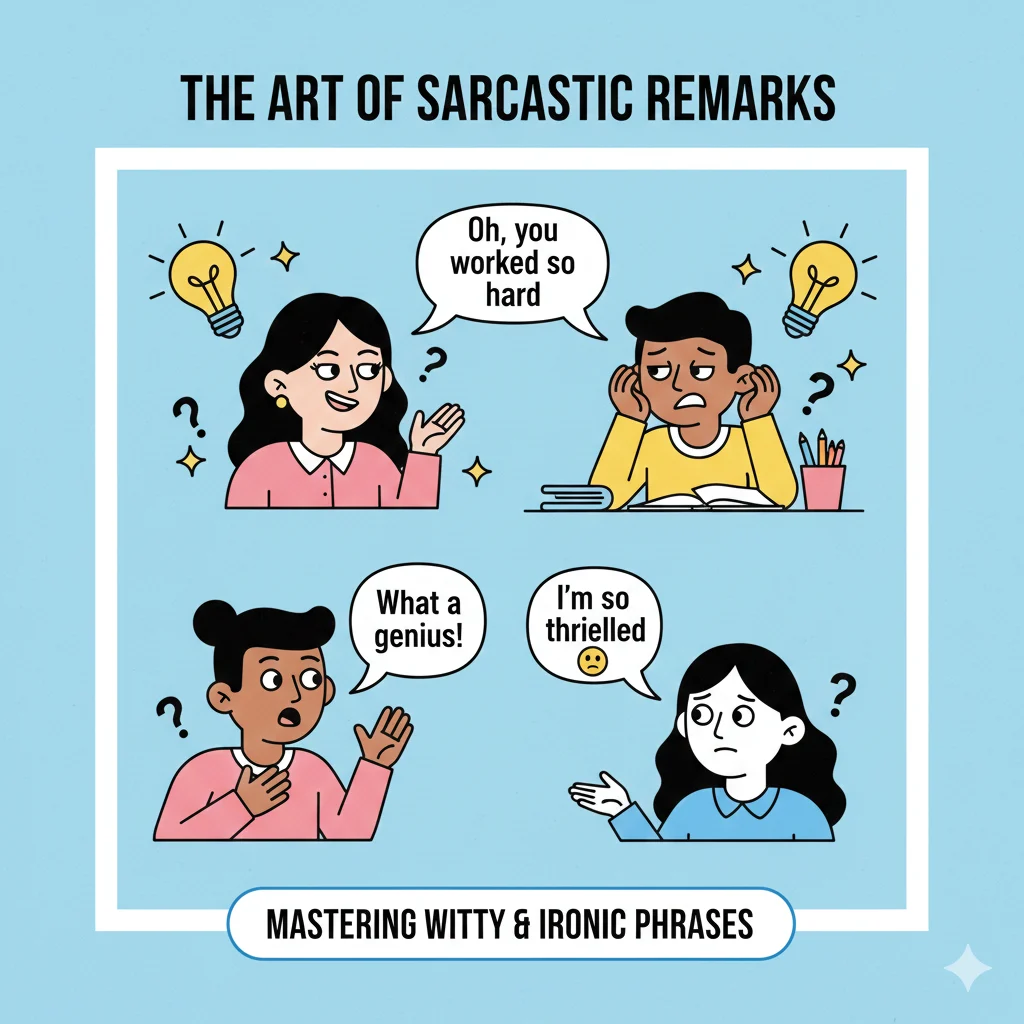
Ever heard someone say “Yeah, right” and instantly felt the sarcasm? Sarcastic idioms add humor, irony, and attitude to everyday English, especially in conversations, movies, and social media. In this guide, you’ll learn the most common sarcastic idioms, what they really mean, and how to use them confidently without sounding rude.
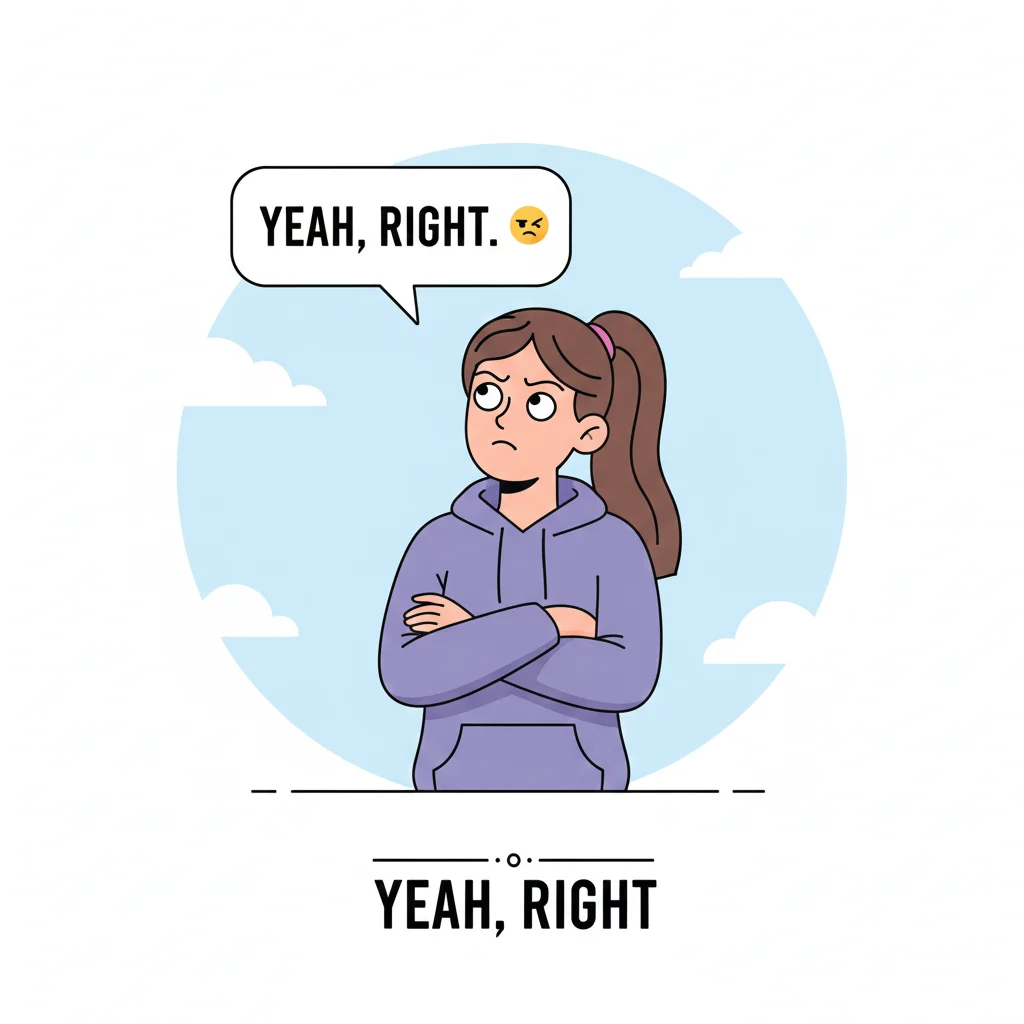
Yeah, Right
Word-by-word meaning
- Yeah = yes
- Right = correct
Idiomatic meaning
Used to show disbelief or sarcasm, meaning “I don’t believe that at all.”
Example sentences
- He said he’ll wake up at 5 a.m. — Yeah, right.
Common error
Using it sincerely instead of sarcastically.
Usage note
Tone of voice is crucial; usually spoken with emphasis.
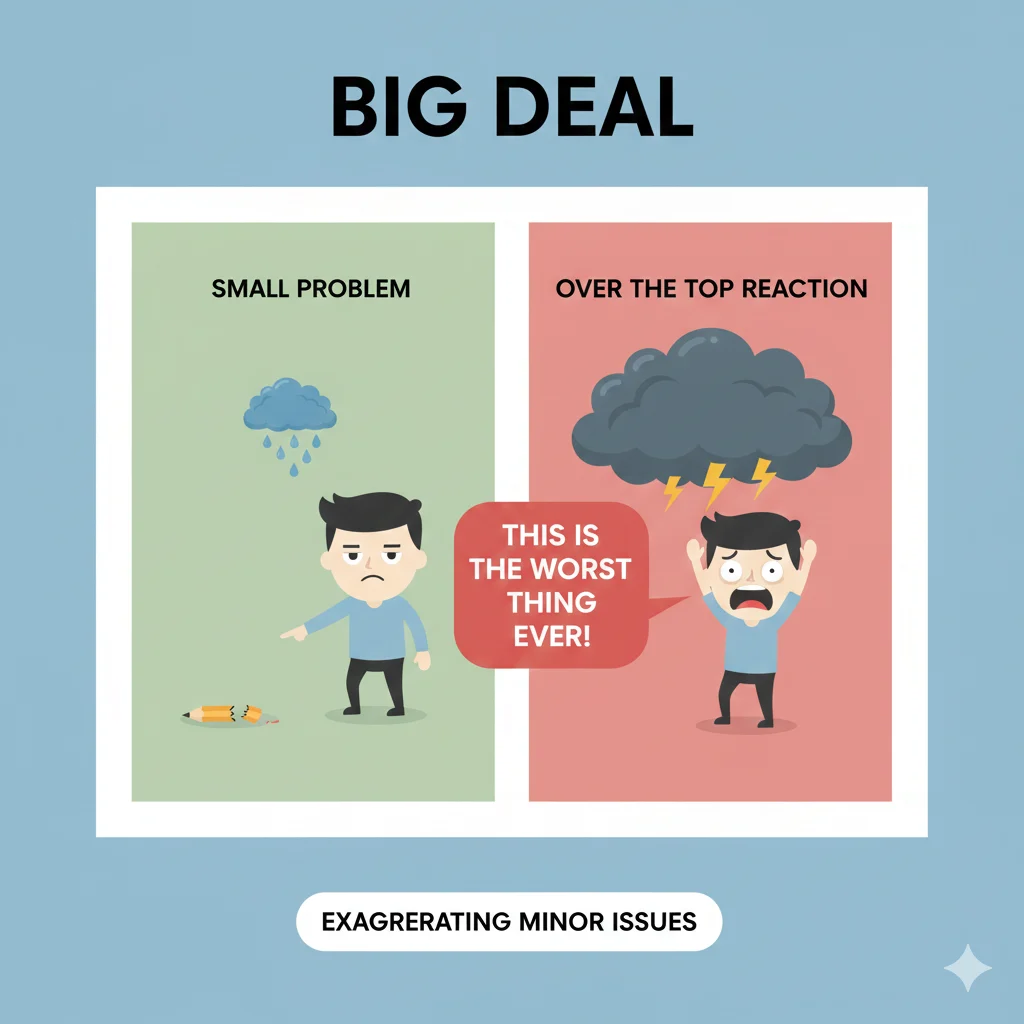
Big Deal
Word-by-word meaning
- Big = large
- Deal = matter
Idiomatic meaning
Used sarcastically to say something is not important.
Example sentences
- You got one extra mark? Big deal.
Common error
Confusing it with a genuinely important situation.
Usage note
Often used casually among friends.
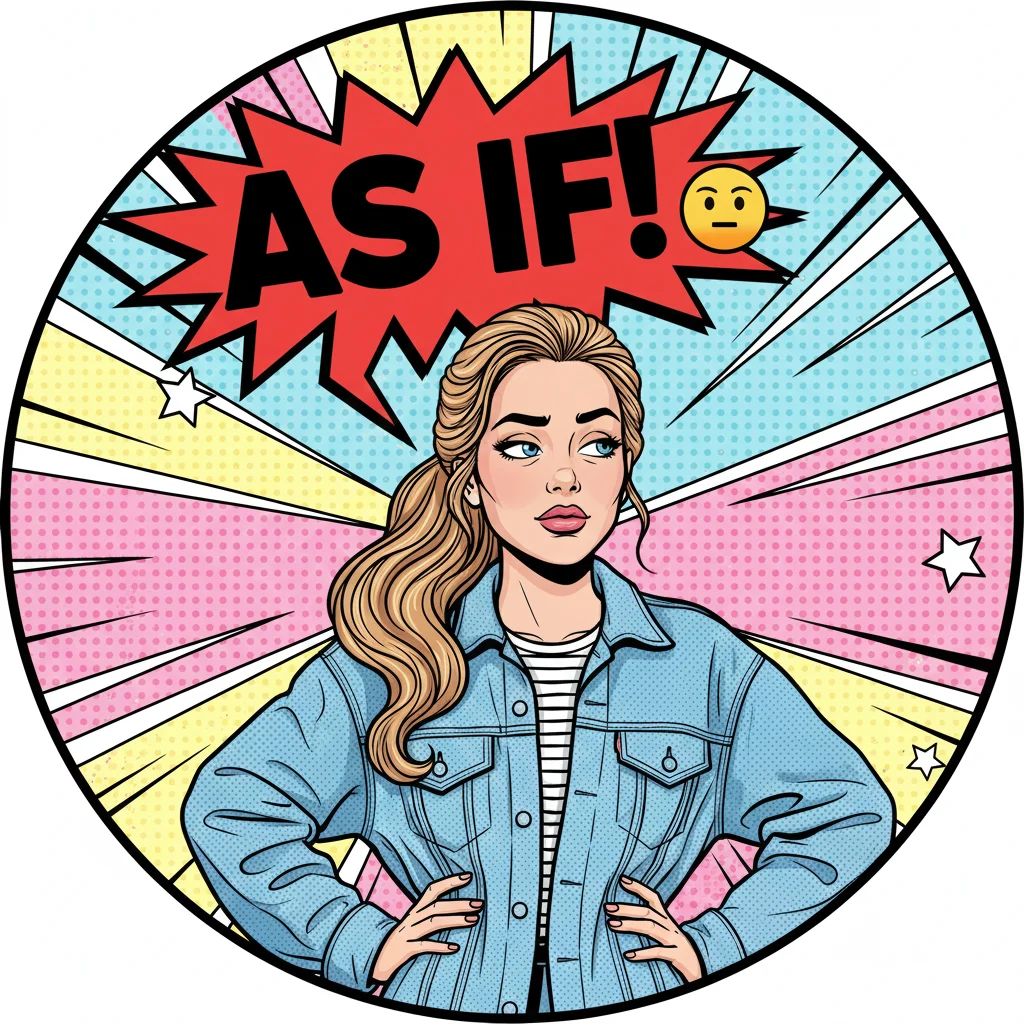
As If
Word-by-word meaning
- As = like
- If = condition
Idiomatic meaning
Shows strong disbelief or mockery.
Example sentences
- He thinks he’s always right? As if!
Common error
Using it in formal writing.
Usage note
Common in spoken English and pop culture.
Tell Me About It
Word-by-word meaning
- Tell = inform
- Me = myself
- About = regarding
Idiomatic meaning
Sarcastically means “I already know and agree.”
Example sentences
- This heat is unbearable. — Tell me about it.

Common error
Taking it literally.
Usage note
Used to show shared frustration.
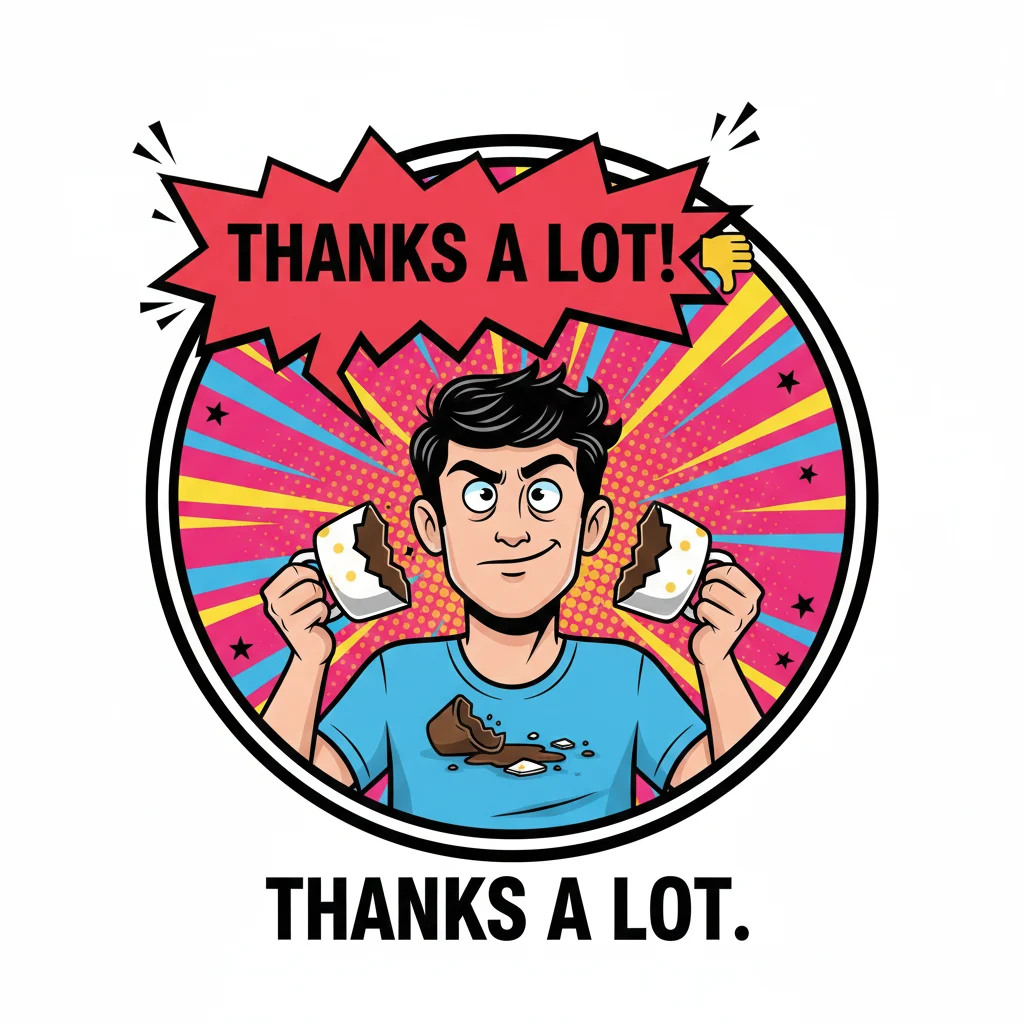
Thanks a Lot
Word-by-word meaning
- Thanks = gratitude
- A lot = very much
Idiomatic meaning
Often sarcastic, meaning “You caused trouble.”
Example sentences
- You deleted my file? Thanks a lot.
Common error
Missing sarcastic tone.
Usage note
Context decides whether it’s sincere or sarcastic.
Good for You
Word-by-word meaning
- Good = positive
- For = benefiting
- You = the person
Idiomatic meaning
Can be sarcastic to show indifference.
Example sentences
- You skipped the meeting? Good for you.
Common error
Using it unknowingly in sensitive situations.
Usage note
Tone completely changes meaning.
Lucky You
Word-by-word meaning
- Lucky = fortunate
- You = the person
Idiomatic meaning
Sarcastically suggests envy or annoyance.
Example sentences
- You got extra homework? Lucky you.
Common error
Assuming it’s always positive.
Usage note
Common in casual speech.
Oh, Please
Word-by-word meaning
- Oh = expression
- Please = polite request
Idiomatic meaning
Used sarcastically to dismiss something.
Example sentences
- You think that was hard? Oh, please.
Common error
Using it in polite contexts.
Usage note
Often sounds rude if misused.
What a Surprise
Word-by-word meaning
- What = exclamation
- Surprise = unexpected event
Idiomatic meaning
Sarcastic way to say something was expected.
Example sentences
- He’s late again? What a surprise.
Common error
Confusing listeners without tone.
Usage note
Often paired with eye-rolling.
Don’t Quit Your Day Job
Word-by-word meaning
- Don’t quit = continue
- Day job = main work
Idiomatic meaning
Sarcastically says someone isn’t good at something.
Example sentences
- That singing was awful—don’t quit your day job.
Common error
Using it too harshly.
Usage note
Can sound insulting; use carefully.
Nice Try
Word-by-word meaning
- Nice = good
- Try = attempt
Idiomatic meaning
Sarcastic rejection of an excuse or attempt.
Example sentences
- You forgot because of traffic? Nice try.
Common error
Using it to genuinely encourage.
Usage note
Often playful among friends.
I’m Shaking
Word-by-word meaning
- I am = state
- Shaking = trembling
Idiomatic meaning
Sarcastic way to show no fear at all.
Example sentences
- You’ll report me? I’m shaking.
Common error
Taking it literally.
Usage note
Mostly informal.
How Original
Word-by-word meaning
- How = degree
- Original = unique
Idiomatic meaning
Sarcastic comment on something uncreative.
Example sentences
- Another pizza joke? How original.
Common error
Using it sincerely by mistake.
Usage note
Used with dry humor.
I’m Impressed
Word-by-word meaning
- I am = state
- Impressed = amazed
Idiomatic meaning
Sarcastic way to say you’re not impressed.
Example sentences
- You showed up on time once? I’m impressed.
Common error
Missing sarcastic emphasis.
Usage note
Facial expression matters.
That’s Just Great
Word-by-word meaning
- That is = statement
- Just = emphasis
- Great = excellent
Idiomatic meaning
Sarcastic response to bad news.
Example sentences
- The internet is down again? That’s just great.
Common error
Using it in positive news.
Usage note
Very common in daily English.
Wonderful
Word-by-word meaning
- Wonderful = amazing
Idiomatic meaning
Sarcastic single-word response to frustration.
Example sentences
- Another delay? Wonderful.
Common error
Confusing listeners without context.
Usage note
Often spoken flatly.
Bless Your Heart
Word-by-word meaning
- Bless = give kindness
- Your heart = you
Idiomatic meaning
Polite sarcasm meaning someone is naive.
Example sentences
- You tried fixing it yourself? Bless your heart.
Common error
Cultural misunderstanding.
Usage note
Common in American English.
Sure, Jan
Word-by-word meaning
- Sure = agreement
- Jan = name
Idiomatic meaning
Internet sarcasm expressing disbelief.
Example sentences
- He said he’s innocent? Sure, Jan.
Common error
Using it in formal settings.
Usage note
Popular in memes.
I’m Thrilled
Word-by-word meaning
- I am = state
- Thrilled = excited
Idiomatic meaning
Sarcastic way to show annoyance.
Example sentences
- Extra work on Sunday? I’m thrilled.
Common error
Misreading tone.
Usage note
Dry humor expression.
Wow, Just Wow
Word-by-word meaning
- Wow = surprise
- Just = emphasis
Idiomatic meaning
Sarcastic reaction to stupidity or shock.
Example sentences
- You sent the email to everyone? Wow, just wow.
Common error
Overusing it.
Usage note
Strong emotional sarcasm.
FAQs
Q1: Are sarcastic idioms rude?
Not always. Tone, context, and relationship matter.
Q2: Can learners use sarcastic idioms safely?
Yes, but start with mild ones like “Yeah, right.”
Q3: Are sarcastic idioms common in writing?
They’re more common in spoken and informal writing.
Q4: Do sarcastic idioms vary by culture?
Yes, some are culture-specific.
Conclusion
Mastering sarcastic idioms helps you understand real English conversations and humor. Practice them carefully, notice tone, and soon you’ll sound more natural, confident, and fluent. Try using one today in a casual chat!

Anita Brookner, author at SeekIdiom, shares easy explanations of English idioms with examples to help learners expand vocabulary and speak more confidently.