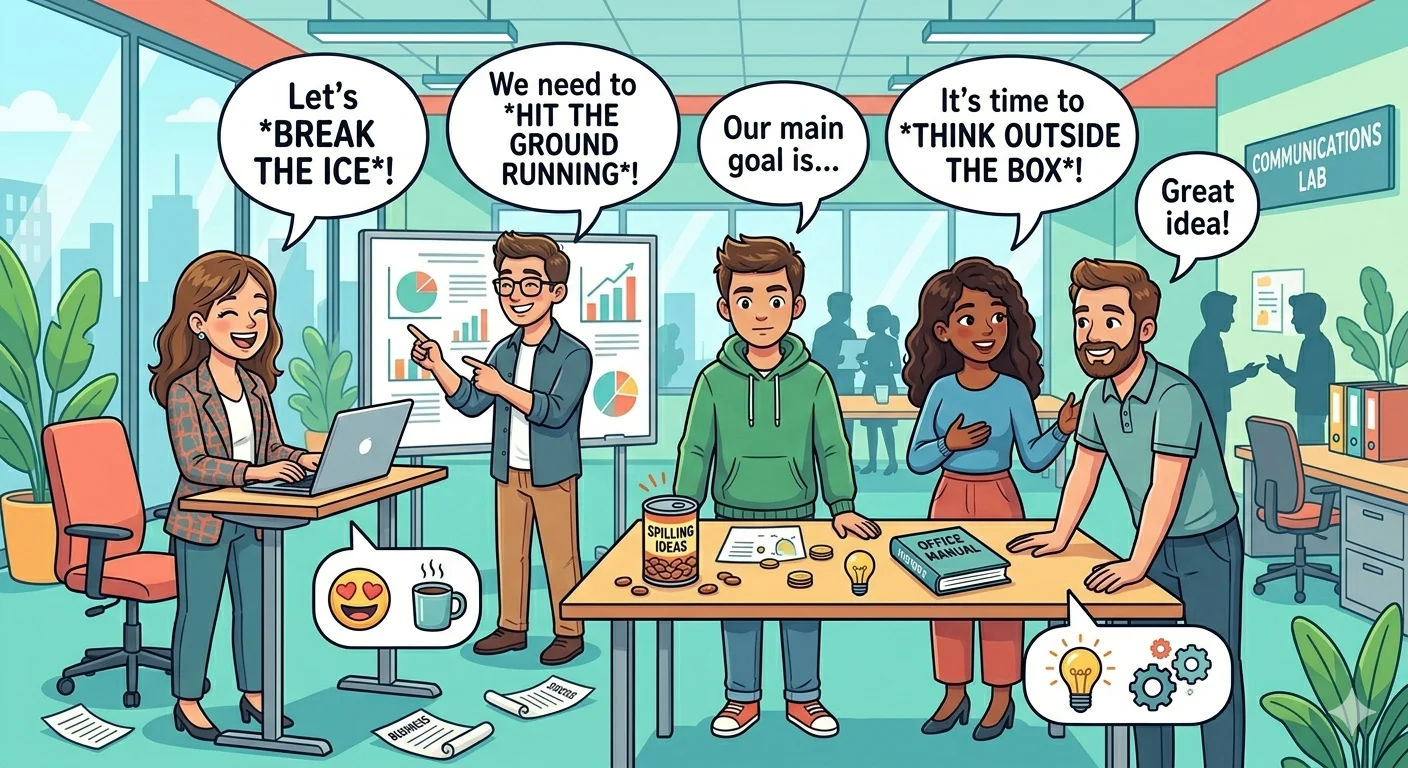
Want to sound more natural and confident at work? Learning idioms at work can instantly upgrade how you communicate. These expressions are commonly used in offices, meetings, and emails—and mastering them helps you fit right in.
Let’s explore 20 of the most useful workplace idioms, explained in a simple and practical way.
Break the Ice
Word-by-word meaning
To physically crack ice.
Idiomatic/figurative meaning
To start a conversation in a social or professional setting.

Example sentences
- The manager told a joke to break the ice at the meeting.
- Icebreaker games help new employees feel comfortable.
Common error
❌ “Cut the ice”
✔️ “Break the ice”
Usage note
Often used in meetings, interviews, or team introductions.
Hit the Ground Running
Word-by-word meaning
Start running immediately after landing.
Idiomatic/figurative meaning
To begin a task with energy and efficiency.

Example sentences
- She hit the ground running on her first day.
- We need someone who can start fast.
Common error
❌ “Run the ground hitting”
✔️ “Hit the ground running”
Usage note
Common in job descriptions and onboarding contexts.
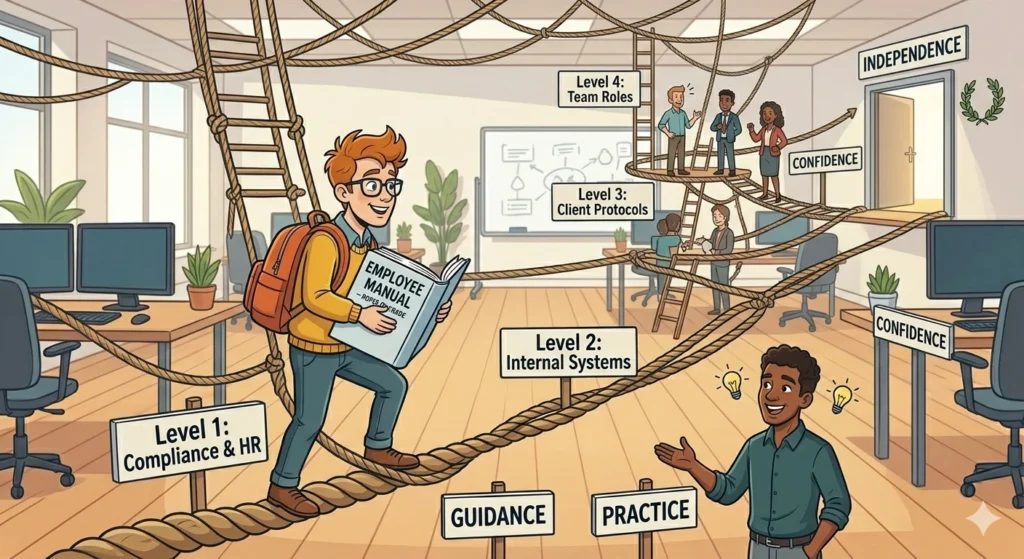
Learn the Ropes
Word-by-word meaning
Understand ropes (from sailing).
Idiomatic/figurative meaning
To learn how something works.
Example sentences
- It takes time to learn the ropes in a new company.
- He is still learning the ropes.
Common error
❌ “Learn the ropes quicklyly”
✔️ “Learn the ropes quickly”
Usage note
Used for beginners or new employees.
On the Same Page
Word-by-word meaning
Reading the same page.
Idiomatic/figurative meaning
To agree or have the same understanding.
Example sentences
- Let’s make sure we’re on the same page.
- The team is finally aligned.

Common error
❌ “In the same page”
✔️ “On the same page”
Usage note
Great for teamwork and communication.
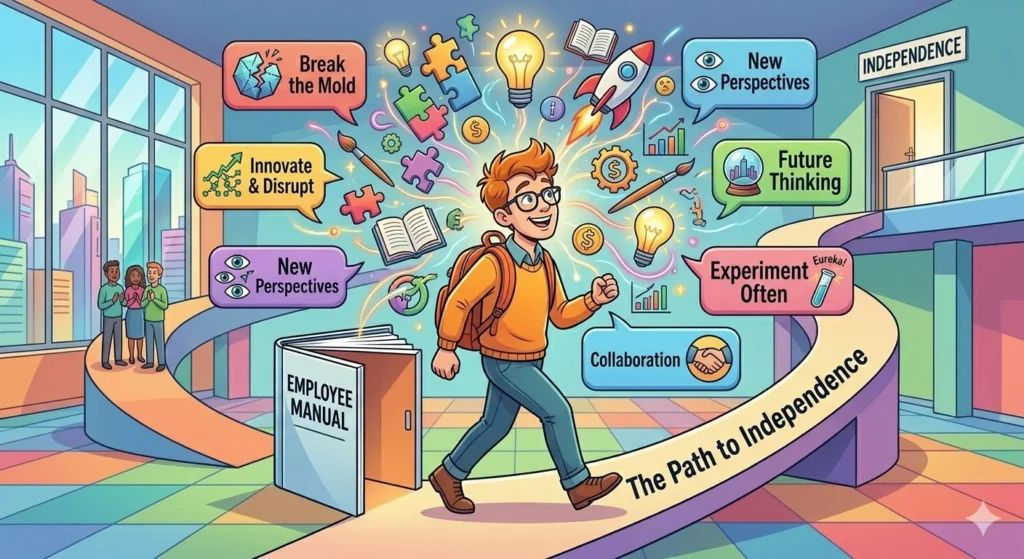
Think Outside the Box
Word-by-word meaning
Think beyond a box.
Idiomatic/figurative meaning
To think creatively.
Example sentences
- We need fresh ideas—think outside the box.
- She solved the problem creatively.
Common error
❌ “Think out of the box” (informal but less preferred)
✔️ “Think outside the box”
Usage note
Common in brainstorming sessions.
Back to the Drawing Board
Word-by-word meaning
Return to a design board.
Idiomatic/figurative meaning
Start over after failure.
Example sentences
- The plan failed, so it’s back to the drawing board.
- We need a new strategy.
Common error
❌ “Go back on drawing board”
✔️ “Back to the drawing board”
Usage note
Used in problem-solving contexts.
In the Loop
Word-by-word meaning
Inside a loop.
Idiomatic/figurative meaning
Included in communication.
Example sentences
- Keep me in the loop.
- She wasn’t informed about the changes.
Common error
❌ “On the loop”
✔️ “In the loop”
Usage note
Common in emails and updates.
Cut Corners
Word-by-word meaning
Skip corners while cutting.
Idiomatic/figurative meaning
Do something cheaply or poorly.
Example sentences
- Don’t cut corners on quality.
- They rushed and made mistakes.
Common error
❌ “Cut the corners”
✔️ “Cut corners”
Usage note
Often used in quality control discussions.
Get the Ball Rolling
Word-by-word meaning
Start rolling a ball.
Idiomatic/figurative meaning
Start a process.
Example sentences
- Let’s get the ball rolling on this project.
- The meeting started the process.
Common error
❌ “Push the ball rolling”
✔️ “Get the ball rolling”
Usage note
Used to initiate tasks.
Go the Extra Mile
Word-by-word meaning
Travel beyond a mile.
Idiomatic/figurative meaning
Make extra effort.
Example sentences
- She always goes the extra mile for clients.
- Hard work leads to success.
Common error
❌ “Go extra mile”
✔️ “Go the extra mile”
Usage note
Used to praise dedication.
Pull Your Weight
Word-by-word meaning
Lift your share.
Idiomatic/figurative meaning
Do your fair share of work.
Example sentences
- Everyone must pull their weight.
- Teamwork requires effort.
Common error
❌ “Push your weight”
✔️ “Pull your weight”
Usage note
Used in team settings.
Think on Your Feet
Word-by-word meaning
Think while standing.
Idiomatic/figurative meaning
React quickly.
Example sentences
- He thinks on his feet in meetings.
- Quick decisions are important.
Common error
❌ “Think in your feet”
✔️ “Think on your feet”
Usage note
Useful in interviews.
Climb the Corporate Ladder
Word-by-word meaning
Climb a ladder.
Idiomatic/figurative meaning
Advance in your career.
Example sentences
- She is climbing the corporate ladder.
- Hard work leads to promotion.
Common error
❌ “Climb corporate stairs”
✔️ “Climb the corporate ladder”
Usage note
Used for career growth.
Burn the Midnight Oil
Word-by-word meaning
Work under oil lamps at night.
Idiomatic/figurative meaning
Work late hours.
Example sentences
- He burned the midnight oil to finish the report.
- Deadlines require effort.
Common error
❌ “Burn midnight light”
✔️ “Burn the midnight oil”
Usage note
Used for overtime work.
The Ball Is in Your Court
Word-by-word meaning
Ball in your playing area.
Idiomatic/figurative meaning
It’s your decision or responsibility.
Example sentences
- I’ve done my part; the ball is in your court.
- It’s your move now.
Common error
❌ “Ball in your side”
✔️ “Ball is in your court”
Usage note
Used in decision-making.
Keep Your Eye on the Ball
Word-by-word meaning
Watch the ball.
Idiomatic/figurative meaning
Stay focused.
Example sentences
- Keep your eye on the ball during the project.
- Focus leads to success.
Common error
❌ “Keep eye on ball”
✔️ “Keep your eye on the ball”
Usage note
Used in productivity advic
Call It a Day
Word-by-word meaning
End the day.
Idiomatic/figurative meaning
Stop working.
Example sentences
- Let’s call it a day.
- We’ve done enough work.
Common error
❌ “Call the day”
✔️ “Call it a day”
Usage note
Used to end work politely.
On Thin Ice
Word-by-word meaning
Standing on fragile ice.
Idiomatic/figurative meaning
In a risky situation.
Example sentences
- He’s on thin ice after missing deadlines.
- Be careful with decisions.
Common error
❌ “In thin ice”
✔️ “On thin ice”
Usage note
Used for warnings.
Bite Off More Than You Can Chew
Word-by-word meaning
Take a large bite.
Idiomatic/figurative meaning
Take on too much work.
Example sentences
- I bit off more than I could chew.
- Don’t overload yourself.
Common error
❌ “Eat more than you chew”
✔️ “Bite off more than you can chew”
Usage note
Used for workload balance.
Get Your Foot in the Door
Word-by-word meaning
Place foot in a doorway.
Idiomatic/figurative meaning
Get an initial opportunity.
Example sentences
- Internships help you get your foot in the door.
- Start small and grow.
Common error
❌ “Put foot in door”
✔️ “Get your foot in the door”
Usage note
Common for career starters.
FAQs About Idioms at Work
1. Why are idioms important at work?
They make your communication sound natural and help you understand colleagues better.
2. Are idioms used in formal communication?
Some idioms are okay in meetings, but avoid them in very formal writing.
3. How can I learn idioms faster?
Practice daily, use them in sentences, and listen to native speakers.
4. Can idioms be misunderstood?
Yes, especially by non-native speakers—so use them carefully.
5. What’s the best way to remember idioms?
Learn them with examples and real-life context.
Conclusion
Mastering idioms at work isn’t just about language—it’s about confidence and connection. Start using a few of these daily, and you’ll notice a big difference in how you communicate.
Keep practicing, stay curious, and soon these idioms will feel natural in your professional life.

Adrian Wells, author at SeekIdiom, shares easy explanations of English idioms with examples to help learners expand vocabulary and speak more confidently.