English idioms make conversations lively, expressive, and memorable. Big idioms are phrases that often sound strange word-for-word but convey a strong figurative meaning. Imagine someone saying, “He’s really barking up the wrong tree!”—it might confuse you unless you know it means someone is mistaken. In this guide, we’ll explore 20 famous big idioms with their word-for-word meanings, figurative meanings, examples, common errors, and usage tips.
Break the Ice
Word-by-Word Meaning
“Break” = to shatter, “ice” = frozen water
Idiomatic/Figurative Meaning
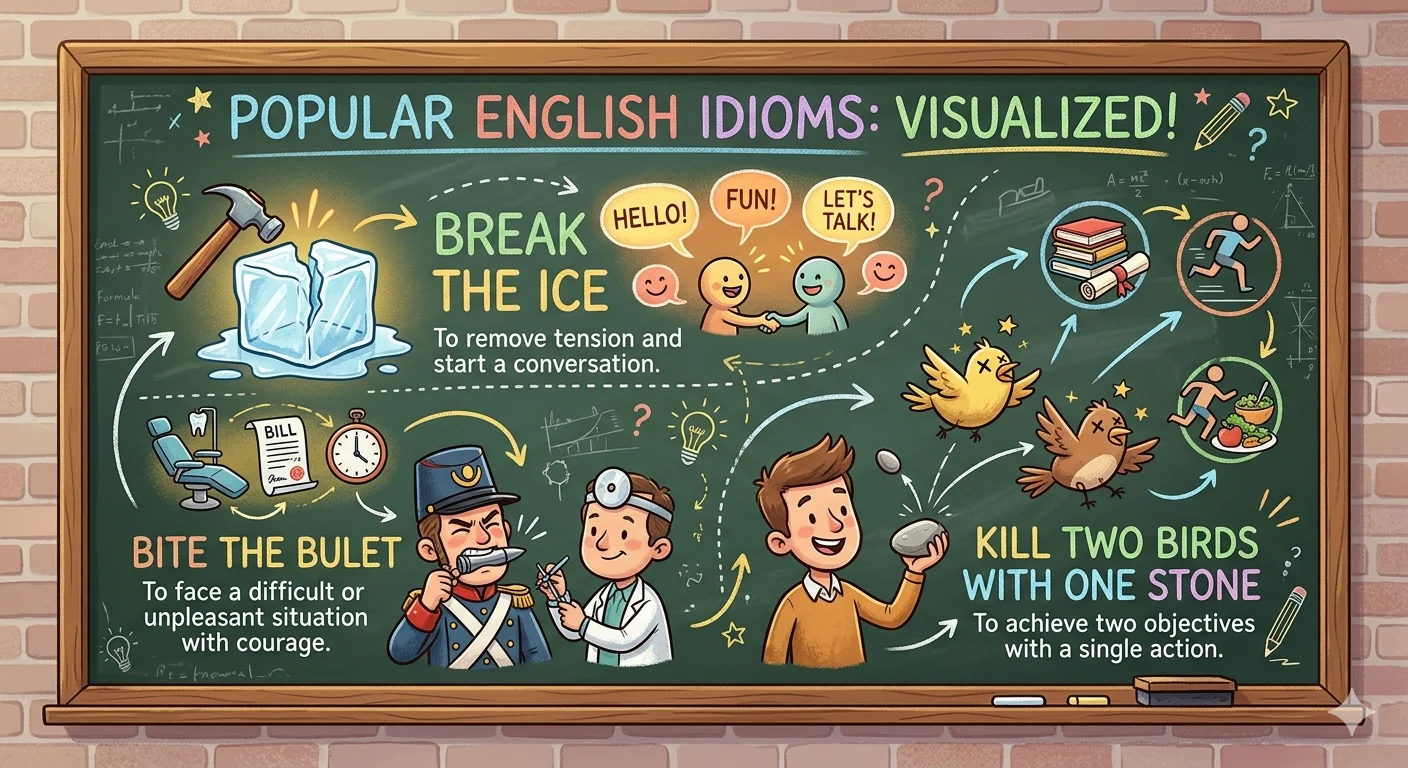
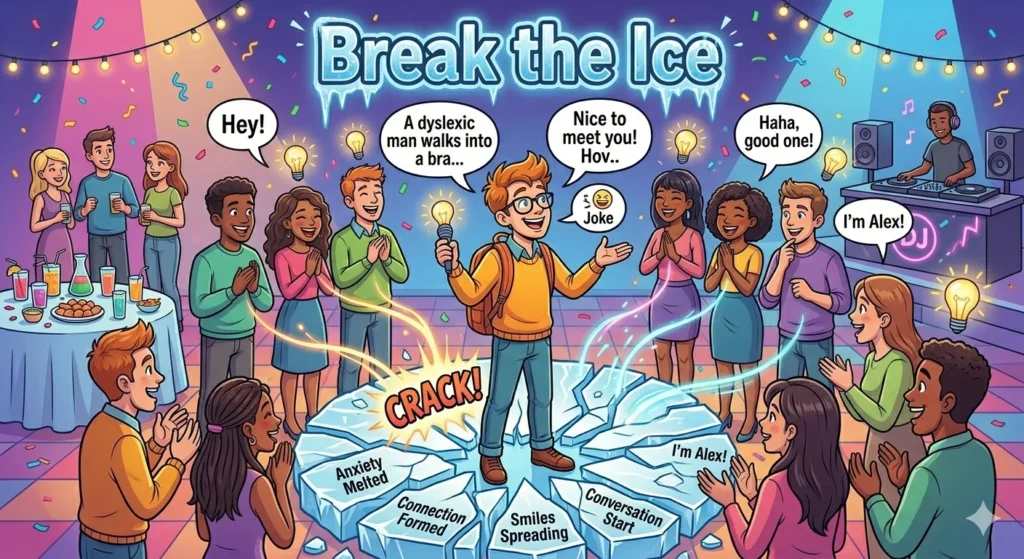
To start a conversation or activity to reduce tension or awkwardness.
Example Sentences
- At the party, John told a funny story to break the ice.
- The teacher played a game to break the ice on the first day of class.
Common Error
- ❌ “I break ice with my friend” (missing “the”)
Usage Note
- Often used in social situations to ease nervousness or start talking.
Hit the Nail on the Head
Word-by-Word Meaning
“Hit” = strike, “nail” = fastener, “head” = top part
Idiomatic/Figurative Meaning
To describe exactly what is causing a situation or problem.
Example Sentences
- You hit the nail on the head when you said teamwork was the key to success.

Common Error
- ❌ Using literally in discussions: He hit the nail on the head with a hammer.
Usage Note
- Compliments accuracy or insight in speech.
Bite the Bullet
Word-by-Word Meaning
“Bite” = use teeth, “bullet” = projectile from a gun
Idiomatic/Figurative Meaning
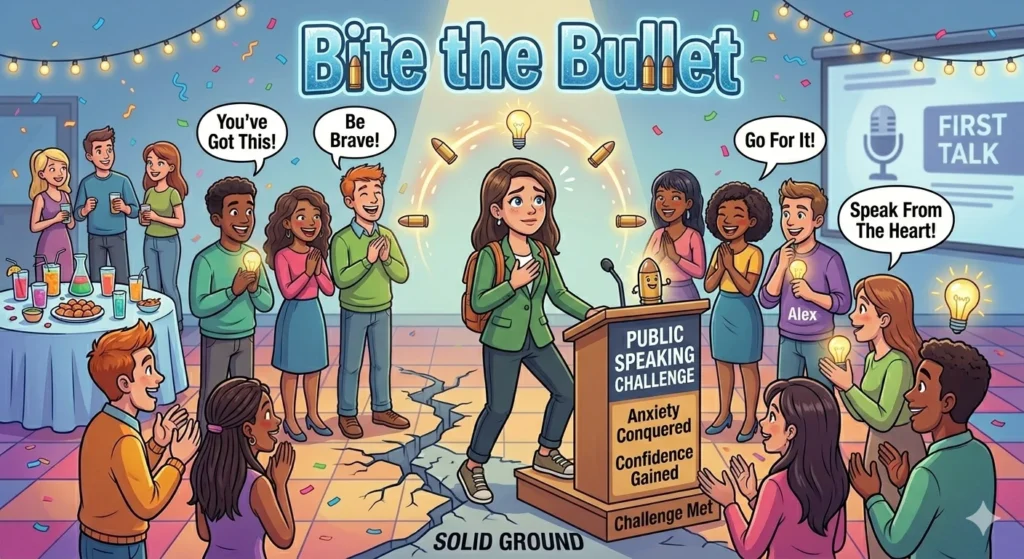
To face a painful or unpleasant situation bravely.
Example Sentences
- I had to bite the bullet and admit my mistake to my boss.
Common Error
- ❌ “I bite the bullet for fun” (wrong context)
Usage Note
- Often used when courage is needed to deal with difficulty.
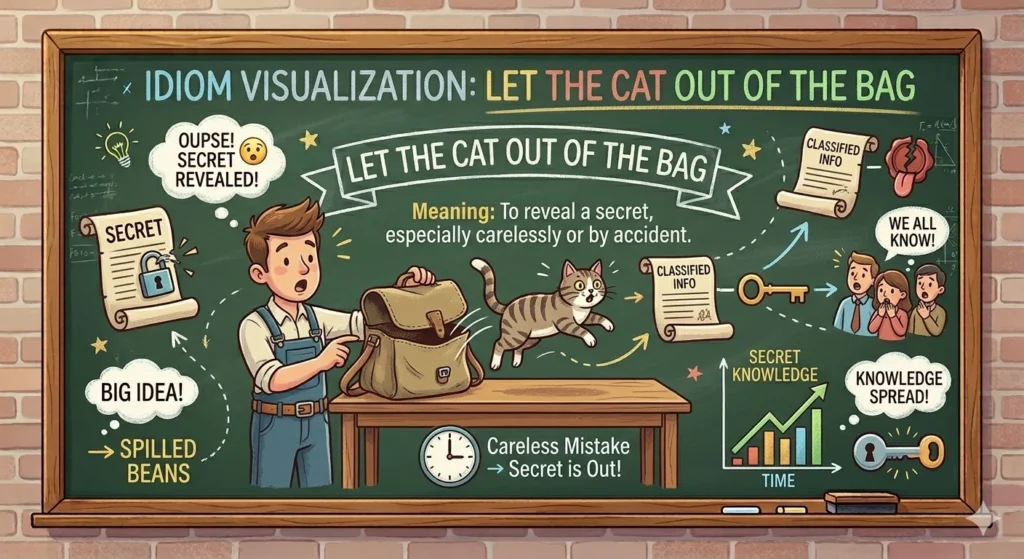
Let the Cat Out of the Bag
Word-by-Word Meaning
“Cat” = feline, “bag” = container
Idiomatic/Figurative Meaning
To accidentally reveal a secret.
Example Sentences
- She let the cat out of the bag about the surprise party.
Common Error
- ❌ “I let out the cat of the bag” (wrong preposition)
Usage Note
- Commonly used in casual conversation about secrets.
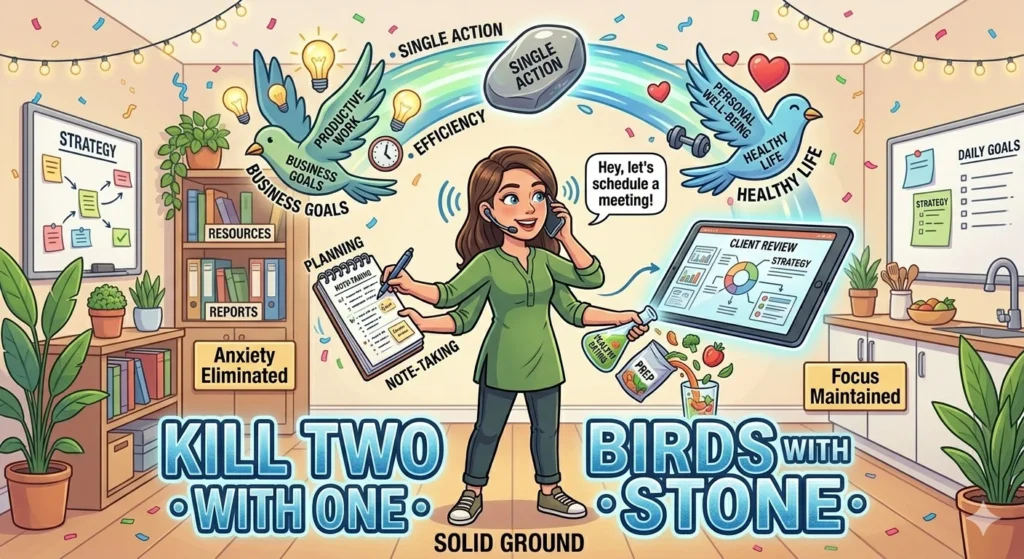
Kill Two Birds with One Stone
Word-by-Word Meaning
“Kill” = end life, “birds” = animals, “stone” = rock
Idiomatic/Figurative Meaning
To achieve two things at the same time with a single effort.
Example Sentences
- By studying while commuting, I kill two birds with one stone.
Common Error
- ❌ Using it literally in daily speech.
Usage Note
- Perfect for time-saving or efficiency.
The Ball is in Your Court
Word-by-Word Meaning
“Ball” = spherical object, “court” = playing field
Idiomatic/Figurative Meaning
It’s your turn to make a decision or take action.
Example Sentences
- I’ve done my part; now the ball is in your court.
Common Error
- ❌ Using in contexts unrelated to decisions.
Usage Note
- Common in both personal and professional settings.
Barking Up the Wrong Tree
Word-by-Word Meaning
“Barking” = making a dog sound, “tree” = plant
Idiomatic/Figurative Meaning
To make a wrong assumption or pursue a mistaken course.
Example Sentences
- If you think I will help cheat, you’re barking up the wrong tree.
Common Error
- ❌ Confusing it with criticism.
Usage Note
- Often used to correct misunderstandings politely.
Costs an Arm and a Leg
Word-by-Word Meaning
“Costs” = requires payment, “arm” & “leg” = body parts
Idiomatic/Figurative Meaning
Something is very expensive.
Example Sentences
- That designer bag costs an arm and a leg.
Common Error
- ❌ Using literally: I paid an arm and a leg. (without context)
Usage Note
- Best for informal or conversational English.
Cut to the Chase
Word-by-Word Meaning
“Cut” = remove, “chase” = pursuit
Idiomatic/Figurative Meaning
Get straight to the point without unnecessary details.
Example Sentences
- Let’s cut to the chase: what’s the main problem?
Common Error
- ❌ Misusing in formal essays.
Usage Note
- Popular in meetings, emails, and casual talks.
Devil’s Advocate
Word-by-Word Meaning
“Devil” = evil figure, “advocate” = supporter
Idiomatic/Figurative Meaning
To argue the opposite for the sake of debate or discussion.
Example Sentences
- I’ll play devil’s advocate to test your idea.
Common Error
- ❌ Thinking it means actual evil behavior.
Usage Note
- Use in debates or discussions to explore alternative views.
Feeling Under the Weather
Word-by-Word Meaning
“Under” = below, “weather” = conditions of the sky
Idiomatic/Figurative Meaning
Feeling sick or unwell.
Example Sentences
- I’m feeling under the weather, so I’ll skip work today.
Common Error
- ❌ Using for emotional sadness only.
Usage Note
- Commonly used in casual conversation about health.
Get Out of Hand
Word-by-Word Meaning
“Get” = become, “out of hand” = uncontrollable
Idiomatic/Figurative Meaning
A situation becomes difficult to control.
Example Sentences
- The meeting got out of hand after the argument.
Common Error
- ❌ Using for minor issues.
Usage Note
- Best used when describing escalating problems.
Jump on the Bandwagon
Word-by-Word Meaning
“Jump” = leap, “bandwagon” = moving cart with a band
Idiomatic/Figurative Meaning
To adopt a trend or join something popular.
Example Sentences
- Many companies jumped on the bandwagon of eco-friendly products.
Common Error
- ❌ Using literally: jumping onto a wagon.
Usage Note
- Often used to describe trends in fashion, business, or social media.
Once in a Blue Moon
Word-by-Word Meaning
“Once” = one time, “blue moon” = rare lunar event
Idiomatic/Figurative Meaning
Something that happens very rarely.
Example Sentences
- I go to the movies once in a blue moon.
Common Error
- ❌ Confusing “blue moon” with sadness.
Usage Note
- Use for rare or unusual events.
Piece of Cake
Word-by-Word Meaning
“Piece” = portion, “cake” = dessert
Idiomatic/Figurative Meaning
Something very easy to do.
Example Sentences
- That exam was a piece of cake.
Common Error
- ❌ Using for complex tasks.
Usage Note
- Common in informal conversation.
Sit on the Fence
Word-by-Word Meaning
“Sit” = rest on seat, “fence” = barrier
Idiomatic/Figurative Meaning
To avoid making a decision or taking sides.
Example Sentences
- He’s sitting on the fence about which candidate to support.
Common Error
- ❌ Using when someone has already decided.
Usage Note
- Useful for politics, debates, or disputes.
Speak of the Devil
Word-by-Word Meaning
“Speak” = talk, “devil” = evil figure
Idiomatic/Figurative Meaning
Someone appears just after being mentioned.
Example Sentences
- Speak of the devil! We were just talking about you.
Common Error
- ❌ Using for literal evil references.
Usage Note
- Casual phrase for unexpected appearances.
Spill the Beans
Word-by-Word Meaning
“Spill” = let fall, “beans” = legumes
Idiomatic/Figurative Meaning
Reveal a secret or confidential information.
Example Sentences
- Don’t spill the beans about the surprise party!
Common Error
- ❌ Misusing as literal spilling food.
Usage Note
- Perfect for gossip or revealing secrets.
Steal Someone’s Thunder
Word-by-Word Meaning
“Steal” = take, “thunder” = storm sound
Idiomatic/Figurative Meaning
To take credit or attention away from someone else.
Example Sentences
- She stole my thunder by announcing her promotion first.
Common Error
- ❌ Using for literal theft.
Usage Note
- Common in work or competition settings.
Through Thick and Thin
Word-by-Word Meaning
“Thick” = dense, “thin” = not dense
Idiomatic/Figurative Meaning
To stay loyal through good and bad times.
Example Sentences
- My best friend has supported me through thick and thin.
Common Error
- ❌ Using only for good times.
Usage Note
- Ideal for expressing loyalty in relationships.
FAQs About Big Idioms
Q1: Why are idioms important in English?
A1: Idioms make language colorful, natural, and engaging.
Q2: Can idioms be used in writing?
A2: Yes, in informal essays, blogs, and dialogues, but less in formal reports.
Q3: How can I remember idioms?
A3: Practice using them in sentences, link them to stories, or make flashcards.
Q4: Are idioms universal in English?
A4: Some are region-specific (US vs UK), so check context.
Q5: Can I invent my own idioms?
A5: Absolutely! Make them relatable and easy to understand.
Conclusion
Mastering big idioms will make your English lively, fluent, and confident. Start using 2–3 idioms each week in conversations, writing, or storytelling. Speak, write, and share them in real-life situations, and watch your English transform!

Hazel Monroe, author at SeekIdiom, explains English idioms through simple meanings and examples, helping learners improve vocabulary and everyday usage.