
When life feels tough, idioms about hope help us express positivity, faith, and optimism beautifully. Whether you’re writing a speech, motivating someone, or improving your English, these phrases add emotion and depth. Imagine telling a friend who failed an exam, “Every cloud has a silver lining” — instantly comforting, right?
Let’s explore the most useful hope idioms with easy meanings, clear examples, mistakes to avoid, and usage tips.
1. Every Cloud Has a Silver Lining
Word-by-word Meaning
Har badal ke kinare par chamak hoti hai.
Idiomatic Meaning
Har mushkil me koi na koi acha pehlu hota hai.

Examples
- She failed once, but every cloud has a silver lining — she learned a lot.
- Don’t worry, good things come after bad days.
Common Error
❌ Every cloud have
✔ Every cloud has
Usage Note
Encouragement dene ke liye use hota hai.
2. Hope Against Hope
Word-by-word Meaning
Bohot kam umeed ke bawajood umeed rakhna.
Idiomatic Meaning
Baray mushkil waqt me bhi umeed na chorhna.
Examples
- He hoped against hope for his recovery.
- We hope against hope that things change.

Common Error
❌ hopes against hope
✔ hope against hope
Usage Note
Emotional aur serious tone.
3. Light at the End of the Tunnel
Word-by-word Meaning
Andheray tunnel ke end par roshni.
Idiomatic Meaning
Mushkil waqt ke baad behtari ki nishani.
Examples
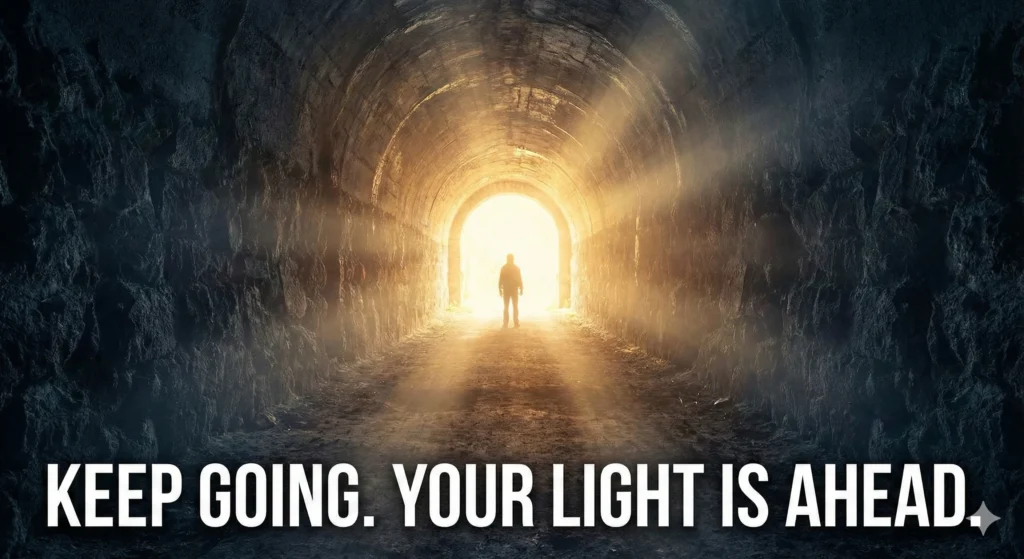
- After months of struggle, she saw light at the end of the tunnel.
- Signs of progress gave us hope.
Common Error
Not light inside tunnel.
Usage Note
Improvement nazar aye to use hota hai.
4. Fingers Crossed
Word-by-word Meaning
Ungliyan cross karna.
Idiomatic Meaning
Good luck ki umeed lagana.
Examples

- Exam kal hai — fingers crossed!
- Fingers crossed I get the job.
Common Error
Not finger crossed.
Usage Note
Casual conversation me perfect.
5. Where There’s a Will, There’s a Way
Word-by-word Meaning
Jahan irada ho, wahan raasta bhi milta hai.
Idiomatic Meaning
Mehnat aur determination se sab mumkin.
Examples

- He practiced daily — where there’s a will, there’s a way.
- Hard work plus hope leads to success.
Common Error
Phrase kabhi alter nahi hota.
Usage Note
Motivational speeches me common.
6. Keep Your Chin Up
Word-by-word Meaning
Chin uchi rakho.
Idiomatic Meaning
Himmat rakho, mayus na ho.
Examples
- You lost today, but keep your chin up.
- She kept her chin up during tough days.
Common Error
Not keep your head up (different idiom).
Usage Note
Support dene ke liye.
7. Look on the Bright Side
Word-by-word Meaning
Roshan pehlu par nazar rakho.
Idiomatic Meaning
Positive cheezein dhoondo.
Examples
- Plan failed but look on the bright side — you learned something.
- Bright side thinking reduces stress.
Common Error
Not look at the bright side (less common).
Usage Note
Negative situation ko soften karta hai.
8. Hang in There
Word-by-word Meaning
Jamae raho, chorho mat.
Idiomatic Meaning
Sabar karo, behtar waqt ayega.
Examples
- Hang in there, success will come.
- He hung in there even when things were bad.
Common Error
Not hang there.
Usage Note
Motivating tone.
9. All Is Not Lost
Word-by-word Meaning
Har cheez nahi khatma hui.
Idiomatic Meaning
Abhi umeed baqi hai.
Examples
- You still have time — all is not lost.
- Mistakes happen, but hope stays.
Common Error
Not everything is lost (literal).
Usage Note
Failure ke baad encourage karne me.
10. A Ray of Hope
Word-by-word Meaning
Umeed ki ek kiran.
Idiomatic Meaning
Thodi ya halki umeed.
Examples
- New results show a ray of hope.
- Her smile was a ray of hope.
Common Error
Not small hope ray.
Usage Note
Soft & poetic tone.
11. Keep Hope Alive
Word-by-word Meaning
Umeed ko zinda rakho.
Idiomatic Meaning
Haalaat mushkil hon tab bhi umeed barkarar rakhna.
Examples
- We must keep hope alive for peace.
- The team kept hope alive till the last minute.
Common Error
Don’t shorten to just keep alive.
Usage Note
Emotional & motivational.
12. Build Castles in the Air
Word-by-word Meaning
Hawa me qile banana.
Idiomatic Meaning
Ghair-realistic sapne dekhna.
Examples
- You can’t just build castles in the air, work too.
- He loves building castles in the air.
Common Error
Not castles in sky.
Usage Note
Advice ya warning tone me.
13. Hope Springs Eternal
Word-by-word Meaning
Umeed hamesha phooti rehti hai.
Idiomatic Meaning
Insaan kabhi umeed nahi chhorta.
Examples
- Hope springs eternal — maybe next time!
- Even after failure, hope springs eternal.
Common Error
Don’t shorten to spring eternal.
Usage Note
Quotes, poetry, articles me common.
14. The Sky’s the Limit
Word-by-word Meaning
Asmaan tak had.
Idiomatic Meaning
Koi limit nahi — sab mumkin.
Examples
- With hard work, the sky’s the limit.
- Dream big — sky’s the limit.
Common Error
Not sky is limit.
Usage Note
Motivational expression.
15. In the Nick of Time
Word-by-word Meaning
Bilkul last moment par.
Idiomatic Meaning
Waqt se thori der pehle bach jana.
Examples
- Help arrived in the nick of time.
- Hope returned in the nick of time.
Common Error
Not nick time.
Usage Note
Survival / rescue context me.
16. Not Give Up Hope
Word-by-word Meaning
Umeed na chorna.
Idiomatic Meaning
Situation mushkil ho to bhi hopeful rehna.
Examples
- We didn’t give up hope.
- Never give up hope in hard situations.
Common Error
Don’t replace hope with hopes unnecessarily.
Usage Note
Encouraging tone.
17. On the Horizon
Word-by-word Meaning
Aage dikhai dena.
Idiomatic Meaning
Kuch acha ya naya jaldi hone wala hai.
Examples
- Better opportunities are on the horizon.
- A new beginning is on the horizon.
Common Error
Not in horizon.
Usage Note
Future expectation.
18. A Glimmer of Hope
Word-by-word Meaning
Umeed ki halki chamak.
Idiomatic Meaning
Choti si umeed bhi bachi hai.
Examples
- Success improved — a glimmer of hope remained.
- One yes was a glimmer of hope for us.
Common Error
Not glitter of hope.
Usage Note
Low chance but still positive.
19. Dream Big
Word-by-word Meaning
Bade khwab dekho.
Idiomatic Meaning
High goals set karo, umeed rakho.
Examples
- Dream big and stay hopeful.
- She dreams big about her career.
Common Error
Not big dream (not idiomatic).
Usage Note
Motivational & friendly.
20. Hope for the Best
Word-by-word Meaning
Behtareen anjaam ki umeed rakhna.
Idiomatic Meaning
Positive outcome ki expectation.
Examples
- We prepared well — now hope for the best.
- Let’s hope for the best in tough times.
Common Error
Not hope best.
Usage Note
Daily conversation me bohot common.
FAQs
1. What are idioms about hope?
Idioms expressing positivity, expectations, and belief in better outcomes.
2. Why learn hope idioms?
They make your English emotional, motivational, and natural.
3. Are idioms used formally?
Yes, many suitable for essays, speeches & conversations.
4. How to remember idioms easily?
Use them in sentences daily & attach visuals for memory.
5. Is using idioms important for writing?
Idioms improve tone, creativity, flow & expression.
Conclusion
Hope keeps us going — and these idioms about hope make language richer and inspiring. Use them in messages, stories, essays, speeches, or daily conversations. Pick 3 idioms and practice them today — small steps create big improvement.

Hazel Monroe, author at SeekIdiom, explains English idioms through simple meanings and examples, helping learners improve vocabulary and everyday usage.