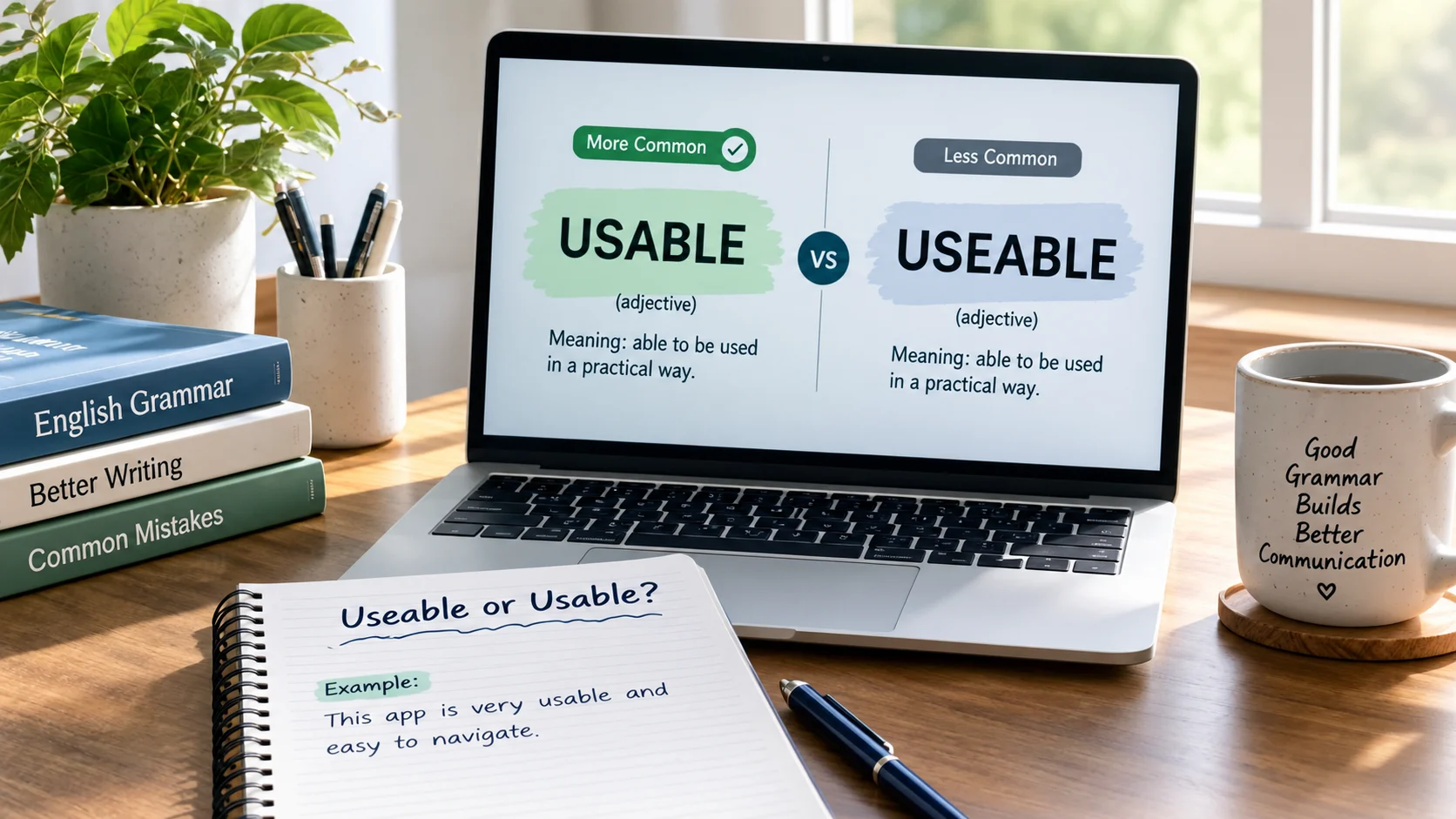
Usable is the more common and generally preferred spelling when you mean that something can be used, works properly, or is suitable for a particular purpose. Useable is also a recognized variant, but it is much less common in modern English. So, if you are unsure which spelling to use, usable is usually the safest choice.
For example, you would normally write, “The old computer is still usable,” or “The website has a clean and usable design.” The spelling useable is not simply a mistake, but most readers will be more familiar with usable.
Useable or Usable: Which One Is Correct?
Both usable and useable can be found in English, and both can mean capable of being used or suitable for use.
However, usable is far more common and is generally the preferred spelling in modern writing.
Usable
The equipment is still usable.
Useable
The equipment is still useable.
The meaning is essentially the same, but the first spelling is much more conventional.
If you are writing a professional email, article, report, academic paper, or website content, usable is the better default.
What Does Usable Mean?
Usable is an adjective that means fit or suitable for use. It can describe something that can still function, be used effectively, or serve its intended purpose.
For example:
The laptop is old, but it is still usable.
Here, usable means that the laptop can still be used.
The word can describe many different things, including:
- Products
- Equipment
- Software
- Websites
- Information
- Materials
- Space
- Resources
- Tools
- Data
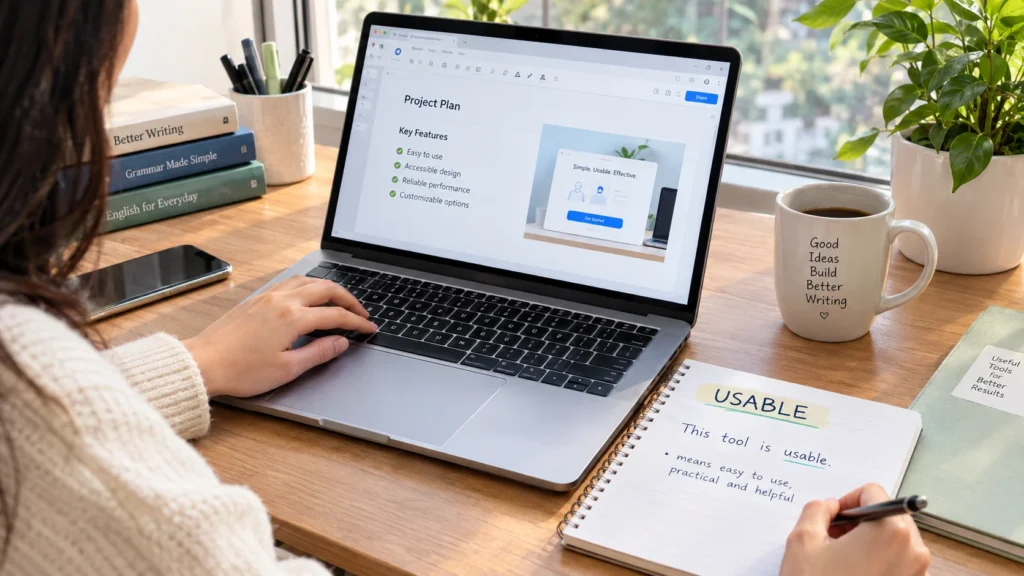
For example:
We need more usable information.
The room has very little usable space.
The application has a simple and usable interface.
Most of the damaged equipment is still usable.
In each example, usable describes something that can be used or is suitable for use.
What Does Useable Mean?
Useable has essentially the same meaning as usable. It can mean that something is capable of being used or suitable for a particular purpose.
For example:
The remaining materials are still useable.
However, useable is much less common than usable.
Some dictionaries recognize useable as a variant spelling of usable, so it should not automatically be treated as a spelling error. Merriam-Webster, for example, lists useable as a variant of usable.
The practical rule for writers is simple:
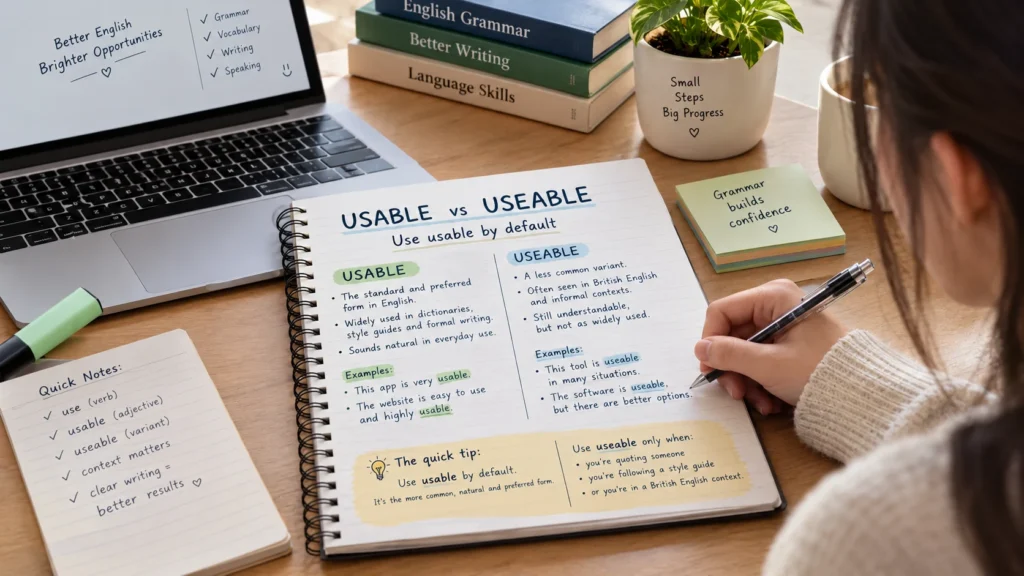
Both forms exist, but use “usable” by default.
Usable vs Useable: What’s the Difference?
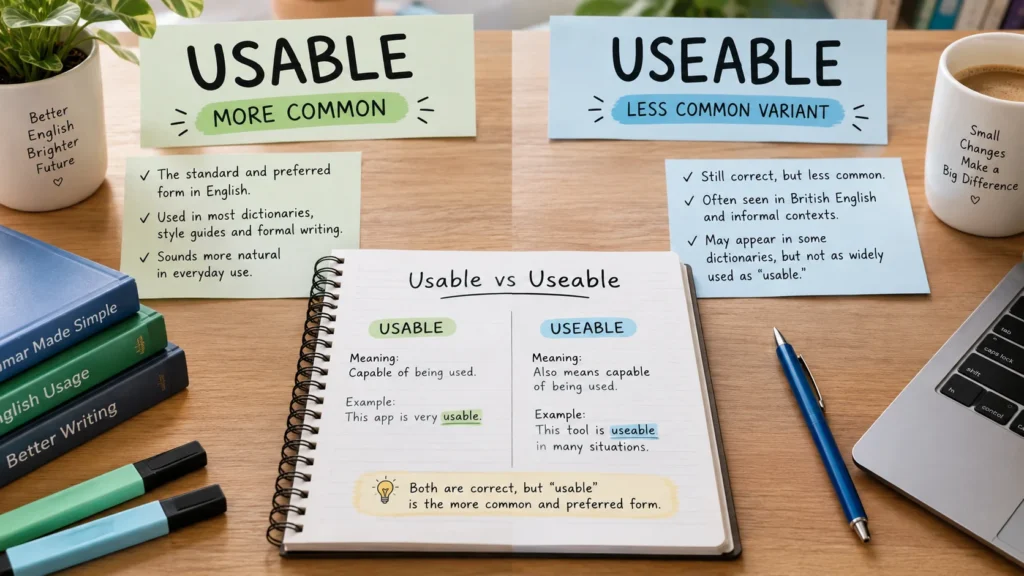
The main difference is frequency and spelling preference, not meaning.
| Spelling | Meaning | Usage |
|---|---|---|
| usable | Fit or suitable for use | Much more common |
| useable | Fit or suitable for use | Less common variant |
Both words can describe something that can be used.
For example:
The old furniture is still usable.
You could also see:
The old furniture is still useable.
The first sentence is more likely to appear in modern edited English.
This is why usable is usually the better choice for general, professional, and online writing.
Why Is Usable More Common Than Useable?
The spelling usable may seem unusual at first because the base verb is use.
It can seem logical to write:
use + able = useable
But English does not always preserve the complete spelling of a base word when a suffix is added.
The established form is:
use → usable
The spelling useable has also developed as a variant, which explains why you may encounter both forms.
The important point is that usable has become the dominant spelling in modern English.
Is Useable Incorrect?
Not necessarily.
Calling useable completely incorrect would be too strong because it is recognized as a variant spelling in dictionary usage.
A more accurate explanation is:
Usable is the standard and much more common spelling, while useable is a less common variant.
This distinction matters because many spelling comparisons incorrectly label useable as a misspelling.
If you see useable in a book, website, or document, the intended meaning is normally clear. However, if you are choosing the spelling yourself, usable is the better option.
Usable in American English
Usable is widely used in American English.
You will often see it in professional and technical contexts, especially when discussing products, websites, software, and user experience.
For example:
The new website is more usable than the old one.
We need a usable solution.
The software is simple and usable.
Is this information usable for our report?
Useable can occur, but it is much less common.
Therefore, for American English writing, usable is the safest choice.
Usable in British English
Usable is also common in British English.
For example:
The room is small but still usable.
The information needs to be presented in a more usable format.
The equipment is no longer usable.
Useable also appears as a variant, so this is not a strict American-versus-British spelling difference.
Unlike spelling differences such as color/colour, both American and British English commonly use usable.
Examples of Usable
Here are some natural examples of usable in everyday and professional English:
The phone is old, but it is still usable.
We need a more usable website.
Only half of the building has usable space.
The instructions are clear and usable.
The data is not usable in its current form.
The tool is lightweight, affordable, and usable.
The damaged furniture is still usable.
We are looking for a usable solution.
These examples show that usable can describe something that works or can serve a practical purpose.
Examples of Useable
Although less common, useable can also be found in English.
For example:
The remaining materials are still useable.
We found several useable parts in the storage room.
The old equipment was damaged but still useable.
These sentences have the same basic meaning if usable is substituted:
The remaining materials are still usable.
We found several usable parts in the storage room.
The old equipment was damaged but still usable.
For most readers, the second versions will look more natural.
Usable or Useable in Professional Writing
If you are writing for a professional audience, usable is generally the better choice.
For example:
Preferred:
We need a more usable website.
Less common:
We need a more useable website.
Another example:
Preferred:
The data is not usable in its current form.
Less common:
The data is not useable in its current form.
Using usable does not change the meaning. It simply follows the spelling most readers are accustomed to seeing.
Usable in Technology and UX
The word usable is especially common in technology, website design, and user experience.
You may see phrases such as:
- usable interface
- usable website
- usable software
- usable design
- usable data
- usable information
- usable features
For example:
The app has a simple and usable interface.
Here, usable can mean more than merely “capable of being used.” In a design context, it can suggest that something is practical and easy or effective to use.
This is why usable is an important word in discussions about websites, applications, products, and digital experiences.
Usable vs Useful
Usable and useful are related, but they do not mean exactly the same thing.
Usable means capable or suitable of being used.
The old computer is still usable.
Useful means helpful or beneficial.
The information is very useful.
Something can be usable without being particularly useful.
For example:
The old phone is still usable, but it is not very useful.
The phone works, so it is usable. However, it may not provide much practical benefit, so it may not be very useful.
Common Mistakes With Usable and Useable
Mistake 1: Thinking Useable Is Always Wrong
Useable is a recognized variant, so it is not accurate to call it completely incorrect.
However, usable is much more common and is usually the better choice.
Mistake 2: Assuming Both Forms Are Equally Common
They are not.
Both spellings can have the same meaning, but usable is considerably more common in modern English.
Mistake 3: Choosing Useable Because It Looks More Logical
The spelling useable may look natural because it appears to combine use and -able directly.
However, the established spelling is usable, and that is the form most readers expect.
Mistake 4: Thinking This Is an American vs British Difference
It is not primarily a difference between American and British English.
Usable is widely used in both varieties.
How to Remember the Correct Spelling
If you are unsure, use this simple pattern:
Use → usable
Think of usable as the default spelling.
For example:
The product is affordable and usable.
The information is clear and usable.
The equipment is still usable.
You do not need to use useable simply because it seems to follow the base word use more closely.
Usable or Useable: Which Should You Use?
If you need to choose just one spelling, choose usable.
It is:
- More common
- More familiar to readers
- Widely used in American English
- Widely used in British English
- Appropriate for formal and informal writing
- Common in professional and technical contexts
Useable is still a legitimate variant, but it is less common.
So, if you are writing an article, email, essay, report, product description, or website page, usable is generally the strongest choice.
Frequently Asked Questions
Is it usable or useable?
Both spellings exist, but usable is much more common and generally preferred. Useable is a recognized variant spelling.
Is useable a correct word?
Yes. Useable is recognized as a variant of usable, although it is much less common.
Which is more common, usable or useable?
Usable is significantly more common in modern English and is the spelling most writers should choose by default.
Is usable correct in American English?
Yes. Usable is the standard and widely preferred spelling in American English.
Is usable correct in British English?
Yes. Usable is also widely used in British English. Useable can occur as a less common variant.
Does usable mean useful?
No. Usable means something can be used or is suitable for use, while useful means something provides help or practical value.
Should I use usable in formal writing?
Yes. Usable is a clear and conventional choice for professional, academic, and formal writing.
Why do people write useable?
Some writers use useable because it appears to combine use directly with -able. It is also a recognized variant. However, usable is much more common.
Conclusion
When choosing between useable or usable, usable is the spelling you should normally choose. It means that something is capable of being used, suitable for use, or practical for a particular purpose.
Useable is not simply a spelling mistake. It is a recognized but much less common variant of usable. Both forms can have the same meaning, but usable is more familiar and conventional in modern American and British English.
So, if you are unsure which spelling to use, remember this simple rule:
Use “usable” by default.
For example:
The product is affordable, practical, and usable.
That is the spelling most readers will expect.

Adrian Wells, author at SeekIdiom, shares easy explanations of English idioms with examples to help learners expand vocabulary and speak more confidently.