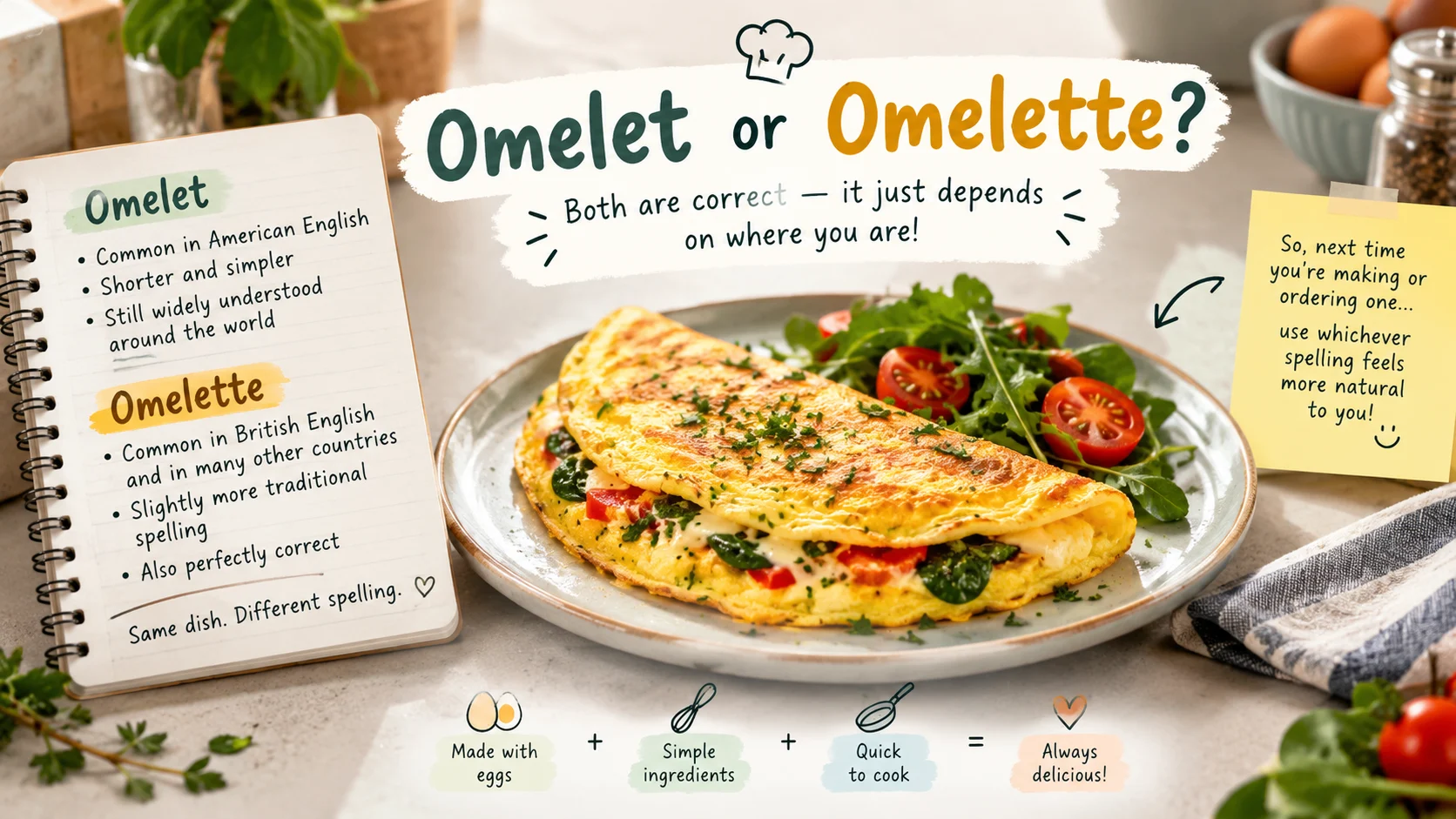
Omelet and omelette are both correct spellings. The main difference is regional. Omelet is the standard spelling in American English, while omelette is more common in British English and many other varieties of English. Both words refer to the same dish made from beaten eggs, usually cooked in a pan and served with fillings such as cheese, vegetables, herbs, or meat.
If you are writing for an American audience, omelet is generally the best choice. If you are following British English, omelette is the more familiar spelling. Neither spelling changes the meaning of the word.
Omelet or Omelette: Which One Is Correct?
Both omelet and omelette are correct.
The difference is mainly based on regional spelling conventions:
- Omelet is especially common in American English.
- Omelette is especially common in British English.
- Omelette is also widely used in many other varieties of English.
- Both spellings describe the same egg dish.
For example:
I ordered a cheese omelet for breakfast.
In British English, the same sentence may appear as:
I ordered a cheese omelette for breakfast.
Both are correct.
What Does Omelet Mean?
An omelet is a dish made from beaten eggs that are cooked in a pan until they are set. It can be served plain or filled with ingredients such as cheese, vegetables, mushrooms, meat, or herbs.
For example:
- She made a cheese omelet for breakfast.
- I ordered a vegetable omelet at the café.
- He added mushrooms and spinach to his omelet.
- The restaurant serves a three-egg omelet.
The spelling omelet is particularly common in American English.
What Does Omelette Mean?
Omelette has the same meaning as omelet. It refers to the same type of egg dish and is simply a different spelling.
Examples include:
- She made a cheese omelette for breakfast.
- He ordered a mushroom omelette.
- The chef prepared a traditional omelette.
- I added fresh herbs to my omelette.
The spelling omelette is especially common in British English.
Omelet vs Omelette: What’s the Difference?
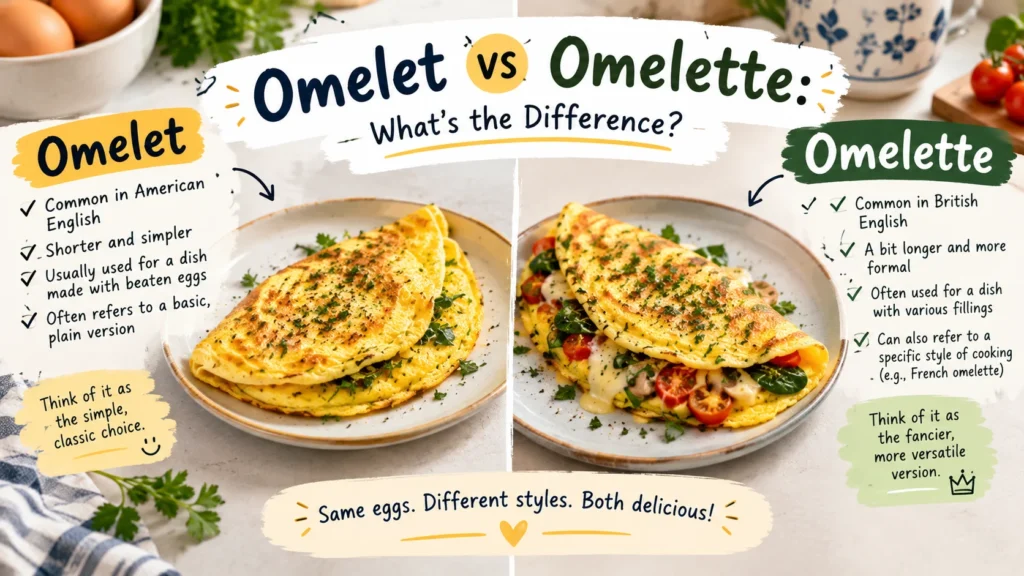
The main difference between omelet and omelette is spelling and regional preference, not meaning.
| Spelling | Common Usage | Meaning |
|---|---|---|
| omelet | American English | A dish made from cooked beaten eggs |
| omelette | British English and many other varieties | A dish made from cooked beaten eggs |
Neither spelling describes a different kind of food. An American cookbook may use omelet, while a British cookbook may use omelette.
Is Omelet American English?
Yes. Omelet is the spelling commonly used in American English.
If you are writing an American recipe, food blog, menu, or article, you will typically see forms such as:
- Cheese Omelet
- Vegetable Omelet
- Mushroom Omelet
- Easy Breakfast Omelet
For an American audience, omelet is usually the most natural choice.
Is Omelette British English?
Yes. Omelette is especially common in British English.
For example:
- Cheese Omelette
- Mushroom Omelette
- Vegetable Omelette
- French Omelette
British readers will generally understand omelet, but omelette is the more familiar traditional spelling in British usage.
Why Are There Two Spellings?
The word omelette comes from French, and English has developed more than one established spelling of the word.
The shorter spelling omelet became particularly common in American English, while omelette remained widely used in British English and other varieties.
This is why you can find both spellings in dictionaries, cookbooks, restaurant menus, and everyday writing.
The important point is that the two spellings have the same basic meaning.
Omelet or Omelette in Formal Writing
Both spellings are acceptable in formal writing. Your choice should depend on the variety of English you are using.
For American English:
The chef prepared a cheese omelet with fresh herbs.
For British English:
The chef prepared a cheese omelette with fresh herbs.
Neither sentence is grammatically better. The spelling simply reflects the regional convention.
If you are writing for an international audience, either form can work. The most important thing is to use one spelling consistently.
Common Types of Omelet or Omelette
The dish can be prepared with many different fillings and styles.
Cheese Omelet
A cheese omelet contains cheese that is added to the eggs before they are folded or served.
Example:
She made a cheddar cheese omelet for breakfast.
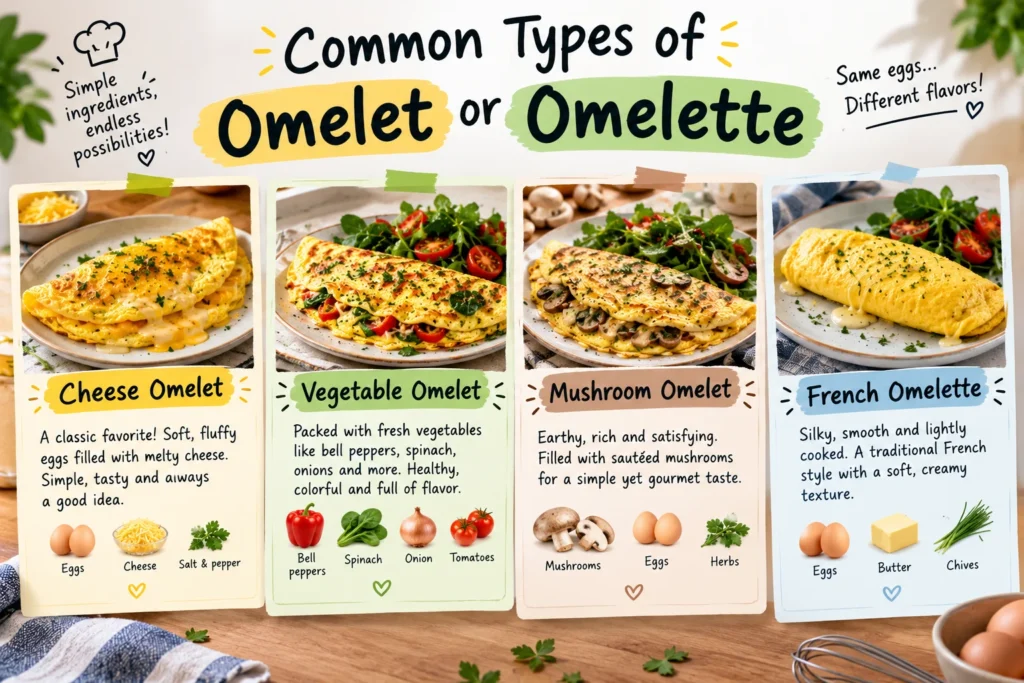
Vegetable Omelet
A vegetable omelet can contain ingredients such as onions, peppers, tomatoes, spinach, or mushrooms.
Example:
I ordered a vegetable omelet with spinach and mushrooms.
Mushroom Omelet
A mushroom omelet contains cooked mushrooms and may also include cheese, herbs, or other vegetables.
Example:
He made a mushroom omelet for brunch.
French Omelette
A French omelette is traditionally associated with a smooth exterior and a soft interior and is usually folded before serving.
Example:
The chef prepared a classic French omelette.
Examples of Omelet in Sentences
Here are some examples using the American spelling:
- I made a cheese omelet for breakfast.
- She ordered a vegetable omelet at the restaurant.
- He added spinach to his omelet.
- The chef prepared a fluffy omelet.
- We had a three-egg omelet with mushrooms.
- My favorite breakfast is a cheese omelet.
- She learned how to make an omelet at home.
- The menu includes several different omelet options.
Examples of Omelette in Sentences
Here are examples using the British spelling:
- I made a cheese omelette for breakfast.
- She ordered a mushroom omelette.
- He added fresh herbs to his omelette.
- The chef prepared a traditional omelette.
- We had a vegetable omelette at the hotel.
- She prefers a soft French omelette.
- The restaurant serves omelettes with different fillings.
- He learned how to make an omelette at culinary school.
Common Mistakes With Omelet and Omelette
Mistake 1: Thinking One Spelling Is Wrong
A common mistake is assuming that omelet or omelette is incorrect. Both are established English spellings.
Mistake 2: Treating Them as Different Foods
The two words do not describe different dishes. Omelet and omelette have the same basic meaning.
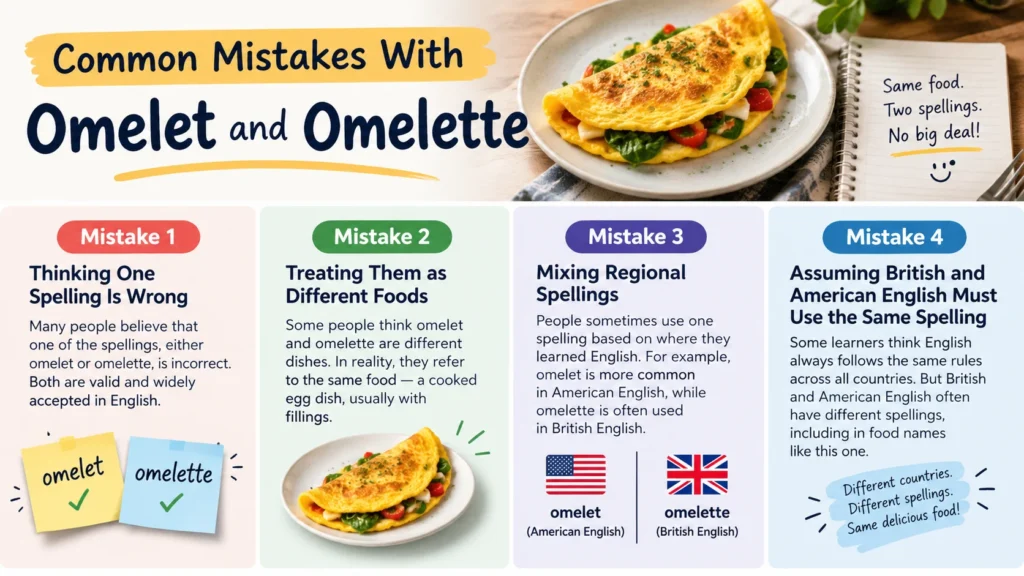
Mistake 3: Mixing Regional Spellings
If you are writing consistently in American English, switching between omelet and omelette can make your article or recipe look inconsistent.
Choose the spelling that matches your target variety of English.
Mistake 4: Assuming British and American English Must Use the Same Spelling
American and British English have many spelling differences. Omelet and omelette are one example of regional variation.
Omelet or Omelette for a Recipe?
Both spellings can be used in recipes.
For an American recipe:
Easy Cheese Omelet
Beat the eggs in a bowl and season with salt and pepper.
For a British recipe:
Easy Cheese Omelette
Beat the eggs in a bowl and season with salt and pepper.
The spelling does not affect the recipe or cooking method.
Omelet or Omelette for a Menu?
Restaurant menus may use either spelling depending on the restaurant’s location and style.
An American menu might list:
- Cheese Omelet
- Vegetable Omelet
- Mushroom Omelet
A British menu might list:
- Cheese Omelette
- Vegetable Omelette
- Mushroom Omelette
Both are perfectly understandable. If a restaurant follows a particular style guide or regional convention, it should use that spelling consistently.
How to Remember the Difference
A simple way to remember the difference is:
Omelet = commonly used in American English
Omelette = commonly used in British English
You do not need to memorize a difference in meaning because there isn’t one.
If your audience is primarily American, choose omelet. If you are writing in British English, choose omelette.
Omelet or Omelette: Which Should You Use?
Your choice depends on your audience.
Use omelet when:
- You are writing in American English.
- Your audience is primarily in the United States.
- You are following American spelling conventions.
- You are writing an American recipe or food article.
Use omelette when:
- You are writing in British English.
- Your audience is primarily in the United Kingdom.
- You are following British spelling conventions.
- You prefer the traditional spelling used in many international contexts.
For an international audience, either spelling is understandable and accepted. Consistency matters more than choosing one spelling as universally correct.
Frequently Asked Questions
Is it omelet or omelette?
Both omelet and omelette are correct spellings. Omelet is especially common in American English, while omelette is especially common in British English and many other varieties.
Is omelette British or American?
Omelette is more strongly associated with British English, while American English generally uses omelet.
Is omelet American English?
Yes. Omelet is the spelling commonly used in American English.
Does omelet mean the same as omelette?
Yes. Both words refer to the same egg dish. The difference is primarily regional spelling.
Which spelling should I use in American English?
Use omelet if you are following standard American English usage.
Which spelling should I use in British English?
Use omelette, which is the more familiar spelling in British English.
Is omelette wrong in American English?
No. Omelette is a recognized spelling and is easily understood by American readers. However, omelet is generally the more typical American spelling.
Is omelet wrong in British English?
No. British readers understand omelet, although omelette is generally the more familiar British spelling.
Why does omelette have two T’s?
The spelling omelette reflects the word’s French form. English also developed the shorter spelling omelet, which became particularly established in American English.
Conclusion
Omelet and omelette are both correct spellings for the same dish. The main difference is regional usage. Omelet is especially common in American English, while omelette is more common in British English and many other varieties of English.
If you are writing for an American audience, omelet is generally the best choice. If you are following British English, omelette is the natural choice. Whichever spelling you choose, use it consistently throughout your writing.

Adrian Wells, author at SeekIdiom, shares easy explanations of English idioms with examples to help learners expand vocabulary and speak more confidently.