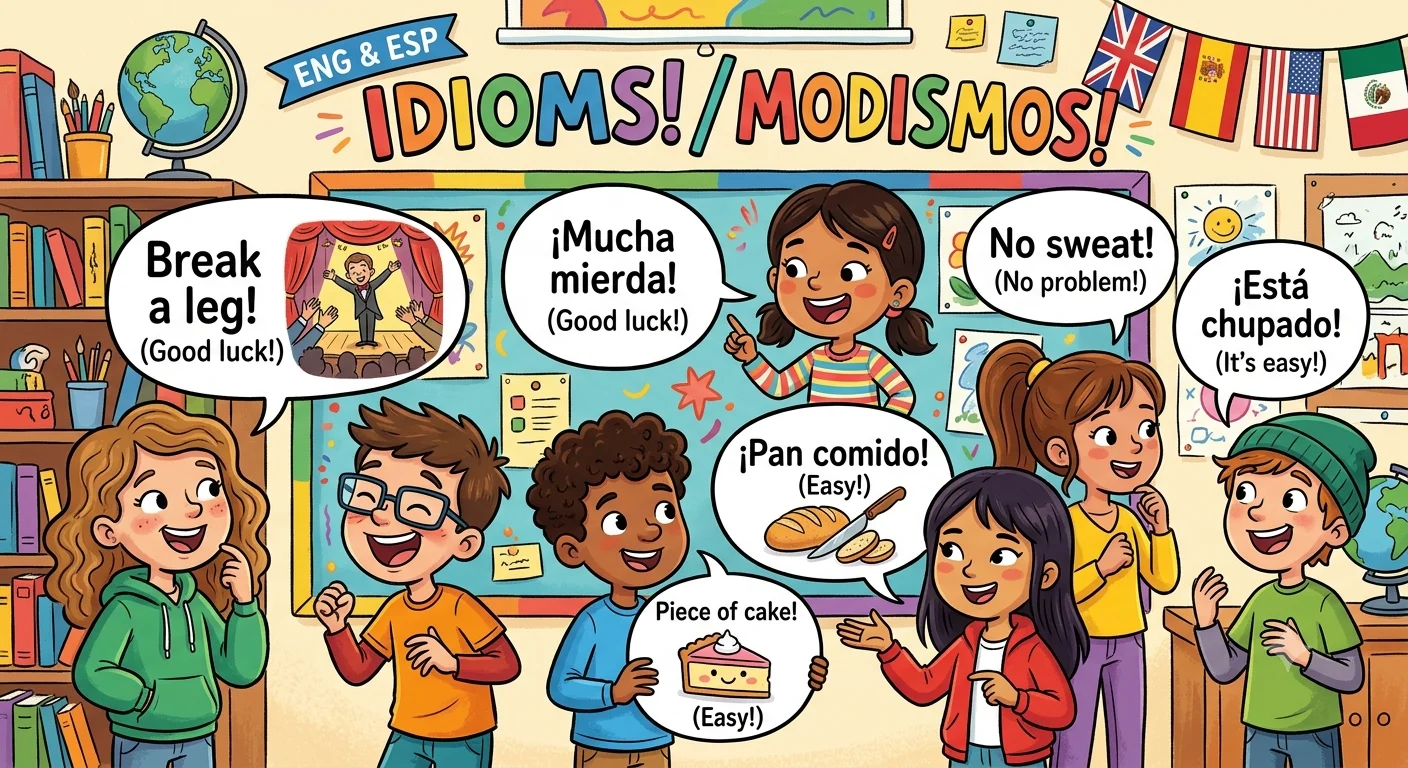
Learning idioms is one of the most enjoyable ways to master a language. Imagine trying to explain “break the ice” in Spanish or say “it’s raining cats and dogs” in another language. This guide covers 20 essential idioms English to Spanish, with word-for-word meanings, figurative interpretations, examples, common errors, and usage tips to help you speak like a native.
It’s Raining Cats and Dogs
Word-by-Word Meaning
It’s raining: Está lloviendo
Cats and dogs: Gatos y perros
Idiomatic/Figurative Meaning
It’s raining heavily.
Example Sentences

- English: “Don’t forget your umbrella—it’s raining cats and dogs!”
- Spanish: “¡No olvides tu paraguas, está lloviendo a cántaros!”
Common Error
Literal translation “está lloviendo gatos y perros” is incorrect.
Usage Note
Use “a cántaros” or “a mares” for heavy rain in Spanish.
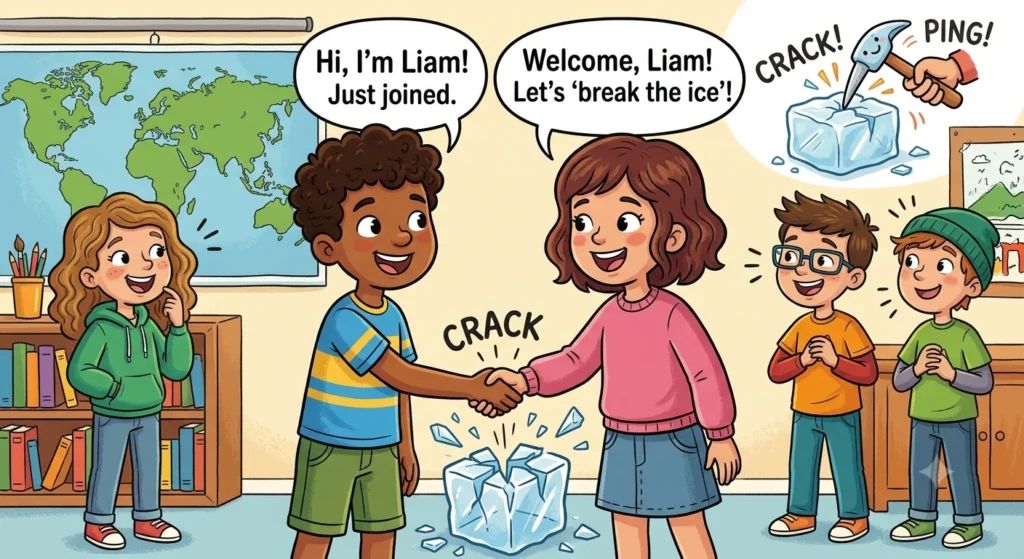
Break the Ice
Word-by-Word Meaning
Break: Romper
Ice: Hielo
Idiomatic/Figurative Meaning
To start a conversation or ease tension in a social situation.
Example Sentences
- English: “He told a joke to break the ice.”
- Spanish: “Contó un chiste para romper el hielo.”
Common Error
Avoid literal translation “romper el hielo” in serious contexts; it works best in social interactions.
Usage Note
Widely used in meetings, parties, or networking events.
Hit the Nail on the Head
Word-by-Word Meaning
Hit: Golpear
Nail: Clavo
Head: Cabeza
Idiomatic/Figurative Meaning
To describe something exactly right.
Example Sentences
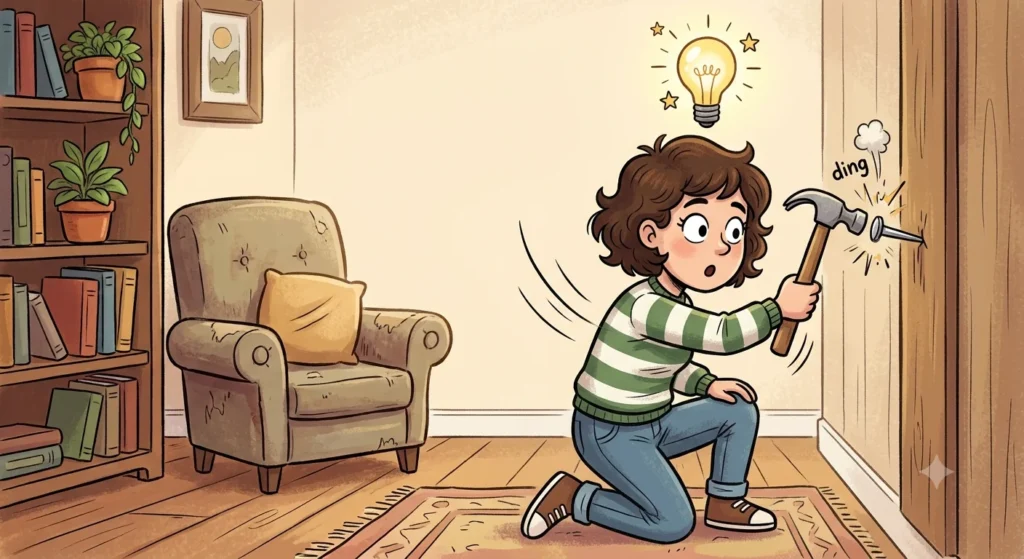
- English: “You hit the nail on the head with your analysis.”
- Spanish: “Diste en el clavo con tu análisis.”
Common Error
Do not translate literally as “golpear el clavo en la cabeza.”
Usage Note
Useful in conversations, reports, or presentations.
Piece of Cake
Word-by-Word Meaning
Piece: Trozo
Cake: Pastel
Idiomatic/Figurative Meaning
Something very easy to do.
Example Sentences
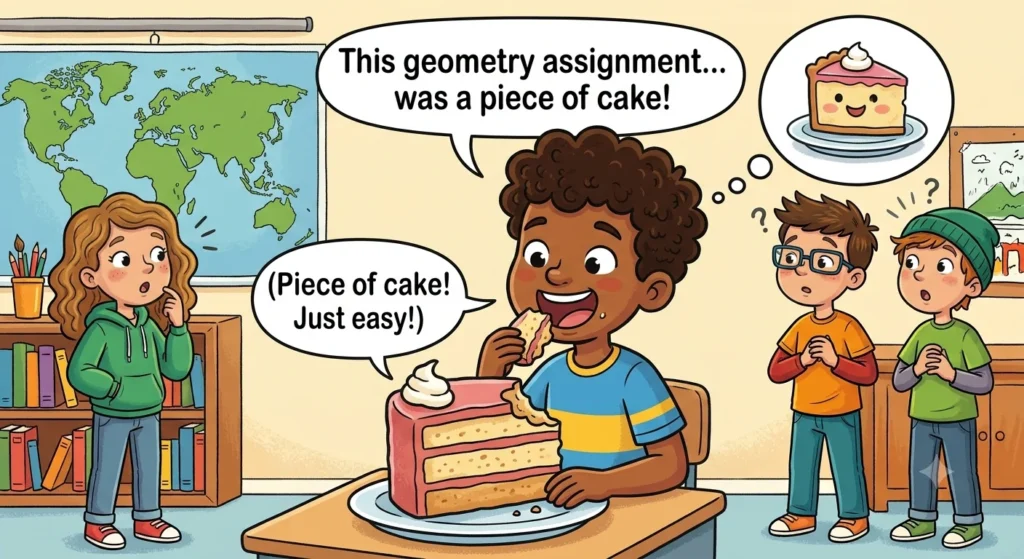
- English: “The exam was a piece of cake.”
- Spanish: “El examen fue pan comido.”
Common Error
Avoid literal translation “un trozo de pastel.”
Usage Note
“Pan comido” is natural in Spain and Latin America.
Let the Cat Out of the Bag
Word-by-Word Meaning
Let: Dejar
Cat: Gato
Out of the bag: Fuera de la bolsa
Idiomatic/Figurative Meaning
To accidentally reveal a secret.
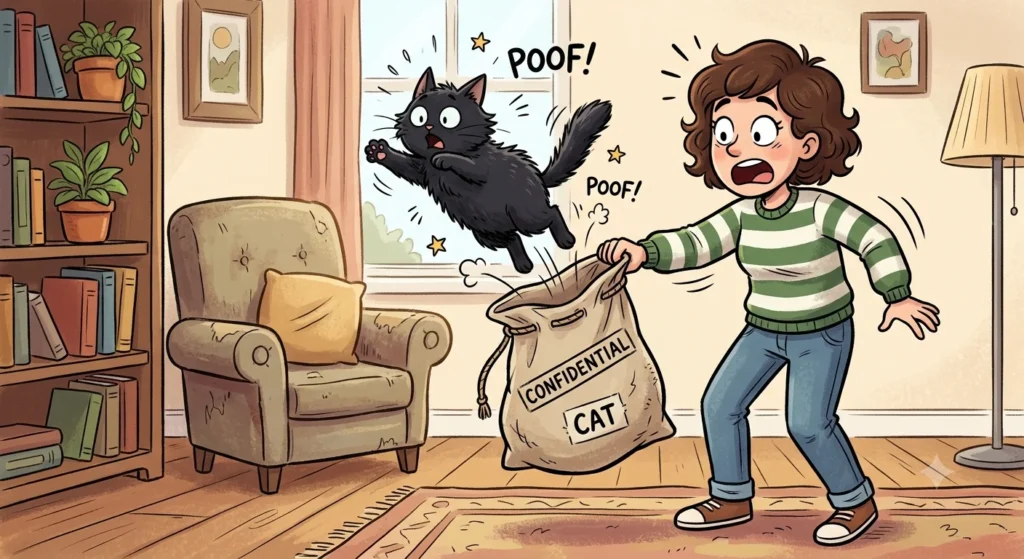
Example Sentences
- English: “She let the cat out of the bag about the surprise party.”
- Spanish: “Ella dejó escapar el secreto sobre la fiesta sorpresa.”
Common Error
Literal translation “dejar al gato salir de la bolsa” is confusing.
Usage Note
Use “dejar escapar un secreto” to sound natural.
Bite the Bullet
Word-by-Word Meaning
Bite: Morder
Bullet: Bala
Idiomatic/Figurative Meaning
To endure something painful or unpleasant.
Example Sentences
- English: “I had to bite the bullet and finish the project.”
- Spanish: “Tuve que morder la bala y terminar el proyecto.”
Common Error
Avoid translating word-for-word; the Spanish equivalent is idiomatic.
Usage Note
Perfect for situations requiring courage or resilience.
Costs an Arm and a Leg
Word-by-Word Meaning
Costs: Cuesta
Arm: Brazo
Leg: Pierna
Idiomatic/Figurative Meaning
Very expensive.
Example Sentences
- English: “The car costs an arm and a leg.”
- Spanish: “El coche cuesta un ojo de la cara.”
Common Error
Literal translation “cuesta un brazo y una pierna” may confuse some readers.
Usage Note
Commonly used for expensive purchases.
Under the Weather
Word-by-Word Meaning
Under: Bajo
Weather: Clima
Idiomatic/Figurative Meaning
Feeling unwell or sick.
Example Sentences
- English: “I feel under the weather today.”
- Spanish: “Me siento mal hoy.”
Common Error
Do not translate literally as “bajo el clima.”
Usage Note
Informal expression for mild illness.
Kill Two Birds with One Stone
Word-by-Word Meaning
Kill: Matar
Two birds: Dos pájaros
With one stone: Con una piedra
Idiomatic/Figurative Meaning
Achieve two things with one action.
Example Sentences
- English: “We killed two birds with one stone by shopping and visiting friends.”
- Spanish: “Matamos dos pájaros de un tiro.”
Common Error
Avoid literal translation which may confuse Spanish speakers.
Usage Note
Perfect for multitasking scenarios.
The Ball is in Your Court
Word-by-Word Meaning
Ball: Pelota
Court: Cancha
Idiomatic/Figurative Meaning
It’s your turn to act or make a decision.
Example Sentences
- English: “The ball is in your court to respond.”
- Spanish: “La pelota está en tu tejado para responder.”
Common Error
Literal translation “la pelota está en tu cancha” may sound unnatural.
Usage Note
Use in decision-making or negotiation contexts.
Barking up the Wrong Tree
Word-by-Word Meaning
Barking: Ladrando
Wrong tree: Árbol equivocado
Idiomatic/Figurative Meaning
Accusing or blaming the wrong person.
Example Sentences
- English: “If you think I did it, you’re barking up the wrong tree.”
- Spanish: “Si crees que lo hice, estás buscando en el lugar equivocado.”
Common Error
Do not translate literally; it can confuse Spanish speakers.
Usage Note
Use in discussions or clarifications.
Burn the Midnight Oil
Word-by-Word Meaning
Burn: Quemar
Midnight oil: Aceite de medianoche
Idiomatic/Figurative Meaning
To work late into the night.
Example Sentences
- English: “She burned the midnight oil to finish her thesis.”
- Spanish: “Trabajó hasta tarde para terminar su tesis.”
Common Error
Literal “quemar el aceite de medianoche” sounds odd.
Usage Note
Common in academic or work contexts.
Cry over Spilled Milk
Word-by-Word Meaning
Cry: Llorar
Spilled milk: Leche derramada
Idiomatic/Figurative Meaning
To regret something that can’t be undone.
Example Sentences
- English: “Don’t cry over spilled milk.”
- Spanish: “No llores sobre la leche derramada.”
Common Error
Direct translation works but context is key.
Usage Note
Use to comfort or advise someone.
Every Cloud Has a Silver Lining
Word-by-Word Meaning
Every cloud: Cada nube
Silver lining: Revestimiento plateado
Idiomatic/Figurative Meaning
There’s something good in every bad situation.
Example Sentences
- English: “Every cloud has a silver lining.”
- Spanish: “No hay mal que por bien no venga.”
Common Error
Literal translation may confuse; use Spanish equivalent.
Usage Note
Use to encourage optimism.
Hit the Sack
Word-by-Word Meaning
Hit: Golpear
Sack: Saco
Idiomatic/Figurative Meaning
Go to bed.
Example Sentences
- English: “I’m tired, time to hit the sack.”
- Spanish: “Estoy cansado, hora de ir a la cama.”
Common Error
Do not translate literally.
Usage Note
Informal, casual expression.
In Hot Water
Word-by-Word Meaning
In: En
Hot water: Agua caliente
Idiomatic/Figurative Meaning
In trouble or facing difficulties.
Example Sentences
- English: “He’s in hot water for missing the deadline.”
- Spanish: “Está en apuros por no cumplir el plazo.”
Common Error
Avoid literal translation “en agua caliente.”
Usage Note
Use for personal or professional issues.
Pull Someone’s Leg
Word-by-Word Meaning
Pull: Tirar
Someone’s leg: La pierna de alguien
Idiomatic/Figurative Meaning
To joke or tease someone.
Example Sentences
- English: “I was just pulling your leg.”
- Spanish: “Solo te estaba tomando el pelo.”
Common Error
Literal translation may confuse Spanish speakers.
Usage Note
Common in casual conversations.
Spill the Beans
Word-by-Word Meaning
Spill: Derramar
Beans: Frijoles
Idiomatic/Figurative Meaning
Reveal a secret.
Example Sentences
- English: “He spilled the beans about the project.”
- Spanish: “Él soltó la sopa sobre el proyecto.”
Common Error
Avoid literal “derramar los frijoles.”
Usage Note
Used when someone reveals confidential information.
Under One’s Nose
Word-by-Word Meaning
Under: Debajo
One’s nose: De la nariz de alguien
Idiomatic/Figurative Meaning
Something happening right in front of someone.
Example Sentences
- English: “The mistake was right under our noses.”
- Spanish: “El error estaba delante de nosotros.”
Common Error
Literal translation is awkward in Spanish.
Usage Note
Use in both formal and casual contexts.
When Pigs Fly
Word-by-Word Meaning
When: Cuando
Pigs: Cerdos
Fly: Vuelen
Idiomatic/Figurative Meaning
Something impossible.
Example Sentences
- English: “I’ll clean my room when pigs fly.”
- Spanish: “Cuando las ranas críen pelo.”
Common Error
Never translate literally; Spanish idiom is cultural.
Usage Note
Humorous expression for impossible events.
FAQs About English to Spanish Idioms
Q1. Can idioms be translated literally?
A: No. Most idioms have cultural meanings that need context-based translation.
Q2. How can I memorize idioms effectively?
A: Practice in sentences, speak with native speakers, or use flashcards with examples.
Q3. Are idioms the same in all Spanish-speaking countries?
A: Not always. Some idioms vary in usage across Spain, Mexico, and Latin America.
Q4. Can I use English idioms in Spanish writing?
A: Avoid it; they may confuse readers. Always use the Spanish equivalent.
Q5. Why are idioms important to learn?
A: They make your speech sound natural, fluent, and culturally aware.
Conclusion
Mastering idioms English to Spanish is fun and practical. Start using a few daily, practice with friends, and you’ll soon sound natural and confident in conversation. Remember: consistency and context are key!

Adrian Wells, author at SeekIdiom, shares easy explanations of English idioms with examples to help learners expand vocabulary and speak more confidently.