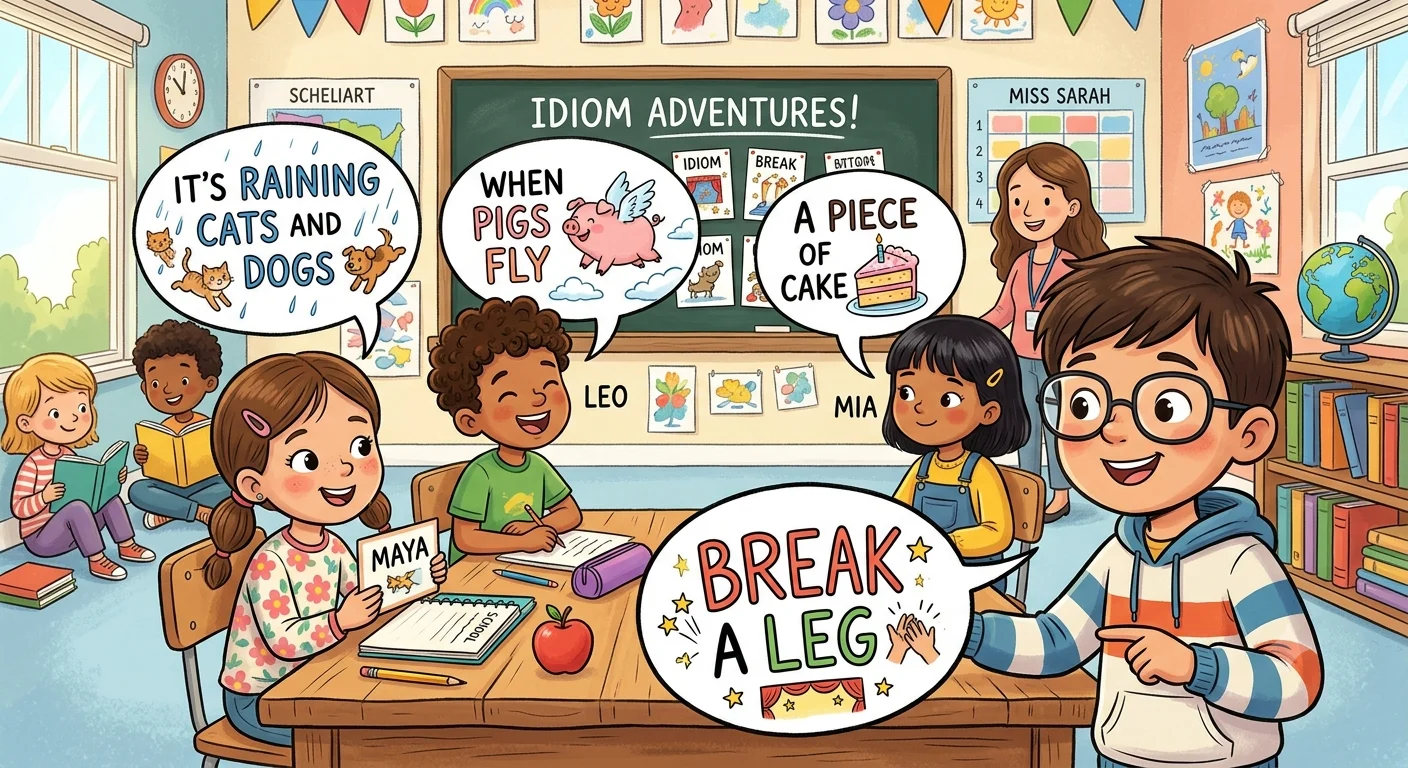
Ever been confused by phrases like “kick the bucket” or “spill the beans”? These quirky expressions are called idioms, and mastering them can make your English sound natural and fluent. Our idioms test helps you understand 20 of the most famous idioms, learn their meanings, and use them confidently in conversations. Let’s dive in and make your English more colorful!
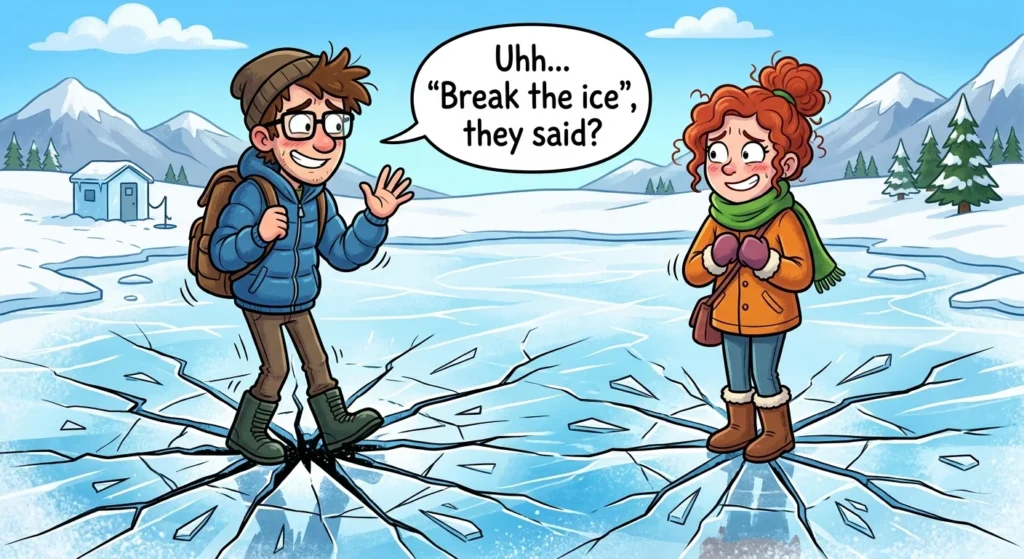
Break the Ice
Word-by-Word Meaning
Break + the + ice = literally cracking frozen water.
Idiomatic/Figurative Meaning
To start a conversation in an awkward or tense situation.
Example Sentences
- “To start the meeting, John told a funny story to break the ice.”
Common Error
Using it literally to mean breaking ice physically.
Usage Note
Common in social or professional settings when meeting new people.
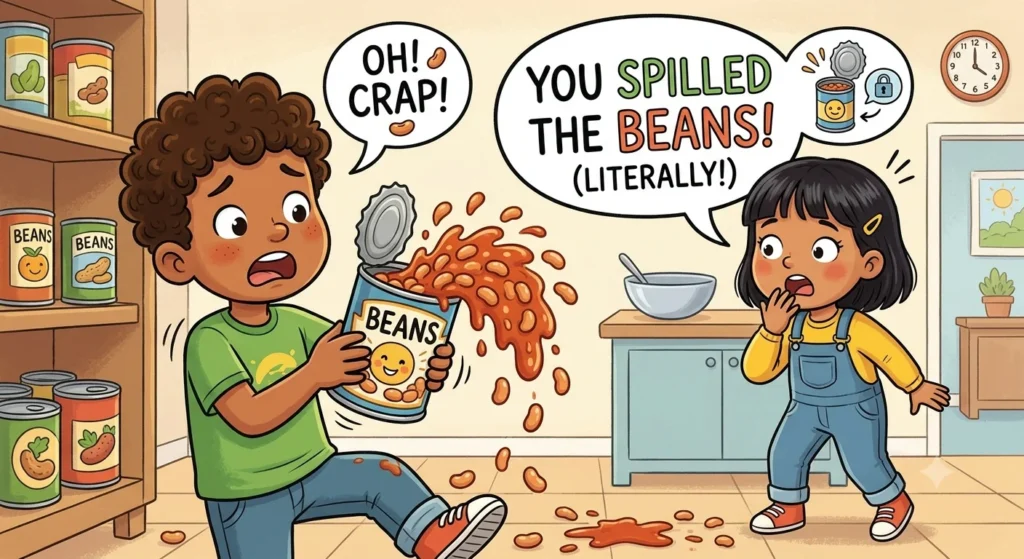
Spill the Beans
Word-by-Word Meaning
Spill + the + beans = accidentally dropping beans.
Idiomatic/Figurative Meaning
To reveal a secret or confidential information.
Example Sentences
- “She accidentally spilled the beans about the surprise party.”
Common Error
Confusing it with cooking context.
Usage Note
Used informally in conversation or storytelling.
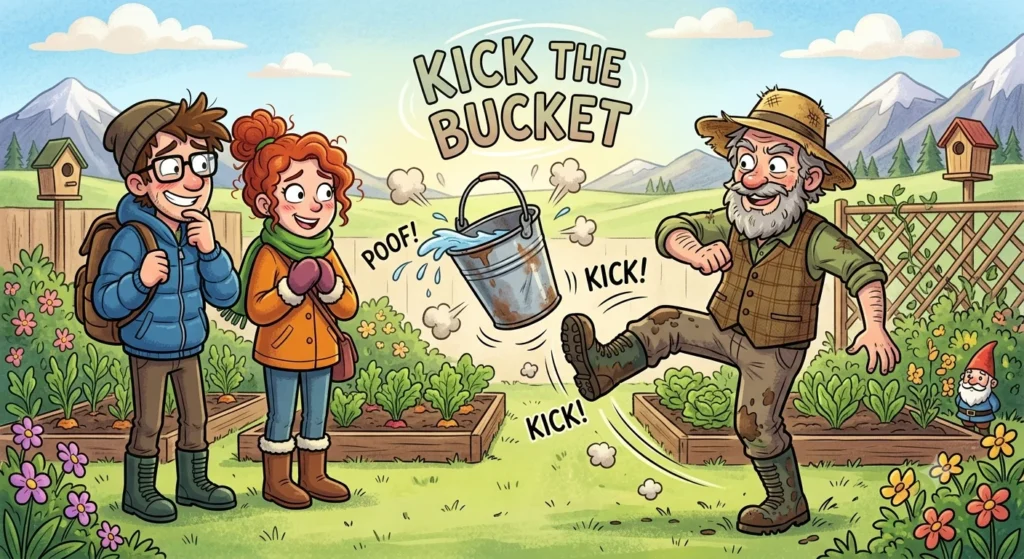
Kick the Bucket
Word-by-Word Meaning
Kick + the + bucket = literally hitting a bucket with your foot.
Idiomatic/Figurative Meaning
A polite or humorous way to say someone died.
Example Sentences
- “The old farmer finally kicked the bucket last week.”
Common Error
Using in serious formal writing without context.
Usage Note
Best for casual conversation or storytelling.
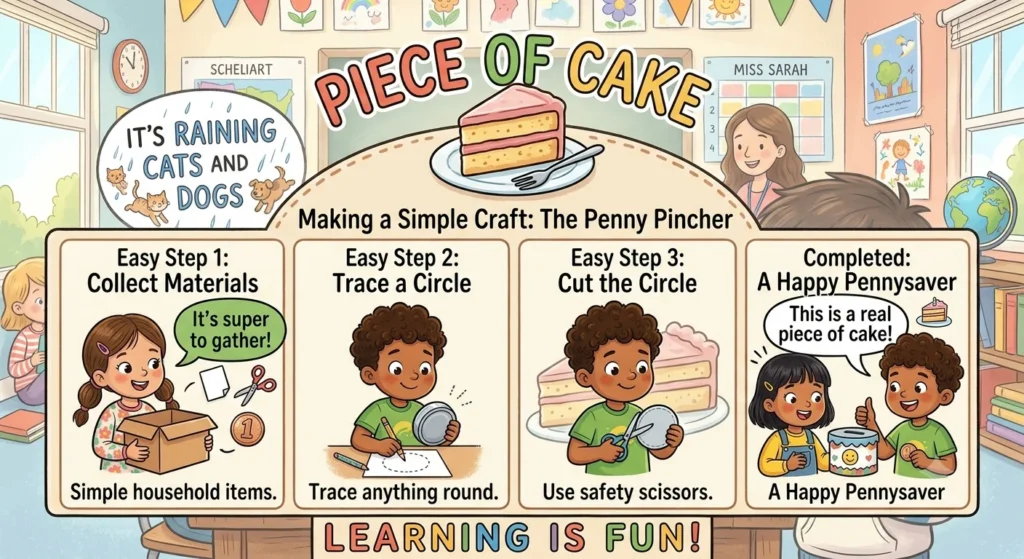
Piece of Cake
Word-by-Word Meaning
Piece + of + cake = a slice of dessert.
Idiomatic/Figurative Meaning
Something very easy to do.
Example Sentences
- “Don’t worry about the exam; it’s a piece of cake.”
Common Error
Translating literally to other languages.
Usage Note
Use in casual contexts to indicate simplicity.
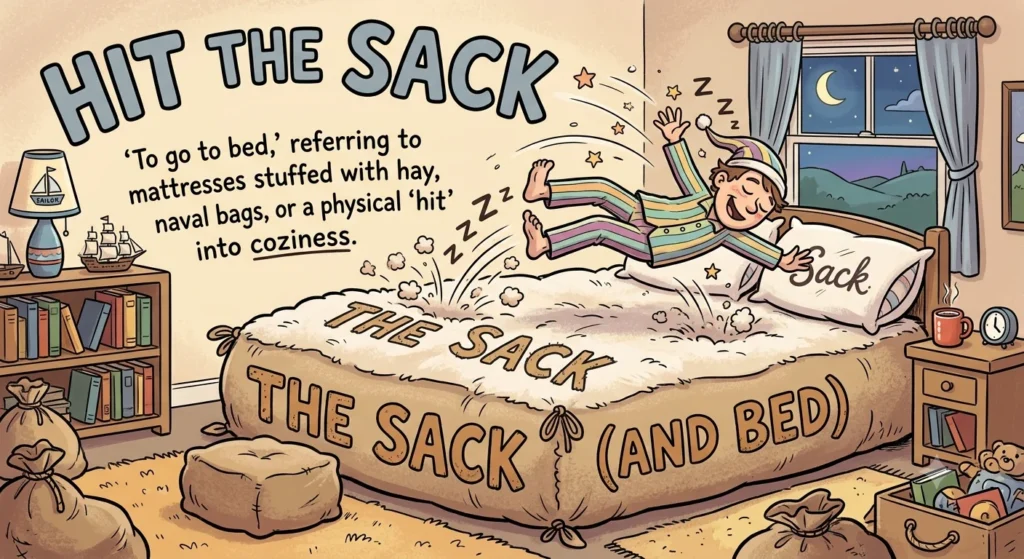
Hit the Sack
Word-by-Word Meaning
Hit + the + sack = literally striking a bag.
Idiomatic/Figurative Meaning
Go to bed or sleep.
Example Sentences
- “I’m exhausted; I’m going to hit the sack.”
Common Error
Misunderstanding as hitting someone or something.
Usage Note
Informal; mostly in spoken English.
Under the Weather
Word-by-Word Meaning
Under + the + weather = beneath bad weather.
Idiomatic/Figurative Meaning
Feeling ill or unwell.
Example Sentences
- “I’m feeling under the weather today, so I’ll stay home.”
Common Error
Thinking it refers to literally being outside in rain.
Usage Note
Casual phrase often used in conversation or emails.
Burn the Midnight Oil
Word-by-Word Meaning
Burn + the + midnight + oil = literally burning oil lamps late at night.
Idiomatic/Figurative Meaning
To work late into the night.
Example Sentences
- “She burned the midnight oil to finish her project on time.”
Common Error
Interpreting it literally instead of figuratively.
Usage Note
Used for studying, working, or effort-intensive tasks.
Bite the Bullet
Word-by-Word Meaning
Bite + the + bullet = literally clamping your teeth on a bullet.
Idiomatic/Figurative Meaning
To face a difficult situation bravely.
Example Sentences
- “I decided to bite the bullet and speak in front of the audience.”
Common Error
Using it when giving up instead of enduring.
Usage Note
Shows courage in tough circumstances.
Let the Cat Out of the Bag
Word-by-Word Meaning
Let + the + cat + out + of + bag = literally releasing a cat from a bag.
Idiomatic/Figurative Meaning
Reveal a secret unintentionally.
Example Sentences
- “He let the cat out of the bag about the promotion.”
Common Error
Confusing with literally releasing an animal.
Usage Note
Used informally in personal or professional contexts.
Cost an Arm and a Leg
Word-by-Word Meaning
Cost + an + arm + and + a + leg = literally paying with body parts.
Idiomatic/Figurative Meaning
Very expensive.
Example Sentences
- “The new phone costs an arm and a leg.”
Common Error
Translating literally or confusing with effort instead of money.
Usage Note
Mostly informal; indicates high cost dramatically.
Hit the Nail on the Head
Word-by-Word Meaning
Hit + the + nail + on + the + head = striking a nail accurately.
Idiomatic/Figurative Meaning
Describe something precisely or correctly.
Example Sentences
- “Her comment really hit the nail on the head about our strategy.”
Common Error
Confusing with literal hammering.
Usage Note
Used in professional and casual contexts.
Pull Someone’s Leg
Word-by-Word Meaning
Pull + someone’s + leg = literally tugging a leg.
Idiomatic/Figurative Meaning
To joke or tease someone.
Example Sentences
- “Relax! I’m just pulling your leg.”
Common Error
Taking it literally as harm.
Usage Note
Casual and humorous context only.
The Ball is in Your Court
Word-by-Word Meaning
The + ball + is + in + your + court = literally ball game reference.
Idiomatic/Figurative Meaning
It’s your decision or responsibility now.
Example Sentences
- “I’ve done my part; now the ball is in your court.”
Common Error
Using in literal sports context unintentionally.
Usage Note
Used in personal, professional, and negotiation contexts.
Barking Up the Wrong Tree
Word-by-Word Meaning
Barking + up + wrong + tree = a dog barking at an incorrect tree.
Idiomatic/Figurative Meaning
Accusing the wrong person or pursuing the wrong idea.
Example Sentences
- “If you think I stole it, you’re barking up the wrong tree.”
Common Error
Literal interpretation.
Usage Note
Used in informal and conversational English.
Beat Around the Bush
Word-by-Word Meaning
Beat + around + the + bush = literally hitting around a bush.
Idiomatic/Figurative Meaning
Avoiding the main topic.
Example Sentences
- “Stop beating around the bush and tell me the truth.”
Common Error
Taking literally.
Usage Note
Common in both personal and professional conversation.
A Blessing in Disguise
Word-by-Word Meaning
A + blessing + in + disguise = good thing hidden under a disguise.
Idiomatic/Figurative Meaning
Something that seems bad at first but is actually good.
Example Sentences
- “Losing that job was a blessing in disguise; I found a better one.”
Common Error
Confusing it with literal disguise.
Usage Note
Used in storytelling or reflections.
Call it a Day
Word-by-Word Meaning
Call + it + a + day = decide the day’s work is finished.
Idiomatic/Figurative Meaning
Stop working for the day.
Example Sentences
- “We’ve done enough; let’s call it a day.”
Common Error
Using outside work context literally.
Usage Note
Informal; mostly for work or group activity.
Cut Corners
Word-by-Word Meaning
Cut + corners = literally trim edges.
Idiomatic/Figurative Meaning
Do something quickly or cheaply, often sacrificing quality.
Example Sentences
- “Don’t cut corners on this project; quality matters.”
Common Error
Misunderstood as literal cutting.
Usage Note
Often used in professional and practical contexts.
85+ Fun Idioms for Kids Pictures That Make English Enjoyable 💡
Devil’s Advocate
Word-by-Word Meaning
Devil + ‘s + advocate = someone arguing for the devil.
Idiomatic/Figurative Meaning
To argue against a position to test its strength.
Example Sentences
- “I’ll play devil’s advocate to challenge your idea.”
Common Error
Thinking it means supporting evil.
Usage Note
Used in debate or analytical discussion.
On Cloud Nine
Word-by-Word Meaning
On + cloud + nine = literally floating on cloud nine.
Idiomatic/Figurative Meaning
Extremely happy or elated.
Example Sentences
- “She was on cloud nine when she got the promotion.”
Common Error
Literal interpretation.
Usage Note
Used in personal or joyful contexts.
FAQ – Idioms Test
Q1: How can I memorize idioms quickly?
A: Use visual stories, flashcards, and practice them in sentences daily.
Q2: Are idioms necessary for fluent English?
A: Yes! They make speech natural and help in understanding native speakers.
Q3: Can idioms have multiple meanings?
A: Some do. Context is key to understanding idiomatic expressions correctly.
Q4: How do I avoid mistakes using idioms?
A: Learn them with examples, practice in writing, and avoid literal translations.
Q5: Is it okay to use idioms in exams or essays?
A: Use sparingly; suitable idioms can make writing expressive but don’t overuse them.
Conclusion
Idioms add flavor to English, making your speech and writing more engaging. Take this idioms test, practice these 20 idioms daily, and use them confidently in conversations. Your English will sound natural, colorful, and fluent in no time. Start today and watch your language skills soar!

Julian Mercer, author at SeekIdiom, writes clear explanations of English idioms with examples to help learners improve vocabulary and communication skills.