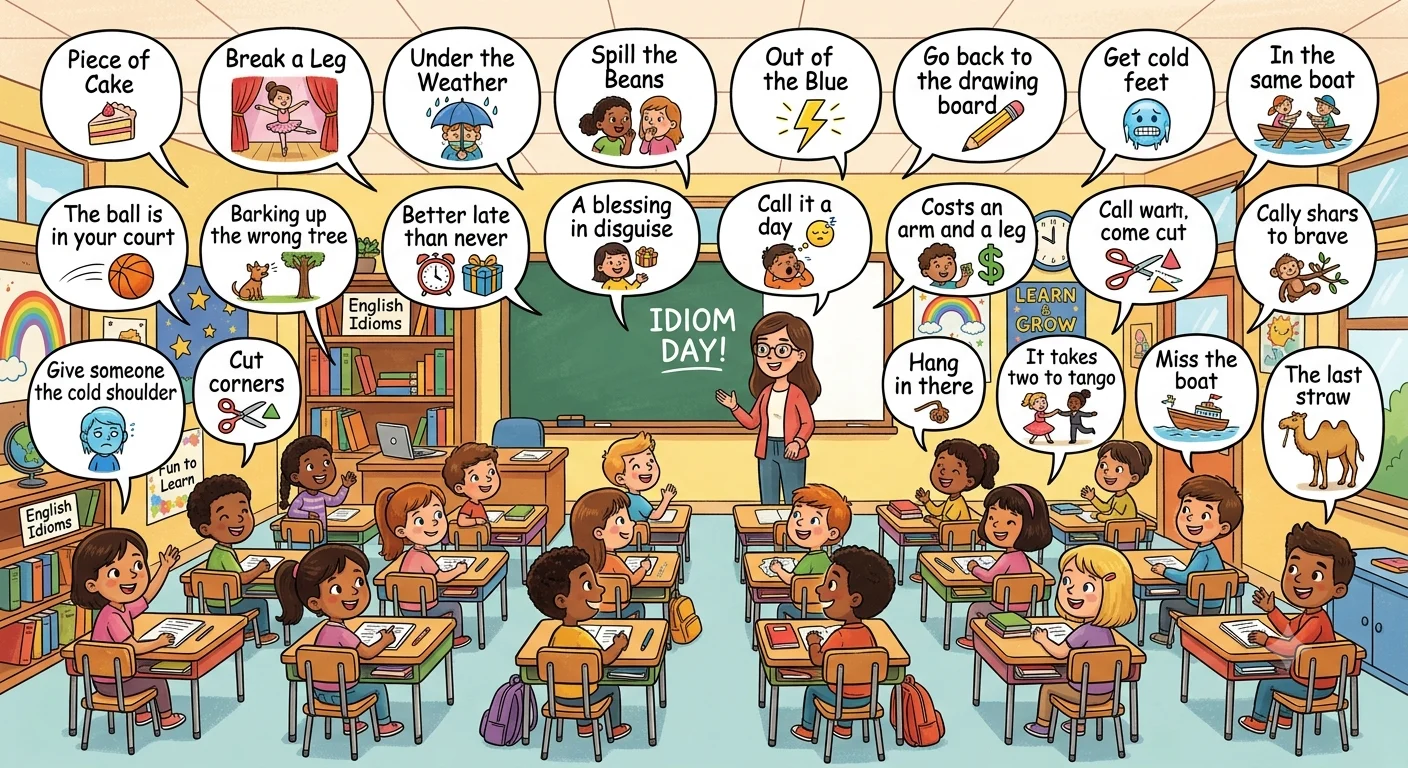
Ever wondered why English speakers say, “Break the ice” or “Hit the sack”? Idioms make language colorful, natural, and fun—but they can be tricky for learners. Our worksheet on idioms helps you understand, remember, and use 20 famous idioms confidently. Perfect for students, teachers, or anyone looking to improve everyday English.
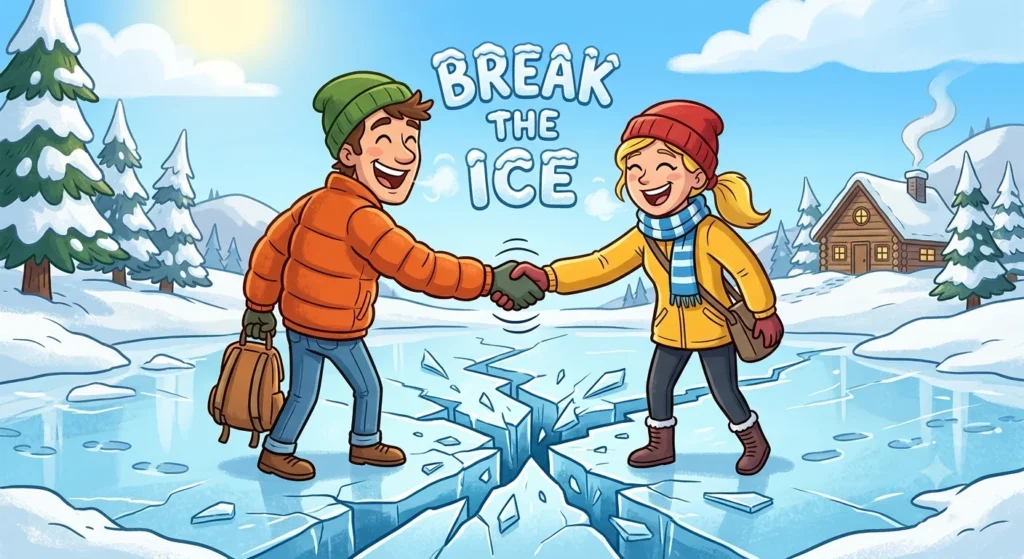
Break the Ice
Word-by-Word Meaning
Break – to shatter; Ice – frozen water
Idiomatic/ Figurative Meaning
To start a conversation or interaction in a social setting to make people feel comfortable.
Example Sentences
- She told a funny story to break the ice at the party.
- Teachers often play games on the first day of class to break the ice.
Common Error
Using it literally, e.g., “I broke the ice in the freezer.”
Usage Note
Common in both social and professional situations to ease tension.
Hit the Sack
Word-by-Word Meaning
Hit – strike; Sack – bed/pillow
Idiomatic/ Figurative Meaning
To go to sleep.
Example Sentences
- I’m exhausted; it’s time to hit the sack.
- After the long hike, everyone was ready to hit the sack.

Common Error
Using in formal writing; “go to bed” is better in essays.
Usage Note
Informal and conversational idiom.
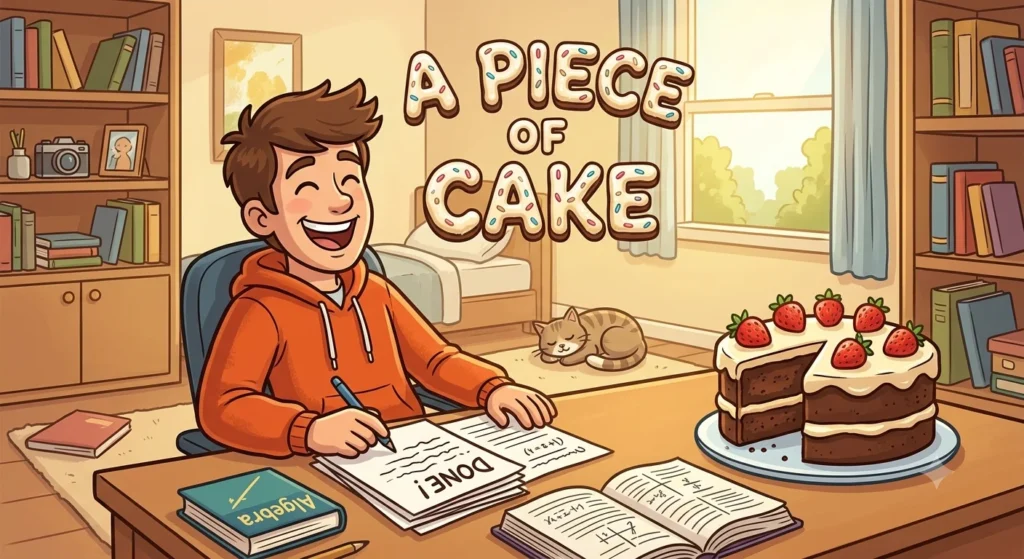
A Piece of Cake
Word-by-Word Meaning
Piece – portion; Cake – dessert
Idiomatic/ Figurative Meaning
Something very easy to do.
Example Sentences
- That exam was a piece of cake!
- Cooking pasta is a piece of cake once you know the steps.
Common Error
Don’t use it literally to describe actual cake.
Usage Note
Best for casual conversation or classroom exercises.
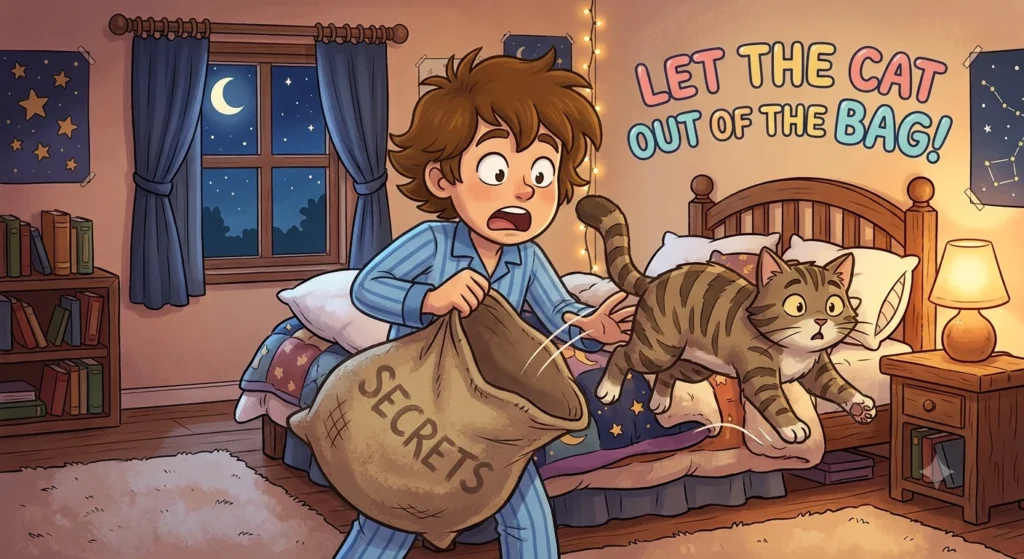
Let the Cat Out of the Bag
Word-by-Word Meaning
Let – release; Cat – a feline; Bag – container
Idiomatic/ Figurative Meaning
To reveal a secret unintentionally.
Example Sentences
- He let the cat out of the bag about the surprise party.
- Don’t let the cat out of the bag before the announcement.
Common Error
Confusing it with just “talking” instead of revealing a secret.
Usage Note
Often used in storytelling or workplace gossip.
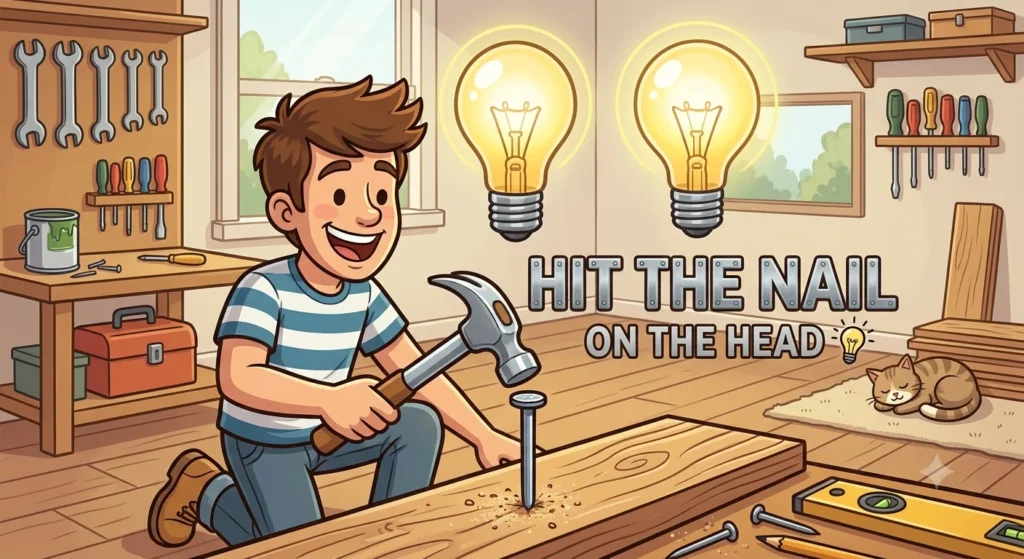
Hit the Nail on the Head
Word-by-Word Meaning
Hit – strike; Nail – hardware; Head – top of nail
Idiomatic/ Figurative Meaning
To describe something accurately or get it exactly right.
Example Sentences
- Her comment about the issue really hit the nail on the head.
- The manager hit the nail on the head when she pointed out the mistake.
Common Error
Not for literal hammering; always figurative.
Usage Note
Useful in professional, academic, or casual conversations.
Bite the Bullet
Word-by-Word Meaning
Bite – use teeth; Bullet – ammunition
Idiomatic/ Figurative Meaning
To face a difficult or unpleasant situation bravely.
Example Sentences
- I decided to bite the bullet and apologize.
- Sometimes you have to bite the bullet and work late to meet a deadline.
Common Error
Confusing it with literal biting.
Usage Note
Common in motivational or advice contexts.
Cost an Arm and a Leg
Word-by-Word Meaning
Arm – body part; Leg – body part
Idiomatic/ Figurative Meaning
Something extremely expensive.
Example Sentences
- That new phone costs an arm and a leg.
- Our vacation cost an arm and a leg, but it was worth it.
Common Error
Using it for cheap items or food literally.
Usage Note
Informal; used mostly in conversational English.
85+ Fun Idioms for Kids Pictures That Make English Enjoyable 💡
Cry Over Spilled Milk
Word-by-Word Meaning
Cry – shed tears; Milk – dairy product; Spilled – dropped
Idiomatic/ Figurative Meaning
To complain about something that cannot be undone.
Example Sentences
- Don’t cry over spilled milk; focus on fixing the problem.
- She cried over spilled milk after missing the bus.
Common Error
Not used for serious problems; minor mistakes are implied.
Usage Note
Common in advice, counseling, or informal speech.
Devil’s Advocate
Word-by-Word Meaning
Devil – evil spirit; Advocate – supporter
Idiomatic/ Figurative Meaning
To argue against a point to test its strength or provoke discussion.
Example Sentences
- I played devil’s advocate to challenge her proposal.
- Sometimes teachers act as devil’s advocate in debates.
Common Error
Used for serious moral or religious argument—avoid literal sense.
Usage Note
Common in debates, discussions, and problem-solving.
Back to Square One
Word-by-Word Meaning
Back – return; Square One – first step/starting point
Idiomatic/ Figurative Meaning
To start over due to a failure or setback.
Example Sentences
- The project failed, and we’re back to square one.
- After losing the data, he was back to square one.
Common Error
Not used for minor setbacks; implies total restart.
Usage Note
Works in both formal and informal settings.
Burn the Midnight Oil
Word-by-Word Meaning
Burn – consume; Midnight – 12 AM; Oil – lamp oil
Idiomatic/ Figurative Meaning
To work late at night.
Example Sentences
- I burned the midnight oil to finish my essay.
- She’s burning the midnight oil studying for exams.
Common Error
Do not use literally for lamps now; figurative only.
Usage Note
Common in academic or work contexts.
Under the Weather
Word-by-Word Meaning
Under – below; Weather – atmospheric conditions
Idiomatic/ Figurative Meaning
Feeling ill or unwell.
Example Sentences
- I’m feeling under the weather today, so I’ll rest.
- He was under the weather, so he skipped work.
Common Error
Not for literal weather; only for health/feeling.
Usage Note
Informal, friendly conversation.
The Ball is in Your Court
Word-by-Word Meaning
Ball – object; Court – sports area
Idiomatic/ Figurative Meaning
It’s your decision or responsibility to act.
Example Sentences
- I’ve done my part; now the ball is in your court.
- After sending the proposal, the ball is in their court.
Common Error
Used only figuratively, not literally in sports unless contextually relevant.
Usage Note
Used in business, education, and personal decisions.
Actions Speak Louder Than Words
Word-by-Word Meaning
Actions – things you do; Words – things you say
Idiomatic/ Figurative Meaning
What someone does is more important than what they say.
Example Sentences
- He promised to help, but actions speak louder than words.
- Actions speak louder than words, so show your dedication.
Common Error
Do not shorten it incorrectly (“actions louder than words”).
Usage Note
Universal usage; motivational, professional, or personal.
Barking Up the Wrong Tree
Word-by-Word Meaning
Barking – making noise; Tree – tree
Idiomatic/ Figurative Meaning
Pursuing a mistaken or misguided course.
Example Sentences
- If you think I broke it, you’re barking up the wrong tree.
- He was barking up the wrong tree accusing her of cheating.
Common Error
Used literally only in rare hunting context.
Usage Note
Best for informal or conversational English.
Hit the Books
Word-by-Word Meaning
Hit – strike; Books – reading material
Idiomatic/ Figurative Meaning
To study hard.
Example Sentences
- Exams are near; time to hit the books.
- She stayed up late hitting the books for the test.
Common Error
Not for literal hitting.
Usage Note
Informal; classroom and student-friendly.
In Hot Water
Word-by-Word Meaning
Hot – high temperature; Water – liquid
Idiomatic/ Figurative Meaning
To be in trouble.
Example Sentences
- He was in hot water after missing the deadline.
- Skipping class put her in hot water with the teacher.
Common Error
Not literal; always figurative for trouble.
Usage Note
Casual or informal professional context.
Kick the Bucket
Word-by-Word Meaning
Kick – strike; Bucket – container
Idiomatic/ Figurative Meaning
To die.
Example Sentences
- The old man finally kicked the bucket peacefully.
- Don’t worry, he hasn’t kicked the bucket yet!
Common Error
Very informal; avoid in sensitive situations.
Usage Note
Mostly humorous or casual.
Once in a Blue Moon
Word-by-Word Meaning
Once – one time; Blue Moon – rare lunar event
Idiomatic/ Figurative Meaning
Something that happens very rarely.
Example Sentences
- We go out to eat once in a blue moon.
- That opportunity comes once in a blue moon.
Common Error
Not used for frequent events.
Usage Note
Casual; for storytelling or describing rarity.
Pull Someone’s Leg
Word-by-Word Meaning
Pull – tug; Leg – limb
Idiomatic/ Figurative Meaning
To joke or tease someone.
Example Sentences
- I’m just pulling your leg about failing the test.
- Don’t take it seriously; he was pulling your leg.
Common Error
Avoid literal interpretation.
Usage Note
Friendly, informal context.
FAQ: Worksheet on Idioms
Q1: What is an idiom?
A: A phrase with a figurative meaning different from its literal words.
Q2: How can I remember idioms?
A: Use worksheets, flashcards, and practice in sentences daily.
Q3: Are idioms suitable for formal writing?
A: Some are; informal idioms like “hit the sack” are better in conversation.
Q4: How do idioms improve English?
A: They make your speech more natural, fluent, and expressive.
Q5: Best way to practice idioms?
A: Write sentences, use them in conversations, or storytelling exercises.
Conclusion
Idioms add life and color to English. Using a worksheet on idioms helps learners understand meaning, usage, and context. Practice these 20 idioms daily—soon they’ll come naturally in your speech and writing. Remember: one idiom a day keeps your English lively!

Hazel Monroe, author at SeekIdiom, explains English idioms through simple meanings and examples, helping learners improve vocabulary and everyday usage.