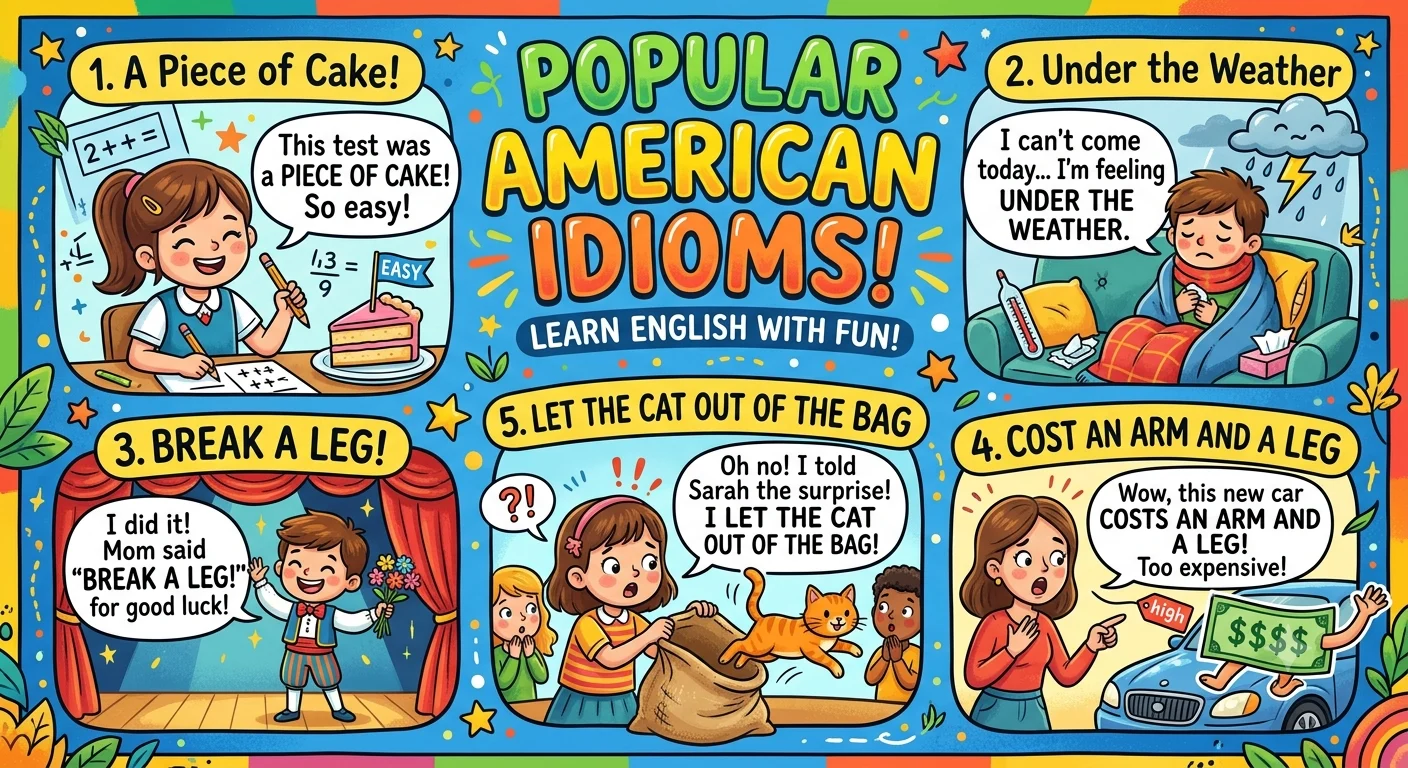
Learning American idioms examples can instantly make your English sound natural and lively. Imagine someone says, “Break a leg!” before your presentation. Confused? Don’t worry—this is exactly why mastering idioms is key!
Idioms are everywhere—in movies, books, conversations, and even emails. In this guide, we’ll explore of the most popular American idioms, with meanings, example sentences, common mistakes, and tips on how to use them correctly.
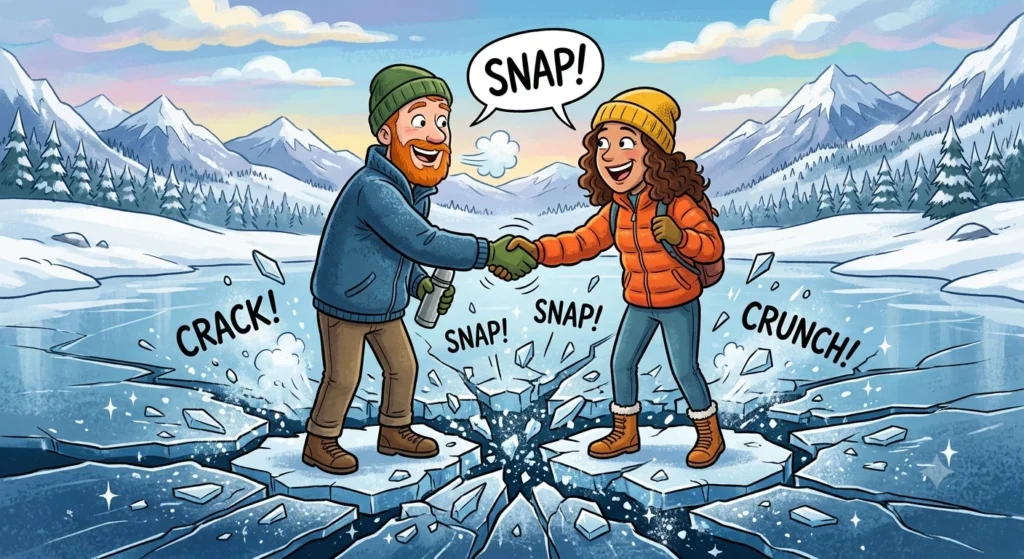
Break the Ice
Word-by-Word Meaning
Break = destroy, Ice = frozen water
Idiomatic/Figurative Meaning
To initiate conversation and reduce awkwardness in a social setting.
Example Sentences
- At the party, I told a funny story to break the ice.
- The teacher asked everyone about their hobbies to break the ice.
Common Error
Saying “crack the ice” instead of “break the ice.”
Usage Note
Often used in social or professional introductions.
Hit the Sack
Word-by-Word Meaning
Hit = strike, Sack = bed (slang)
Idiomatic/Figurative Meaning
To go to sleep.

Example Sentences
- I’m exhausted. I think it’s time to hit the sack.
- After a long hike, we all hit the sack early.
Common Error
Using it in formal writing; it’s casual.
Usage Note
Colloquial, mostly used in informal conversations.
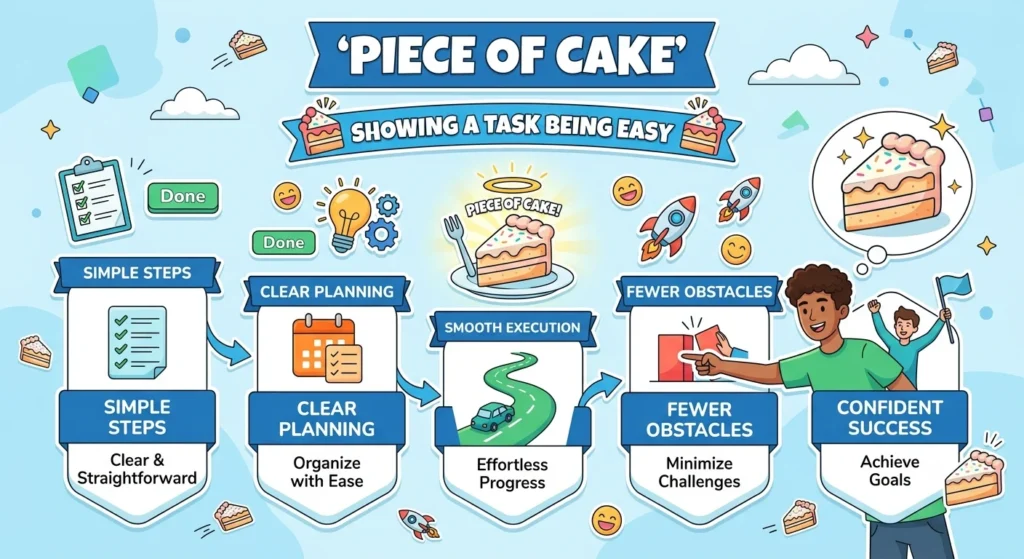
Piece of Cake
Word-by-Word Meaning
Piece = portion, Cake = dessert
Idiomatic/Figurative Meaning
Something very easy to do.
Example Sentences
- Don’t worry about the test—it’s a piece of cake.
- Cooking this recipe is a piece of cake.
Common Error
Saying “part of cake” instead.
Usage Note
Perfect for casual encouragement.
Let the Cat Out of the Bag
Word-by-Word Meaning
Let = allow, Cat = animal, Out of the bag = released
Idiomatic/Figurative Meaning
To reveal a secret accidentally.

Example Sentences
- Jane let the cat out of the bag about the surprise party.
- I accidentally let the cat out of the bag about our trip.
Common Error
Confusing it with “spill the beans” (similar but slightly different tone).
Usage Note
Common in casual storytelling or office talk.
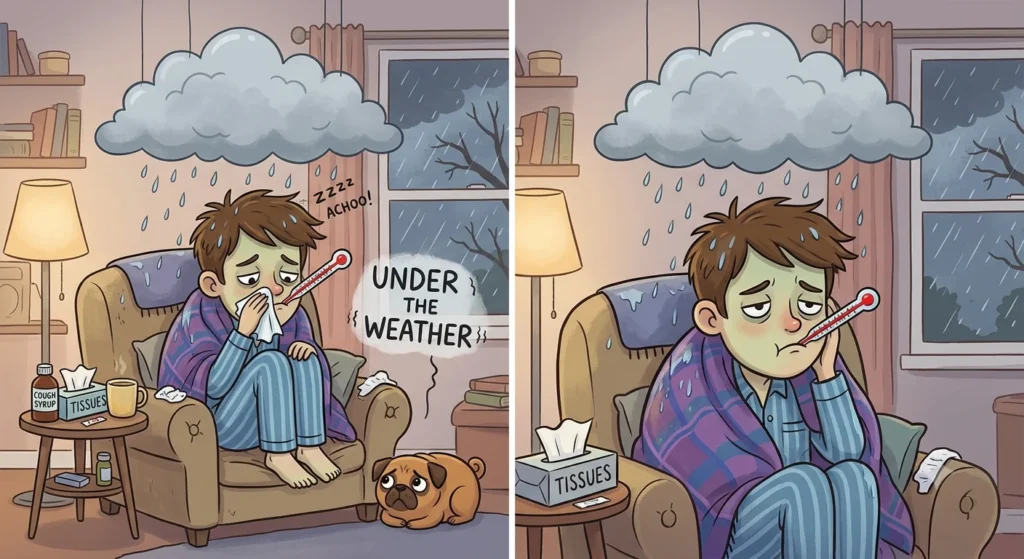
Under the Weather
Word-by-Word Meaning
Under = beneath, Weather = atmospheric conditions
Idiomatic/Figurative Meaning
Feeling ill or sick.
Example Sentences
- I’m feeling under the weather today, so I’ll stay home.
- He’s a bit under the weather, but he’ll be back soon.
Common Error
Using literally in place of actual weather conditions.
Usage Note
Mostly used for mild sickness; informal tone.
Burn the Midnight Oil
Word-by-Word Meaning
Burn = consume, Midnight Oil = working late into the night
Idiomatic/Figurative Meaning
To work late, usually studying or completing tasks.
Example Sentences
- I had to burn the midnight oil to finish my project.
- She’s burning the midnight oil before the big exam.
Common Error
Saying “burn oil at midnight” – incorrect.
Usage Note
Formal and informal use; emphasizes hard work.
Bite the Bullet
Word-by-Word Meaning
Bite = clench teeth, Bullet = projectile
Idiomatic/Figurative Meaning
To endure a painful or difficult situation bravely.
Example Sentences
- I decided to bite the bullet and apologize.
- He bit the bullet and went to the dentist.
Common Error
Confusing with “take the bullet,” which is less common.
Usage Note
Often used in personal challenges or tough decisions.
The Ball is in Your Court
Word-by-Word Meaning
Ball = object, Court = playing field
Idiomatic/Figurative Meaning
It’s your turn to make a decision or take action.
Example Sentences
- I’ve done my part; now the ball is in your court.
- The manager told me the ball is in my court regarding the proposal.
Common Error
Using in contexts unrelated to decision-making.
Usage Note
Common in professional and personal contexts.
Costs an Arm and a Leg
Word-by-Word Meaning
Costs = price, Arm and Leg = body parts
Idiomatic/Figurative Meaning
Something very expensive.
Example Sentences
- That designer bag costs an arm and a leg!
- Renovating the house will cost an arm and a leg.
Common Error
Literal interpretation leads to confusion.
Usage Note
Casual, dramatic expression.
Kill Two Birds with One Stone
Word-by-Word Meaning
Kill = eliminate, Birds = animals, Stone = rock
Idiomatic/Figurative Meaning
Accomplish two tasks with a single action.
Example Sentences
- By exercising while listening to podcasts, I kill two birds with one stone.
- She went to the bank and grocery store, killing two birds with one stone.
Common Error
Misusing in singular tasks.
Usage Note
Widely used in conversational English.
Hit the Nail on the Head
Word-by-Word Meaning
Hit = strike, Nail = metal fastener, Head = top
Idiomatic/Figurative Meaning
Describe exactly what is causing a situation or problem.
Example Sentences
- You hit the nail on the head with your analysis of the market.
- His comment really hit the nail on the head.
Common Error
Saying “hit the nail in the head” – incorrect.
Usage Note
Often used in professional or analytical conversations.
Cut to the Chase
Word-by-Word Meaning
Cut = remove, Chase = pursuit
Idiomatic/Figurative Meaning
Skip unnecessary details and get to the main point.
Example Sentences
- Let’s cut to the chase and discuss the main problem.
- I wish she would cut to the chase in her presentations.
Common Error
Using literally in storytelling.
Usage Note
Very common in meetings and storytelling.
Back to Square One
Word-by-Word Meaning
Back = return, Square One = starting point
Idiomatic/Figurative Meaning
To start over because of failure or problems.
Example Sentences
- The project failed, so we’re back to square one.
- After losing the data, we had to go back to square one.
Common Error
Confusing with “go back a step,” which is less specific.
Usage Note
Common in professional, academic, and casual contexts.
On Cloud Nine
Word-by-Word Meaning
On = atop, Cloud Nine = a figurative place of happiness
Idiomatic/Figurative Meaning
Extremely happy or delighted.
Example Sentences
- She was on cloud nine when she got the job offer.
- Winning the match put him on cloud nine.
Common Error
Literal interpretation may confuse learners.
Usage Note
Informal, expressive of joy.
A Blessing in Disguise
Word-by-Word Meaning
Blessing = good thing, Disguise = hidden appearance
Idiomatic/Figurative Meaning
Something that seems bad but has a good outcome.
Example Sentences
- Losing that job was a blessing in disguise—it led me to my dream career.
- Missing the bus turned out to be a blessing in disguise.
Common Error
Misplacing “in disguise” with other phrases.
Usage Note
Used in reflective or storytelling contexts.
85+ Famous American Idioms and Slang That Sound Cool 😎
Every Cloud Has a Silver Lining
Word-by-Word Meaning
Every cloud = problem, Silver lining = hopeful aspect
Idiomatic/Figurative Meaning
Even bad situations have positive aspects.
Example Sentences
- Don’t worry about failing; every cloud has a silver lining.
- Losing the game taught us teamwork; every cloud has a silver lining.
Common Error
Literal interpretation may confuse learners.
Usage Note
Encouraging phrase; often used to motivate.
Throw in the Towel
Word-by-Word Meaning
Throw = toss, Towel = cloth for wiping
Idiomatic/Figurative Meaning
To give up or surrender.
Example Sentences
- After many failed attempts, he finally threw in the towel.
- Don’t throw in the towel just yet; keep trying.
Common Error
Literal use in sports only; idiomatic use is wider.
Usage Note
Common in personal and professional challenges.
The Elephant in the Room
Word-by-Word Meaning
Elephant = large animal, Room = space
Idiomatic/Figurative Meaning
An obvious problem or issue no one wants to discuss.
Example Sentences
- We need to address the elephant in the room before proceeding.
- The budget cuts were the elephant in the room during the meeting.
Common Error
Confusing with “ignore the elephant,” which is not idiomatic.
Usage Note
Common in business and social discussions.
Take it with a Grain of Salt
Word-by-Word Meaning
Grain = tiny amount, Salt = seasoning
Idiomatic/Figurative Meaning
Don’t take something literally or too seriously.
Example Sentences
- Take his advice with a grain of salt; he tends to exaggerate.
- I take online reviews with a grain of salt.
Common Error
Literal interpretation is incorrect.
Usage Note
Advisory or cautionary tone; informal.
Spill the Beans
Word-by-Word Meaning
Spill = pour out, Beans = edible seeds
Idiomatic/Figurative Meaning
Reveal a secret.
Example Sentences
- Come on, spill the beans! What happened at the party?
- She accidentally spilled the beans about the promotion.
Common Error
Confusing with “let the cat out of the bag” (similar meaning, slightly different tone).
Usage Note
Used in casual storytelling.
FAQs About American Idioms
Q1: Can I use idioms in formal writing?
A1: Mostly avoid casual idioms in academic writing. Stick to formal expressions.
Q2: How can I remember idioms easily?
A2: Use them in sentences, watch movies, and keep a daily idiom diary.
Q3: Are idioms the same in British and American English?
A3: Some are similar, but many idioms are culture-specific.
Q4: Can idioms be translated literally?
A4: Usually not—idioms often lose meaning if translated word-for-word.
Q5: How often should I practice idioms?
A5: Daily use in speech or writing helps retention and natural fluency.
Conclusion
Mastering American idioms examples will make your English vibrant, relatable, and fun. Try using one or two idioms in your conversations this week. The more you practice, the more natural they’ll feel. Idioms are cultural expressions that bring life to your language—start today and see your fluency soar!

Hazel Monroe, author at SeekIdiom, explains English idioms through simple meanings and examples, helping learners improve vocabulary and everyday usage.