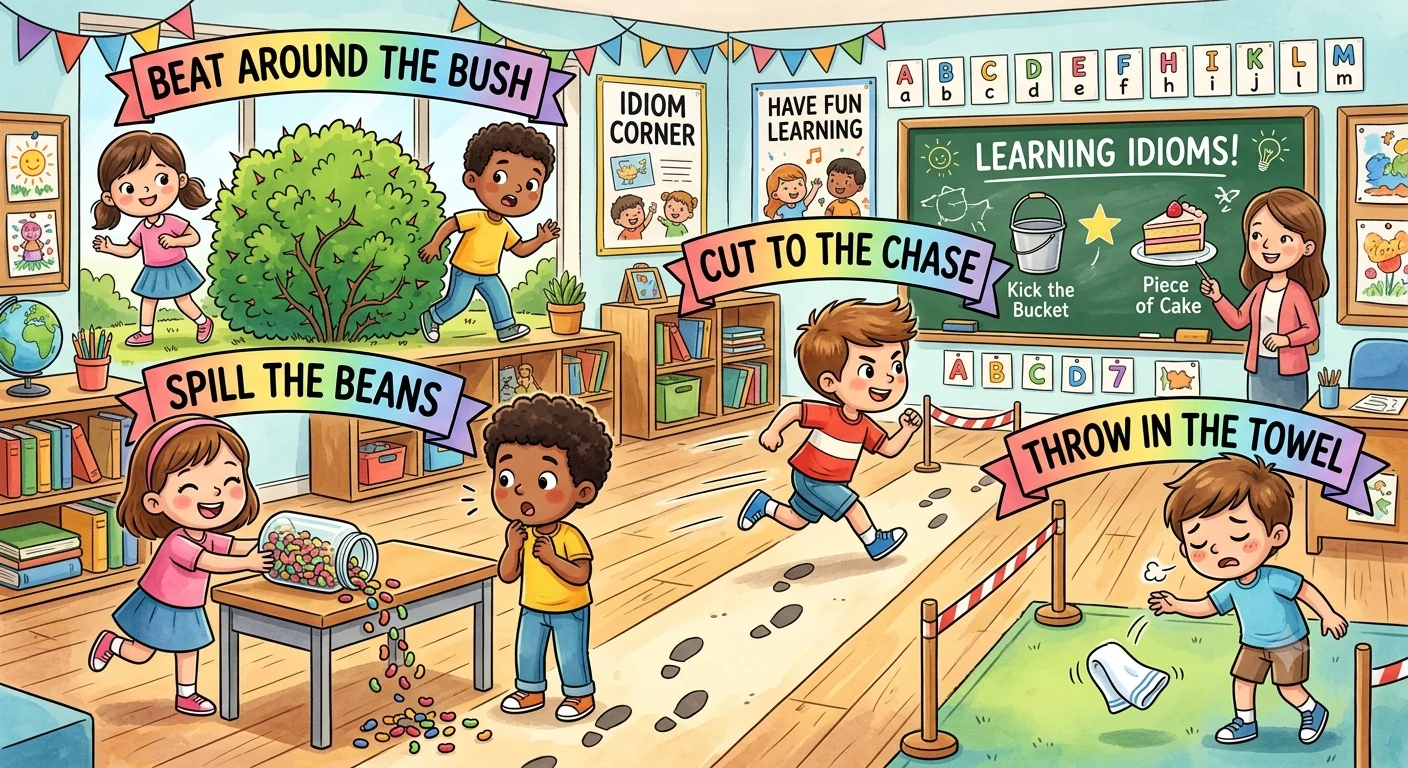
Have you ever wanted to speak English in a way that surprises and engages people? Using uncommon idioms with meanings can make your conversations more colorful and expressive. Imagine telling a story and slipping in phrases that make everyone nod in understanding—that’s the power of idioms!
Here’s a comprehensive guide to 20 uncommon idioms, with their meanings, examples, and usage tips so you can start using them confidently.
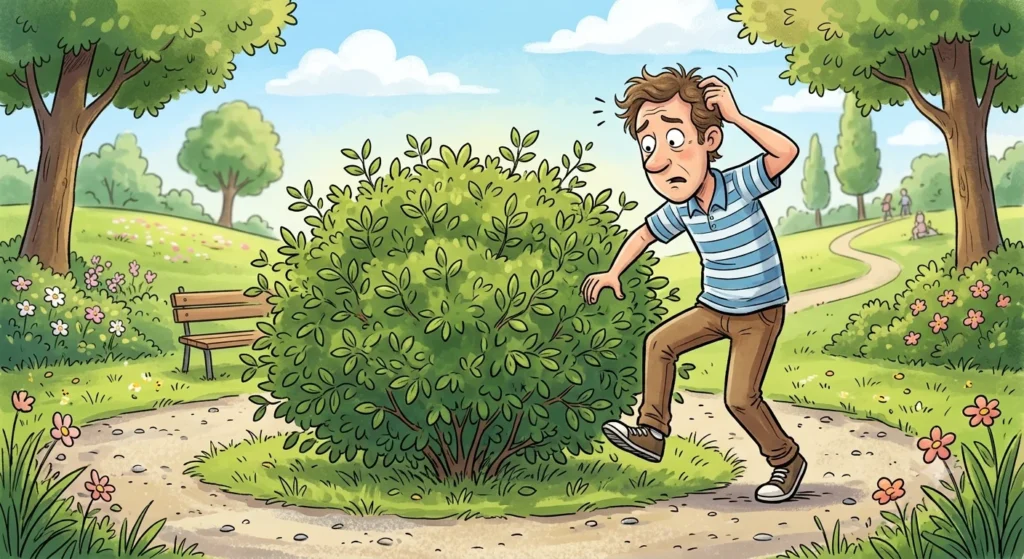
Beat Around the Bush
Word-by-Word Meaning
- Beat = hit or strike
- Around = surrounding
- Bush = a small plant
Idiomatic/Figurative Meaning
To avoid talking about the main topic; to delay saying something directly.
Example Sentences
- Stop beating around the bush and tell me what happened.
- She tends to beat around the bush when discussing her mistakes.
Common Error
Using it as “beat the bush” – the correct idiom always includes around.
Usage Note
Commonly used in informal conversations and workplace discussions.
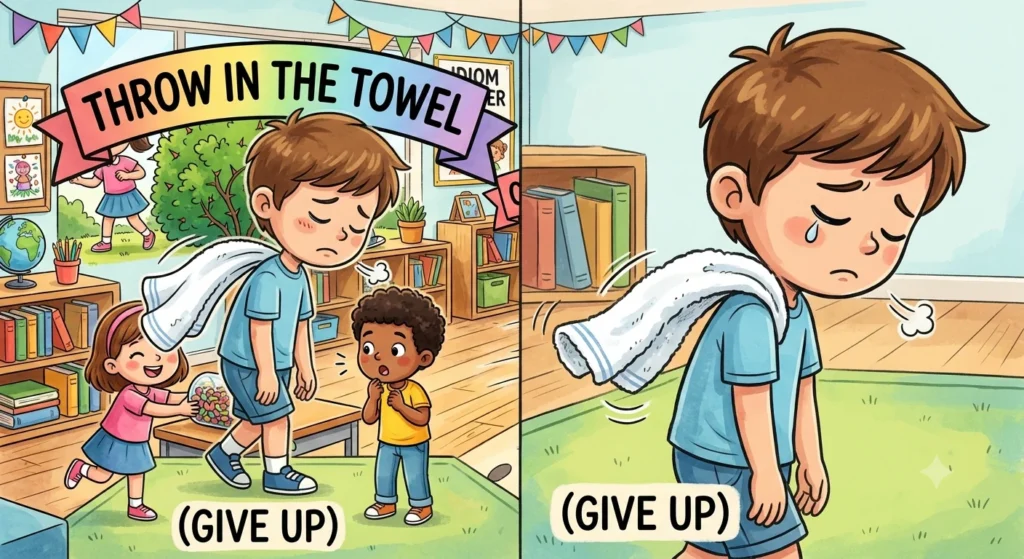
Throw in the Towel
Word-by-Word Meaning
- Throw = toss
- Towel = a piece of cloth
Idiomatic/Figurative Meaning
To give up or surrender.
Example Sentences
- After struggling with the project for weeks, he finally threw in the towel.
- Don’t throw in the towel so soon; try a little longer.
Common Error
Confusing with literal towel throwing; always refers to giving up figuratively.
Usage Note
Often used in sports contexts or when facing challenges.
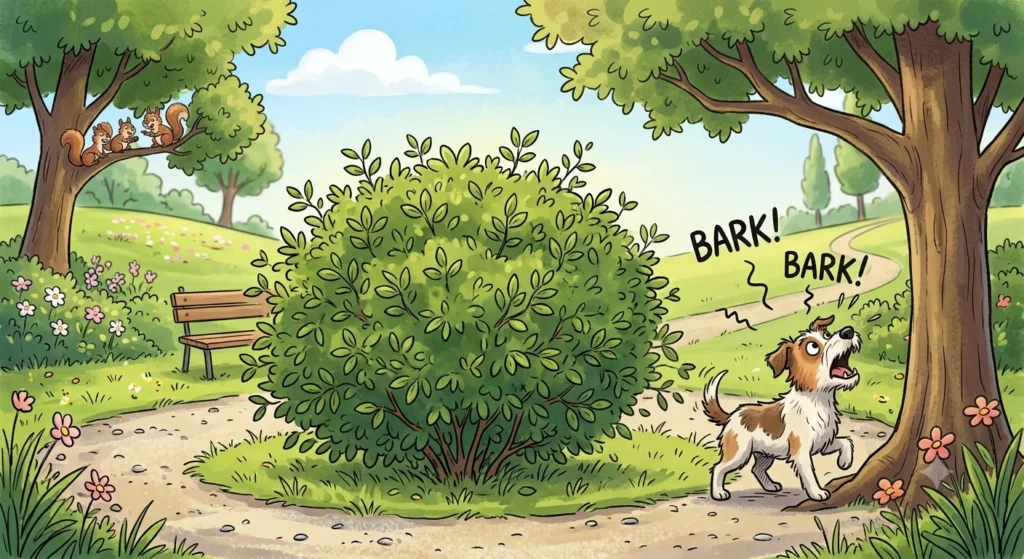
Barking Up the Wrong Tree
Word-by-Word Meaning
- Barking = dog’s sound
- Up = toward
- Wrong tree = incorrect target
Idiomatic/Figurative Meaning
To make a wrong assumption or pursue the wrong course of action.
Example Sentences
- If you think I stole the files, you’re barking up the wrong tree.
- She’s barking up the wrong tree by blaming her team for the delay.
Common Error
Replacing “tree” with other objects; idiom must stay exact.
Usage Note
Useful in professional and casual discussions to correct misconceptions.
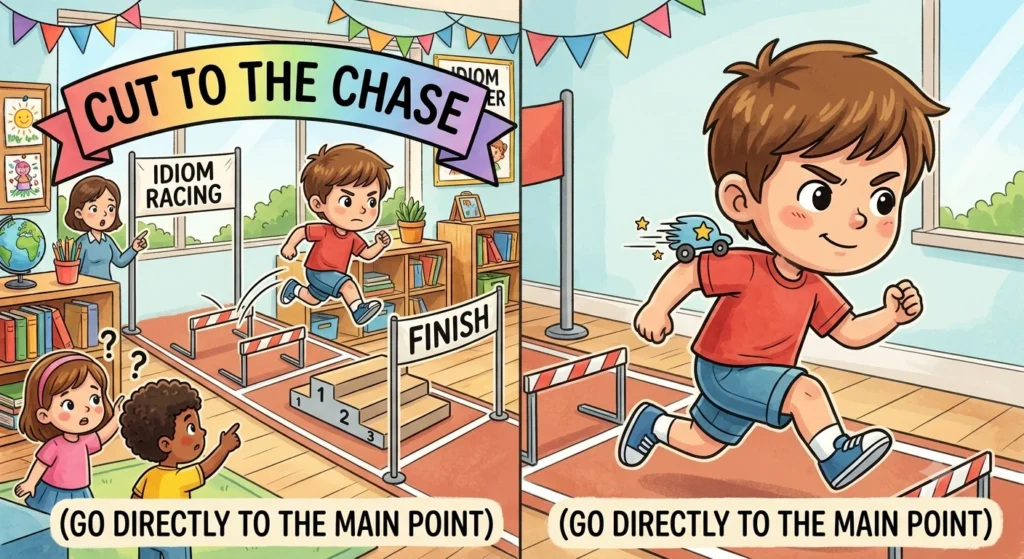
Cut to the Chase
Word-by-Word Meaning
- Cut = skip or remove
- To = toward
- Chase = pursuit or action
Idiomatic/Figurative Meaning
To get directly to the point.
Example Sentences
- Let’s cut to the chase and discuss the main issue.
- Stop the small talk and cut to the chase.
Common Error
Saying “cut the chase” – missing to changes the meaning.
Usage Note
Common in meetings or storytelling when time is limited.
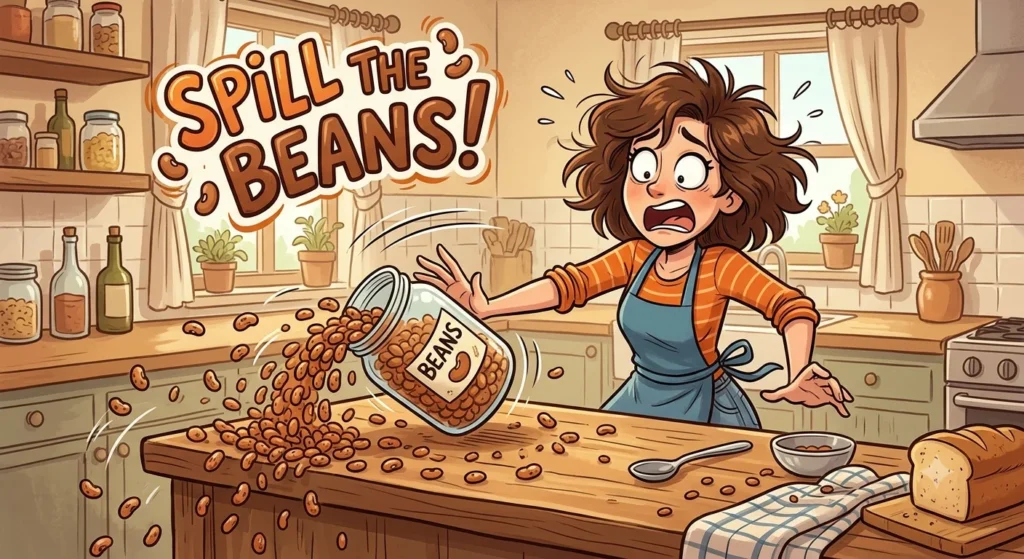
Spill the Beans
Word-by-Word Meaning
- Spill = accidentally drop
- Beans = seeds
Idiomatic/Figurative Meaning
To reveal a secret or disclose information.
Example Sentences
- Come on, spill the beans! Who’s moving to New York?
- She accidentally spilled the beans about the surprise party.
Common Error
Using literally – idiom always means revealing a secret.
Usage Note
Friendly and informal contexts are best for this idiom.
A Dime a Dozen
Word-by-Word Meaning
- Dime = ten-cent coin
- Dozen = twelve items
Idiomatic/Figurative Meaning
Something very common or easy to find.
Example Sentences
- Good ideas are a dime a dozen, but execution is rare.
- Those cheap souvenirs are a dime a dozen in tourist spots.
Common Error
Misunderstanding as “expensive” – it actually means cheap or common.
Usage Note
Used in informal conversations to indicate abundance or lack of uniqueness.
Bite the Bullet
Word-by-Word Meaning
- Bite = clench teeth
- Bullet = ammunition
Idiomatic/Figurative Meaning
To face a difficult situation with courage.
Example Sentences
- I had to bite the bullet and apologize for my mistake.
- Sometimes you just have to bite the bullet and take responsibility.
Common Error
Literal interpretation; always means enduring difficulty bravely.
Usage Note
Often used when someone must accept hardship or discomfort.
Burn the Midnight Oil
Word-by-Word Meaning
- Burn = use up
- Midnight oil = light source at night (historically)
Idiomatic/Figurative Meaning
To work late into the night.
Example Sentences
- She burned the midnight oil to finish her thesis.
- I had to burn the midnight oil to meet the deadline.
Common Error
Using “midnight candle” or other variations; “oil” is essential.
Usage Note
Perfect for academic or work-related contexts.
Devil’s Advocate
Word-by-Word Meaning
- Devil = evil spirit
- Advocate = supporter or defender
Idiomatic/Figurative Meaning
To argue the opposite side for the sake of discussion.
Example Sentences
- I’ll play devil’s advocate and question your plan.
- Sometimes you need a devil’s advocate to find flaws.
Common Error
Misunderstood as actual support for evil; always figurative.
Usage Note
Used in debates, meetings, and critical thinking exercises.
Fly Off the Handle
Word-by-Word Meaning
- Fly = move quickly
- Off = away from
- Handle = part of a tool
Idiomatic/Figurative Meaning
To lose one’s temper suddenly.
Example Sentences
- He flew off the handle when he heard the news.
- Don’t fly off the handle; let’s talk calmly.
Common Error
Confusing with “fly off a ladder”; idiom strictly means losing temper.
Usage Note
Commonly used in informal or emotional situations.
Hit the Nail on the Head
Word-by-Word Meaning
- Hit = strike
- Nail = fastener
- Head = top part of the nail
Idiomatic/Figurative Meaning
To describe exactly what is causing a situation or problem.
Example Sentences
- You hit the nail on the head with your analysis.
- Her comment hit the nail on the head regarding the issue.
Common Error
Saying “hit the nail” without “on the head” reduces clarity.
Usage Note
Often used in professional feedback and casual discussions.
Let the Cat Out of the Bag
Word-by-Word Meaning
- Let = release
- Cat = animal
- Bag = container
Idiomatic/Figurative Meaning
To reveal a secret unintentionally.
Example Sentences
- He let the cat out of the bag about the promotion.
- Don’t let the cat out of the bag before the party!
Common Error
Literal interpretation of “cat” and “bag”; idiom is figurative.
Usage Note
Used in social or casual contexts to talk about accidental disclosures.
Miss the Boat
Word-by-Word Meaning
- Miss = fail to catch
- Boat = water vessel
Idiomatic/Figurative Meaning
To miss an opportunity.
Example Sentences
- He missed the boat on applying for the scholarship.
- Don’t miss the boat on this investment opportunity.
Common Error
Confusing with literal travel; always refers to opportunity.
Usage Note
Common in both informal and semi-formal contexts.
On the Fence
Word-by-Word Meaning
- On = positioned above
- Fence = barrier
Idiomatic/Figurative Meaning
Undecided about a choice or opinion.
Example Sentences
- I’m on the fence about which job to take.
- She’s on the fence regarding the party plan.
Common Error
Saying “in the fence” – correct form is “on the fence.”
Usage Note
Often used in decision-making discussions.
Once in a Blue Moon
Word-by-Word Meaning
- Once = one time
- Blue moon = rare moon occurrence
Idiomatic/Figurative Meaning
Something that happens very rarely.
Example Sentences
- We meet for coffee once in a blue moon.
- That kind of opportunity comes once in a blue moon.
Common Error
Misunderstanding frequency; always refers to rarity.
Usage Note
Used in informal conversation and storytelling.
Out of the Woods
Word-by-Word Meaning
- Out = away from
- Woods = forest
Idiomatic/Figurative Meaning
To be out of danger or difficulty.
Example Sentences
- After the surgery, she is finally out of the woods.
- The company isn’t out of the woods yet after the crisis.
Common Error
Literal interpretation; it always refers to a situation.
Usage Note
Used in both personal and professional contexts.
Pulling Your Leg
Word-by-Word Meaning
- Pulling = tugging
- Leg = limb
Idiomatic/Figurative Meaning
To joke or tease someone.
Example Sentences
- Are you serious, or are you pulling my leg?
- Don’t worry, he’s just pulling your leg.
Common Error
Confusing with physical action; always figurative.
Usage Note
Friendly, casual conversations only.
The Ball is in Your Court
Word-by-Word Meaning
- Ball = sports object
- Court = playing area
Idiomatic/Figurative Meaning
It’s your turn to take action or make a decision.
Example Sentences
- I’ve done my part; now the ball is in your court.
- The ball is in your court if you want to accept the offer.
Common Error
Saying “ball in your hand” – changes meaning.
Usage Note
Common in negotiations, teamwork, and decision-making.
Under the Weather
Word-by-Word Meaning
- Under = below
- Weather = atmospheric condition
Idiomatic/Figurative Meaning
Feeling sick or unwell.
Example Sentences
- I’m feeling under the weather today, so I’ll stay home.
- She’s a bit under the weather, but she’ll recover soon.
Common Error
Literal interpretation; always refers to health.
Usage Note
Informal, everyday use for minor illness or fatigue.
Your Guess is as Good as Mine
Word-by-Word Meaning
- Your = belonging to you
- Guess = estimation
- Mine = belonging to me
Idiomatic/Figurative Meaning
I have no idea; I don’t know either.
Example Sentences
- “Who will win the match?” – “Your guess is as good as mine.”
- When it comes to predicting the results, your guess is as good as mine.
Common Error
Literal guessing; idiom always implies uncertainty.
Usage Note
Used to express shared uncertainty or ignorance.
FAQs About Uncommon Idioms
Q1: How can I remember idioms easily?
A: Use them in daily conversations, make flashcards, and associate them with stories.
Q2: Can idioms be used in formal writing?
A: Choose idioms carefully for formal contexts; some are informal.
Q3: Why are idioms important for English learners?
A: They enhance fluency, make speech engaging, and help understand native expressions.
Q4: How do I avoid common idiom mistakes?
A: Learn exact phrasing, read examples, and practice in sentences.
Q5: Are idioms culturally specific?
A: Yes, many idioms reflect culture, so understanding context is essential.
Conclusion
Mastering uncommon idioms with meanings will make your English more vivid, confident, and memorable. Practice using these 20 idioms in conversations, writing, or storytelling. The more you use them, the more naturally they’ll come to mind. Start today and impress everyone with your idiomatic skills!

Julian Mercer, author at SeekIdiom, writes clear explanations of English idioms with examples to help learners improve vocabulary and communication skills.