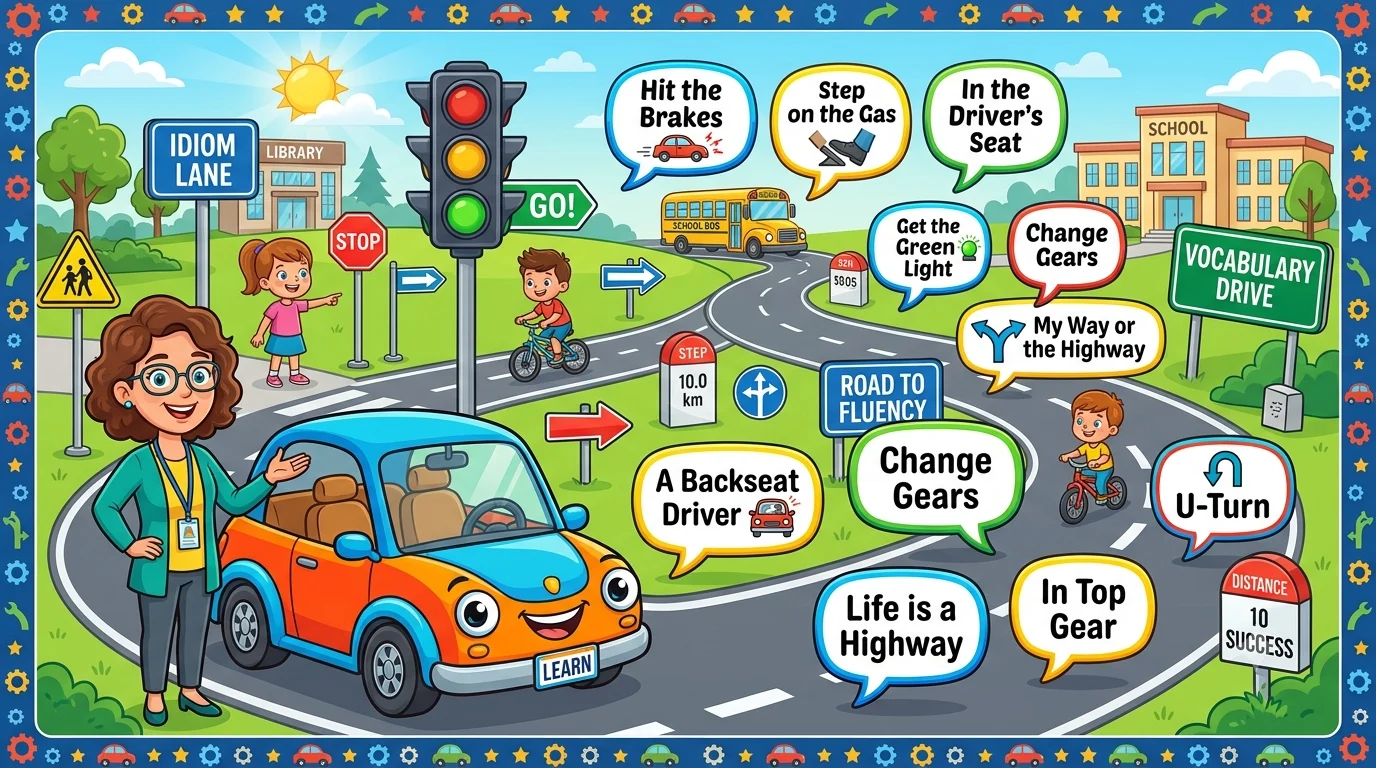
Have you ever heard someone say, “Hit the brakes!” or “You’re in the driver’s seat now” even when no one was talking about a car? These are car idioms—popular English expressions inspired by driving that native speakers use every day. Learning these idioms will help you understand conversations better and make your English sound more fluent, natural, and confident.
Whether you’re preparing for exams, improving your spoken English, or simply expanding your vocabulary, these car idioms will put your language skills on the fast track.
What Are Car Idioms?
Car idioms are figurative expressions based on cars, driving, roads, traffic, and travel. Although they mention vehicles, their meanings usually have nothing to do with driving. Instead, they describe situations, emotions, decisions, success, failure, leadership, and everyday life.
For example:
- Hit the brakes = Stop or slow down.
- Step on the gas = Increase effort.
- In the driver’s seat = Be in control.
Because these expressions are common in business, education, media, and casual conversations, learning them can make your English sound much more natural.
Why Should You Learn Car Idioms?
Using car idioms can help you:
- Sound more like a native English speaker.
- Understand movies, TV shows, and podcasts.
- Improve speaking and writing skills.
- Express ideas more clearly and creatively.
- Build confidence in daily conversations.
Hit the Brakes
Word-by-word meaning: Press the brake pedal to slow or stop a car.
Idiomatic meaning: Stop or slow down a plan, action, or decision.
Example sentences:
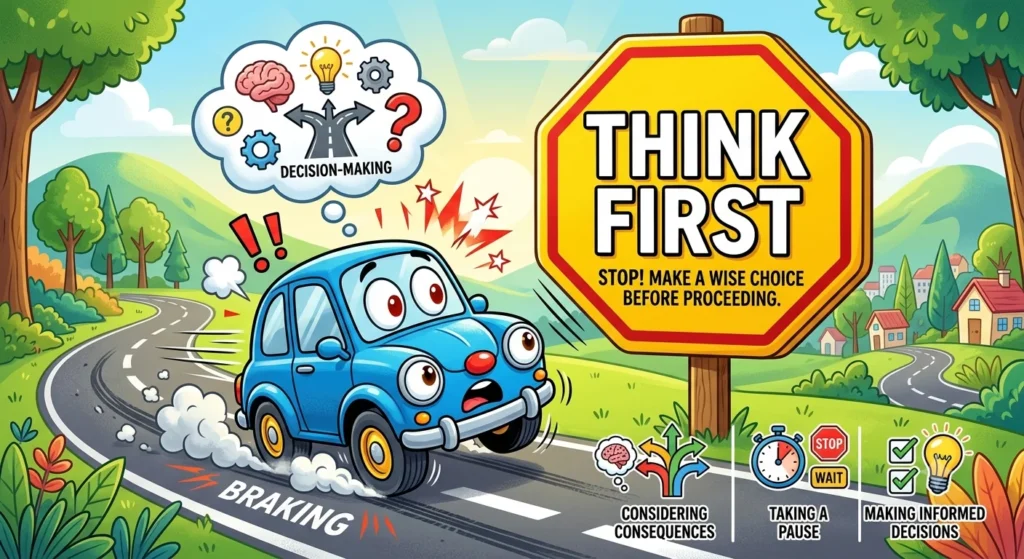
- We should hit the brakes before signing the contract.
- Let’s hit the brakes and think carefully.
Common error: Using it only for actual driving.
Usage note: Often used when discussing business decisions, emotions, or major life choices.
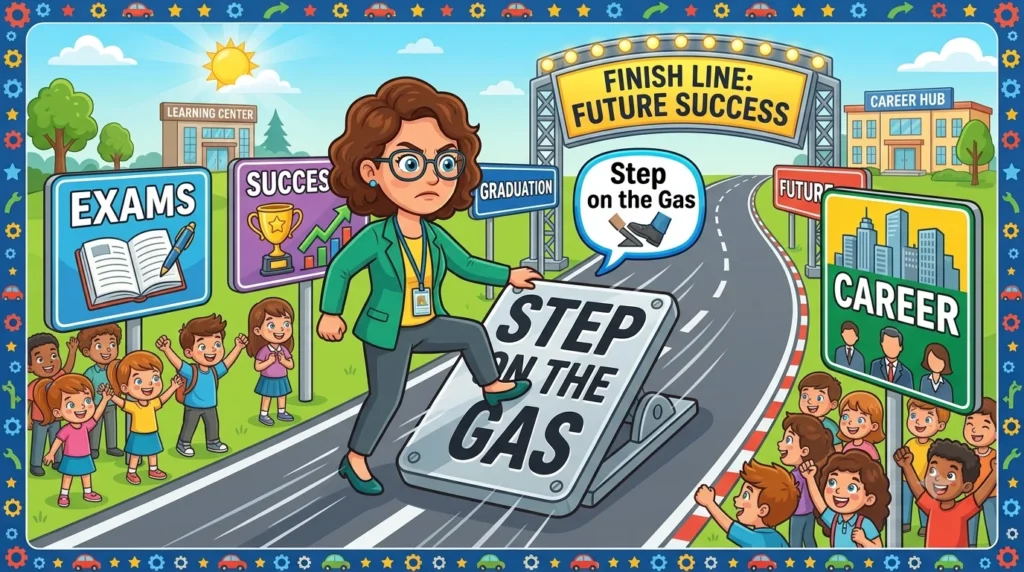
Step on the Gas
Word-by-word meaning: Press the accelerator pedal.
Idiomatic meaning: Increase effort, speed, or progress.
Example sentences:
- I need to step on the gas to finish this project.
- It’s time to step on the gas before the deadline.
Common error: Assuming it means being reckless.
Usage note: Usually has a positive meaning that encourages action.
In the Driver’s Seat
Word-by-word meaning: Sitting where the driver controls the vehicle.
Idiomatic meaning: Being in control or leading a situation.

Example sentences:
- She’s finally in the driver’s seat at work.
- You’re in the driver’s seat now, so make the decision.
Common error: Interpreting it literally.
Usage note: Very common in leadership and business English.
Change Gears
Word-by-word meaning: Shift a vehicle’s gear.
Idiomatic meaning: Change direction, strategy, or pace.
Example sentences:
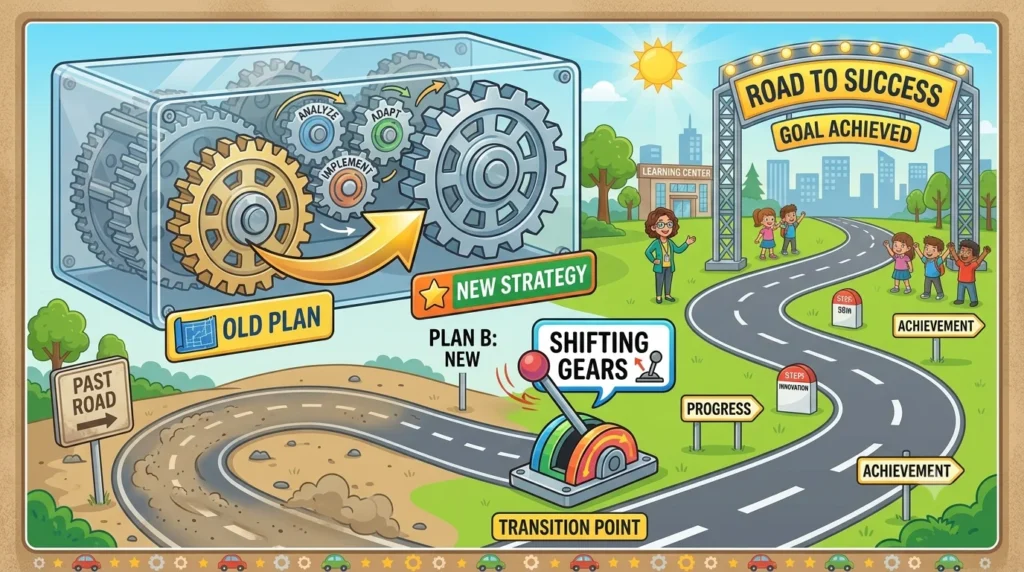
- Let’s change gears and try another solution.
- The company changed gears after customer feedback.
Common error: Using it only for driving speed.
Usage note: Frequently used during meetings and presentations.
Backseat Driver
Word-by-word meaning: Someone giving directions from the back seat.
Idiomatic meaning: A person who constantly gives unwanted advice.
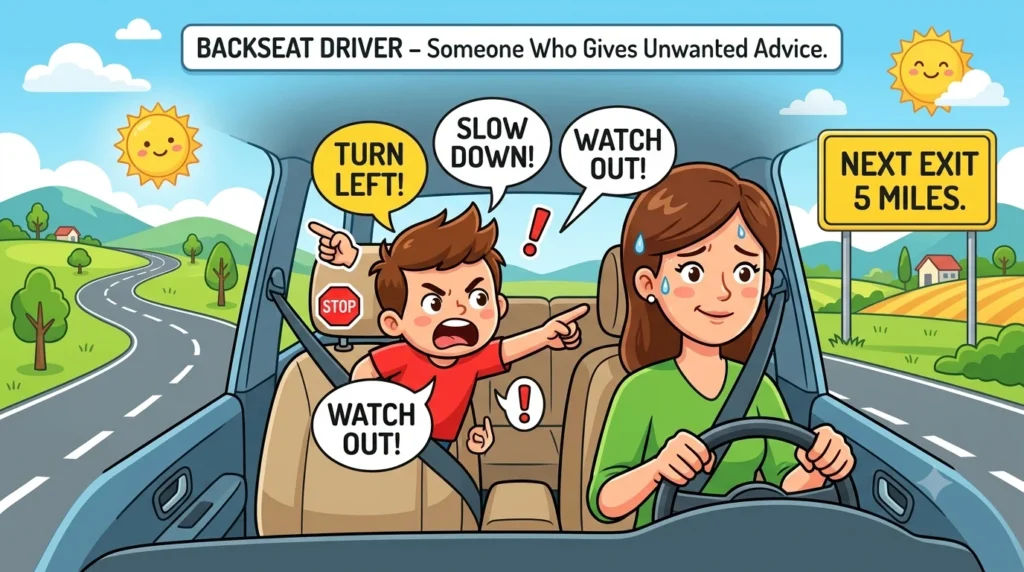
Example sentences:
- Don’t be such a backseat driver.
- My brother is always a backseat driver.
Common error: Thinking it’s a compliment.
Usage note: Usually has a negative meaning.
Drive Someone Crazy
Word-by-word meaning: Drive someone until they lose control.
Idiomatic meaning: Annoy or frustrate someone greatly.
Example sentences:
- The constant noise drives me crazy.
- Waiting for results is driving everyone crazy.
Common error: Taking the expression literally.
Usage note: One of the most common idioms in spoken English.
Live Life in the Fast Lane
Word-by-word meaning: Drive in the fastest traffic lane.
Idiomatic meaning: Live an exciting, adventurous, or risky lifestyle.
Example sentences:
- He enjoys living life in the fast lane.
- She left her quiet job to live in the fast lane.
Common error: Using it only to describe driving fast.
Usage note: Often describes ambitious or adventurous people.
Roadblock
Word-by-word meaning: Something blocking a road.
Idiomatic meaning: An obstacle preventing progress.
Example sentences:
- Lack of funding became a major roadblock.
- Fear can become a roadblock to success.
Common error: Thinking it only refers to police checkpoints.
Usage note: Common in education, business, and personal development.
Spin Your Wheels
Word-by-word meaning: Wheels turn without moving forward.
Idiomatic meaning: Work hard without making progress.
Example sentences:
- I’ve been spinning my wheels all week.
- Don’t waste time spinning your wheels.
Common error: Confusing it with multitasking.
Usage note: Expresses frustration and lack of progress.
Take a Back Seat
Word-by-word meaning: Sit behind the driver.
Idiomatic meaning: Allow someone else to lead.
Example sentences:
- I’ll take a back seat during this project.
- Sometimes it’s good to take a back seat and learn.
Common error: Assuming it means giving up.
Usage note: Usually polite and neutral.
At a Crossroads
Word-by-word meaning: A place where two roads meet.
Idiomatic meaning: Facing an important life decision.
Example sentences:
- She’s at a crossroads in her career.
- We’re at a crossroads and must choose carefully.
Common error: Using it for minor decisions.
Usage note: Often appears in motivational and personal growth topics.
Drive a Hard Bargain
Word-by-word meaning: Negotiate firmly.
Idiomatic meaning: Be tough during negotiations.
Example sentences:
- The buyer drove a hard bargain.
- She always drives a hard bargain.
Common error: Using it outside negotiation contexts.
Usage note: Popular in business English.
Run Out of Gas
Word-by-word meaning: A vehicle has no fuel.
Idiomatic meaning: Lose energy, motivation, or enthusiasm.
Example sentences:
- I ran out of gas halfway through the marathon.
- We ran out of gas after hours of studying.
Common error: Thinking it always refers to vehicles.
Usage note: Informal and commonly used.
Get the Green Light
Word-by-word meaning: The traffic signal turns green.
Idiomatic meaning: Receive permission to continue.
Example sentences:
- We finally got the green light.
- The manager gave us the green light.
Common error: Forgetting “get” or “give.”
Usage note: Extremely common in workplaces.
Red Flag
Word-by-word meaning: A warning signal.
Idiomatic meaning: A sign of danger or a potential problem.
Example sentences:
- His attitude was a major red flag.
- Ignoring deadlines is a red flag.
Common error: Overusing it for small issues.
Usage note: Frequently used in relationships, hiring, and business.
Off the Road
Word-by-word meaning: Not driving on the road.
Idiomatic meaning: Temporarily unavailable or inactive.
Example sentences:
- I’ll be off the road for a week.
- The truck is off the road for repairs.
Common error: Assuming it means permanently retired.
Usage note: Mostly informal.
Drive Home a Point
Word-by-word meaning: Drive until reaching home.
Idiomatic meaning: Emphasize something strongly.
Example sentences:
- The teacher drove home the point with examples.
- The presentation drove home the importance of teamwork.
Common error: Interpreting it literally.
Usage note: Common in speeches and education.
Make a U-Turn
Word-by-word meaning: Turn a vehicle around completely.
Idiomatic meaning: Completely change a decision or opinion.
Example sentences:
- The company made a U-turn on its policy.
- He made a U-turn after hearing new evidence.
Common error: Using it for minor changes.
Usage note: Frequently appears in politics and news.
Crash Course
Word-by-word meaning: Intensive learning in a short time.
Idiomatic meaning: A fast-paced learning program.
Example sentences:
- I took a crash course in digital marketing.
- She completed a crash course before the interview.
Common error: Thinking “crash” means failure.
Usage note: Neutral and widely used.
On Autopilot
Word-by-word meaning: Automatic control system in a vehicle or aircraft.
Idiomatic meaning: Doing something automatically without much thought.
Example sentences:
- I finished my morning routine on autopilot.
- He was answering emails on autopilot.
Common error: Using it only for machines.
Usage note: Common in everyday conversations.
Quick Summary Table
| Car Idiom | Meaning |
|---|---|
| Hit the brakes | Stop or slow down |
| Step on the gas | Increase effort |
| In the driver’s seat | Be in control |
| Change gears | Change strategy |
| Backseat driver | Someone giving unwanted advice |
| Drive someone crazy | Annoy greatly |
| Live life in the fast lane | Live an exciting lifestyle |
| Roadblock | Obstacle |
| Spin your wheels | Make no progress |
| Take a back seat | Let others lead |
| At a crossroads | Face an important decision |
| Drive a hard bargain | Negotiate firmly |
| Run out of gas | Lose energy |
| Get the green light | Receive permission |
| Red flag | Warning sign |
| Off the road | Temporarily inactive |
| Drive home a point | Emphasize strongly |
| Make a U-turn | Change direction completely |
| Crash course | Intensive learning |
| On autopilot | Act automatically |
Tips to Remember Car Idioms Faster
- Imagine each idiom as a real driving scene.
- Create your own example sentences.
- Use one new idiom every day in conversation.
- Watch English movies and notice these expressions.
- Review the idioms weekly for better retention.
Frequently Asked Questions (FAQs)
What are car idioms?
Car idioms are figurative English expressions based on driving, roads, and vehicles. Their meanings are symbolic rather than literal.
Why are car idioms important?
They help you understand native speakers, improve fluency, and make your English sound more natural.
Are car idioms common in business English?
Yes. Idioms like get the green light, change gears, and in the driver’s seat are widely used in professional settings.
Can students use car idioms in exams?
Yes, when used correctly and in the right context, they can improve writing and speaking scores.
What’s the best way to learn car idioms?
Practice using them in daily conversations, write your own example sentences, and connect each idiom to a real-life situation.
Conclusion
Learning car idioms is one of the easiest ways to make your English more natural and expressive. These everyday expressions appear in conversations, workplaces, news articles, movies, and classrooms, making them valuable for learners at every level.
Don’t try to memorize all 20 at once. Instead, choose two or three idioms each week, use them in your speaking and writing, and review them regularly. Before long, you’ll be using phrases like hit the brakes, step on the gas, and get the green light with confidence—just like a native speaker.

Adrian Wells, author at SeekIdiom, shares easy explanations of English idioms with examples to help learners expand vocabulary and speak more confidently.