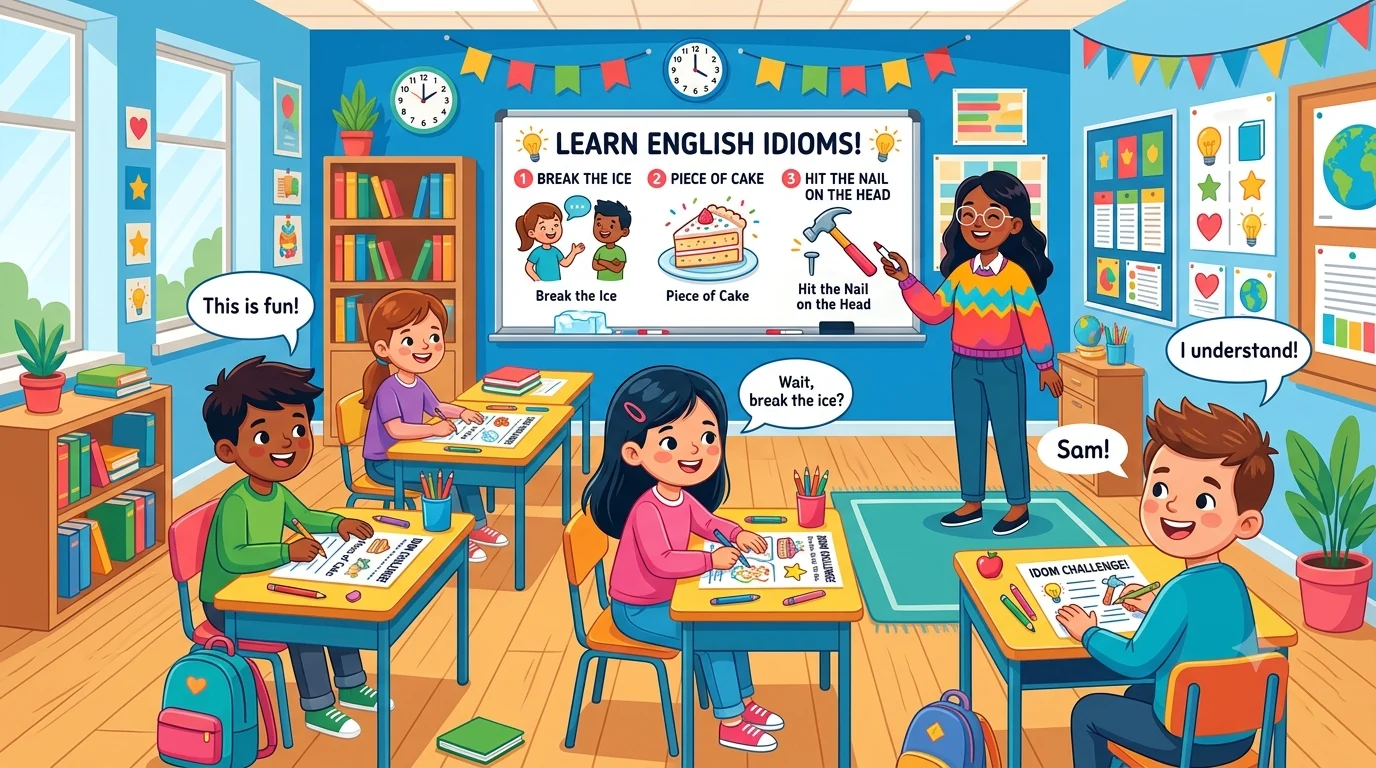
English becomes much more exciting when you understand idioms. Fun with Idioms Worksheets help learners practice these colorful expressions through simple explanations, real-life examples, and engaging activities. Imagine someone saying, “It’s raining cats and dogs,” and immediately knowing they mean it’s raining heavily—not that animals are falling from the sky!
Whether you’re an ESL learner, student, teacher, or parent, these worksheets make learning idioms interactive, memorable, and enjoyable.
Why Fun with Idioms Worksheets Make Learning Easier
Idioms are everywhere—in movies, books, conversations, and social media. Since their meanings aren’t literal, many English learners find them confusing.
Using Fun with Idioms Worksheets helps you:
- Improve vocabulary naturally
- Understand native English conversations
- Speak more confidently
- Remember idioms through practice
- Prepare for school exams and English proficiency tests
Benefits of Practicing Idioms with Worksheets
| Benefit | How It Helps |
|---|---|
| Better Vocabulary | Learn expressions used by native speakers |
| Stronger Speaking Skills | Sound more natural in conversations |
| Improved Reading | Understand stories, articles, and novels easily |
| Better Writing | Add variety and creativity to your writing |
| Long-Term Memory | Practice activities improve retention |
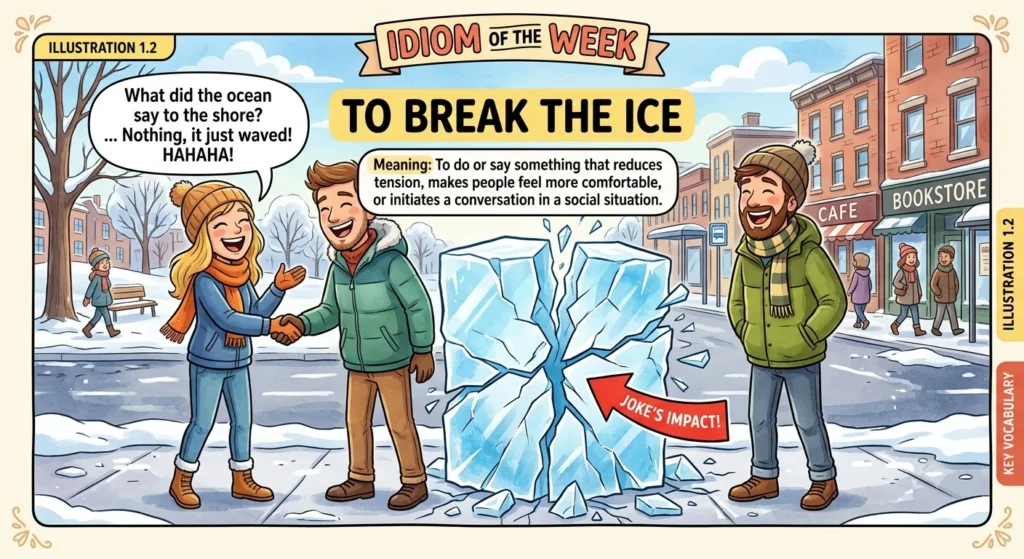
Break the Ice
Word-by-word Meaning
To literally break frozen ice.
Idiomatic Meaning
To make people feel comfortable when meeting or beginning a conversation.
Example Sentence
Sarah told a funny joke to break the ice during the first meeting.
Common Error
❌ Break an ice
✅ Break the ice
Usage Note
Perfect for introductions, interviews, classrooms, and social events.
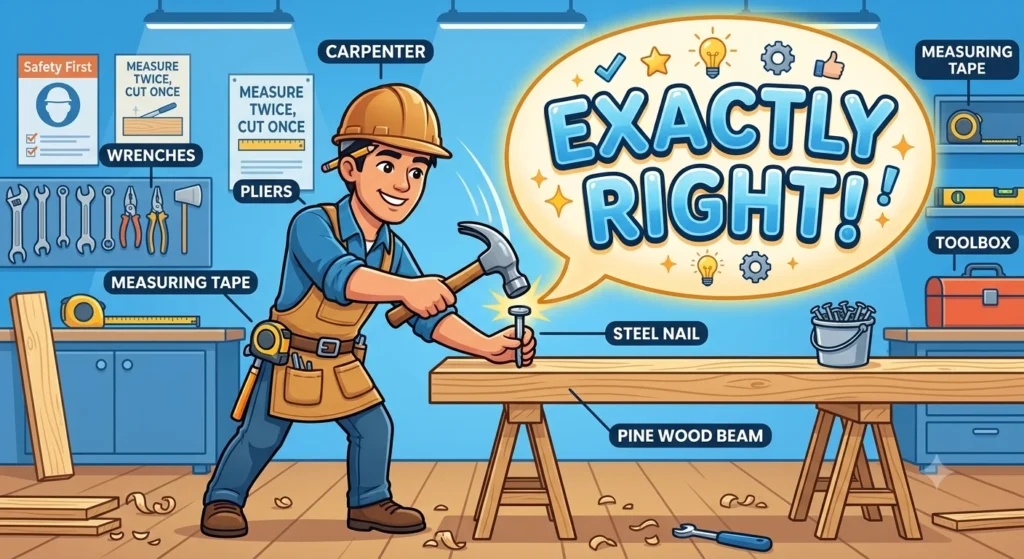
Hit the Nail on the Head
Word-by-word Meaning
Strike the head of a nail with a hammer.
Idiomatic Meaning
To describe something exactly or identify the real cause of a problem.
Example Sentence
Ali hit the nail on the head when he blamed poor communication.
Common Error
❌ Hit the head of the nail
Usage Note
Frequently used during discussions and problem-solving.
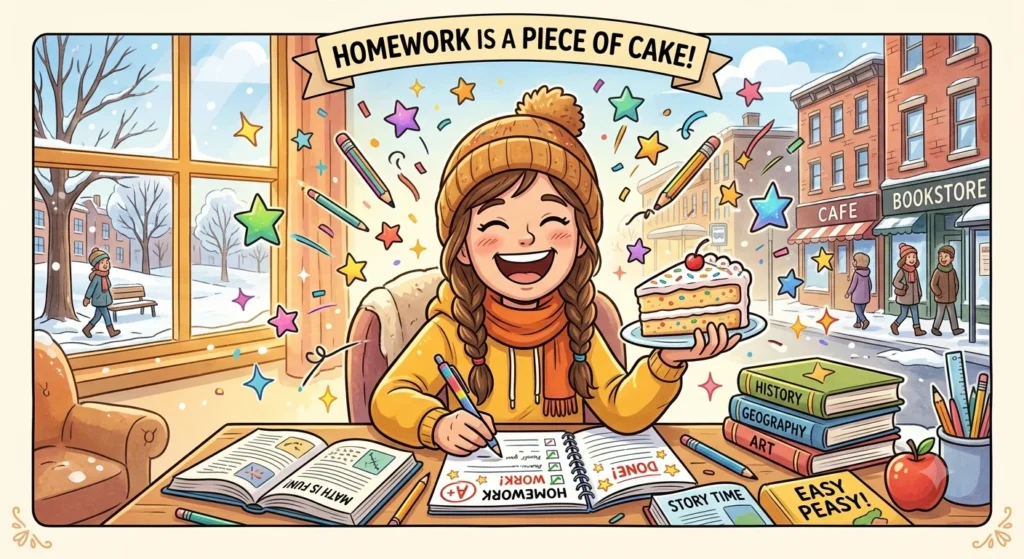
Piece of Cake
Word-by-word Meaning
A slice of cake.
Idiomatic Meaning
Something that is very easy.
Example Sentence
The English quiz was a piece of cake.
Common Error
❌ Piece of pie
Usage Note
Mostly used in casual conversations.
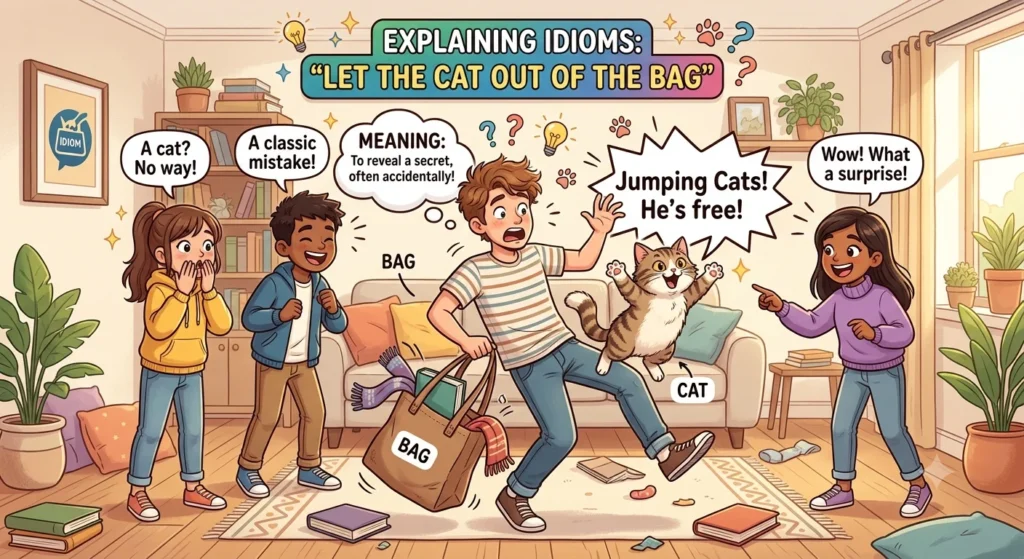
Let the Cat Out of the Bag
Word-by-word Meaning
Release a cat from a bag.
Idiomatic Meaning
Reveal a secret accidentally.
Example Sentence
Tom let the cat out of the bag about the birthday surprise.
Common Error
Using it when someone reveals a secret intentionally.
Usage Note
Best used for accidental disclosures.
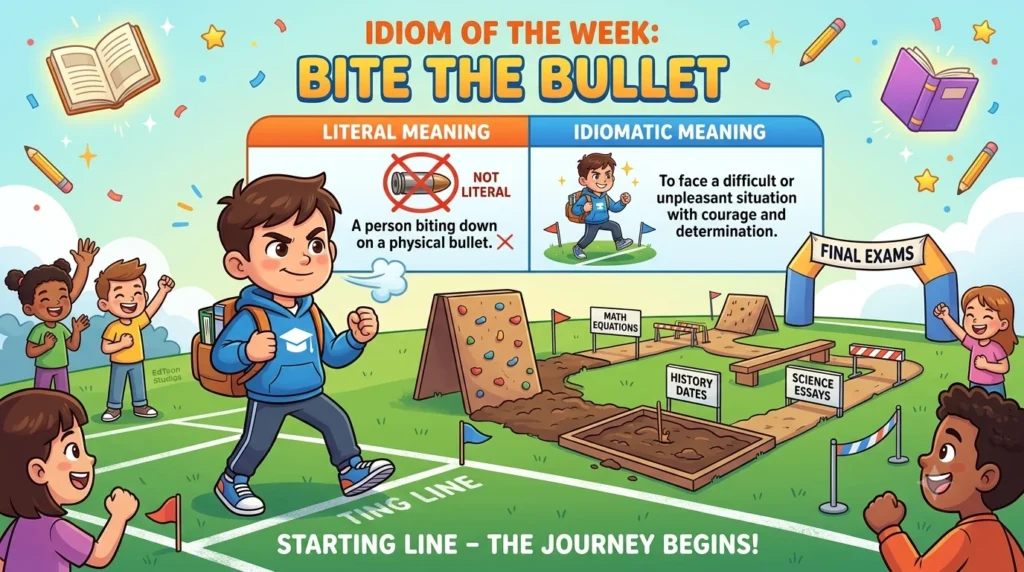
Bite the Bullet
Word-by-word Meaning
Literally bite a bullet.
Idiomatic Meaning
Face a difficult situation with courage.
Example Sentence
She bit the bullet and finally visited the dentist.
Common Error
❌ Bite the round
Usage Note
Often used for difficult decisions.
Cost an Arm and a Leg
Word-by-word Meaning
Something costs valuable body parts.
Idiomatic Meaning
Very expensive.
Example Sentence
That smartphone costs an arm and a leg.
Common Error
Using it for inexpensive items.
Usage Note
Informal expression for high prices.
Barking Up the Wrong Tree
Word-by-word Meaning
A dog barking at the wrong tree.
Idiomatic Meaning
Following the wrong idea or blaming the wrong person.
Example Sentence
You’re barking up the wrong tree if you think I broke it.
Common Error
Changing the word order.
Usage Note
Useful when correcting misunderstandings.
Burning the Midnight Oil
Word-by-word Meaning
Working late using an oil lamp.
Idiomatic Meaning
Studying or working late into the night.
Example Sentence
She is burning the midnight oil before her exams.
Common Error
❌ Burning the night oil
Usage Note
Popular among students and professionals.
Under the Weather
Word-by-word Meaning
Feeling below the weather.
Idiomatic Meaning
Feeling slightly sick.
Example Sentence
I’m feeling under the weather today.
Common Error
❌ In the weather
Usage Note
Used for minor illness.
Kick the Bucket
Word-by-word Meaning
Kick a bucket.
Idiomatic Meaning
To die.
Example Sentence
The old man kicked the bucket peacefully.
Common Error
Using it in formal situations.
Usage Note
An informal and sometimes humorous expression.
Once in a Blue Moon
Word-by-word Meaning
A rare blue moon.
Idiomatic Meaning
Something happens very rarely.
Example Sentence
We travel abroad once in a blue moon.
Common Error
❌ Once in a red moon
Usage Note
Great for describing rare events.
Cry Over Spilt Milk
Word-by-word Meaning
Cry because milk has spilled.
Idiomatic Meaning
Worry about something that cannot be changed.
Example Sentence
Don’t cry over spilt milk; learn from your mistake.
Common Error
❌ Cry on spilled milk
Usage Note
Encourages moving forward.
Hit the Sack
Word-by-word Meaning
Hit a sack.
Idiomatic Meaning
Go to bed.
Example Sentence
I’m tired. Time to hit the sack.
Common Error
❌ Hit the bag
Usage Note
Casual spoken English.
Cut Corners
Word-by-word Meaning
Take shortcuts around corners.
Idiomatic Meaning
Do something cheaply or carelessly.
Example Sentence
The builder cut corners, causing problems later.
Common Error
Thinking it only means saving money.
Usage Note
Usually has a negative meaning.
Face the Music
Word-by-word Meaning
Face a musical performance.
Idiomatic Meaning
Accept the consequences.
Example Sentence
He had to face the music after missing work.
Common Error
❌ Face the song
Usage Note
Useful in professional and personal situations.
Add Fuel to the Fire
Word-by-word Meaning
Pour fuel onto flames.
Idiomatic Meaning
Make a bad situation worse.
Example Sentence
His angry comments added fuel to the fire.
Common Error
Changing the expression unnecessarily.
Usage Note
Common in arguments and debates.
A Blessing in Disguise
Word-by-word Meaning
Something good hidden inside something bad.
Idiomatic Meaning
A bad event that later turns out to be beneficial.
Example Sentence
Losing my old job was a blessing in disguise.
Common Error
Using it before the positive outcome is known.
Usage Note
Perfect for motivational conversations.
The Ball Is in Your Court
Word-by-word Meaning
The ball is on your side.
Idiomatic Meaning
It is your turn to decide or act.
Example Sentence
I’ve explained everything. The ball is in your court.
Common Error
❌ The ball is yours
Usage Note
Often used in business and teamwork.
Back to Square One
Word-by-word Meaning
Return to the first square.
Idiomatic Meaning
Start again after failure.
Example Sentence
The plan failed, so we’re back to square one.
Common Error
Replacing it with “back to step one.”
Usage Note
Common in planning and projects.
The Best of Both Worlds
Word-by-word Meaning
Enjoy two worlds together.
Idiomatic Meaning
Get two advantages at the same time.
Example Sentence
Working remotely gives me the best of both worlds.
Common Error
❌ Both worlds best
Usage Note
Used when discussing balanced lifestyles.
How to Use Fun with Idioms Worksheets Effectively
To get the most from your worksheets:
- Learn 3–5 idioms each day.
- Read the meaning aloud.
- Write your own example sentence.
- Match idioms with their meanings.
- Complete fill-in-the-blank exercises.
- Practice speaking with a partner.
- Review previously learned idioms every week.
Pro Tip: Create flashcards from your worksheets for faster revision.
Fun Classroom Activities Using Idioms Worksheets
Teachers and parents can make lessons more engaging by trying these activities:
- 🎯 Idiom Matching Game
- 🎭 Charades with Idioms
- 🧩 Picture Guessing Activity
- ✏️ Fill-in-the-Blank Worksheets
- 🎲 Idiom Bingo
- 💬 Pair Conversation Practice
- 📝 Story Writing Using Idioms
- 🏆 Weekly Idiom Challenge
These activities help learners remember idioms through repetition and real-life usage.
Common Mistakes When Learning Idioms
Avoid these common errors:
- Translating idioms word for word.
- Using idioms in formal academic writing without checking the context.
- Mixing two different idioms together.
- Changing important words inside an idiom.
- Memorizing meanings without practicing in sentences.
Remember: Idioms should always be learned in context.
Frequently Asked Questions
1. What are Fun with Idioms Worksheets?
They are educational worksheets that teach English idioms through exercises, meanings, examples, matching activities, and quizzes.
2. Are idiom worksheets suitable for beginners?
Yes. Most worksheets start with simple, commonly used idioms and gradually introduce more advanced expressions.
3. How often should I practice idioms?
Practicing for 10–15 minutes every day helps improve memory and confidence much faster than studying occasionally.
4. Can idioms improve my English speaking skills?
Absolutely. Idioms make your English sound more fluent, natural, and similar to that of native speakers.
5. Where can I find printable idiom worksheets?
Many educational websites, ESL platforms, teacher resource libraries, and language-learning blogs offer free printable idiom worksheets.
Conclusion
Learning idioms doesn’t have to be difficult. With Fun with Idioms Worksheets, you can build your vocabulary, improve your speaking skills, and understand native English conversations with confidence. By practicing a few idioms every day, writing your own examples, and using them in real conversations, you’ll quickly make these expressions a natural part of your English.
Start with today’s 20 idioms, revisit them regularly, and keep adding new ones to your collection. Every worksheet brings you one step closer to speaking English naturally and confidently.

Adrian Wells, author at SeekIdiom, shares easy explanations of English idioms with examples to help learners expand vocabulary and speak more confidently.