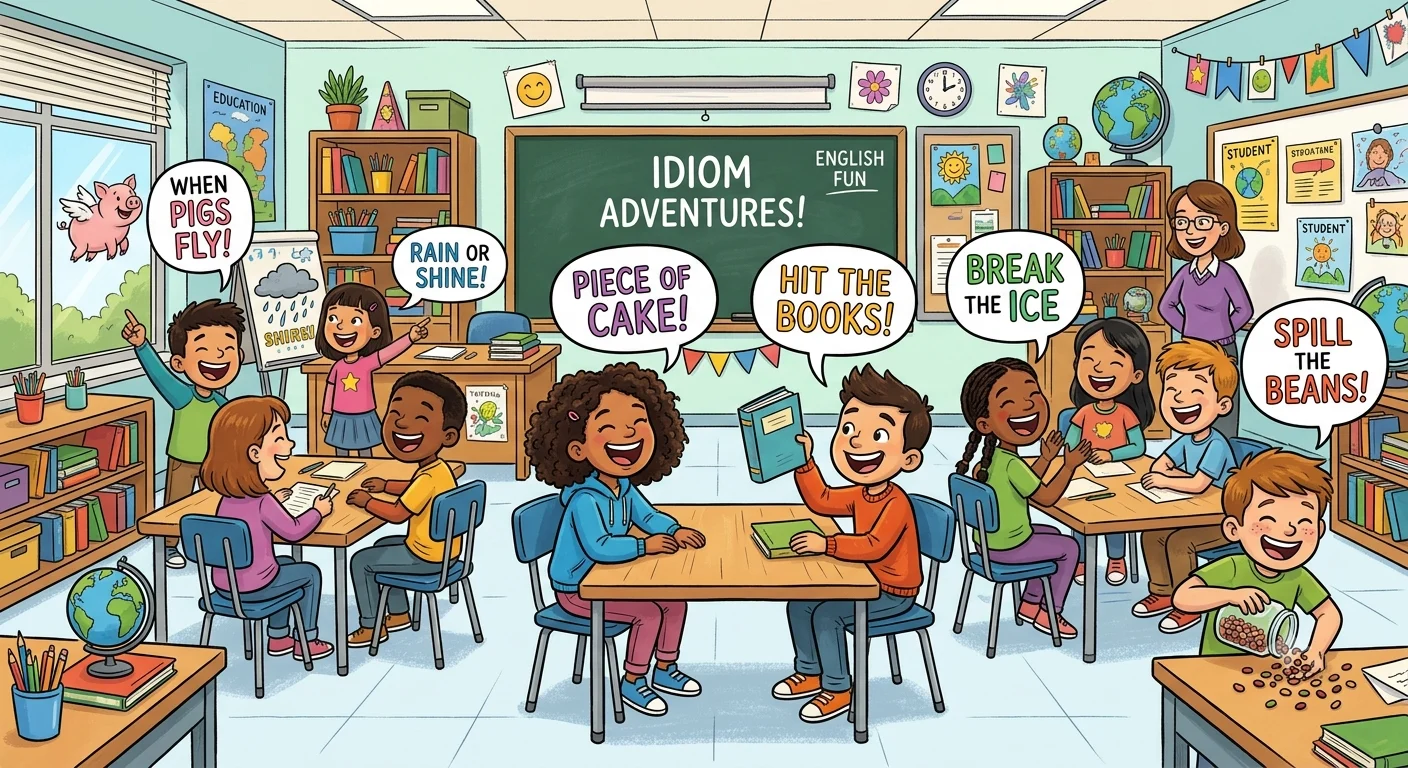
Ever tried to sound more fluent in English but got stuck using boring words? Funny idioms are your secret weapon! These quirky phrases make conversations lively, help you express emotions creatively, and are perfect for students who want to learn while having fun. In this post, we’ll explore funny idioms examples for students, complete with meanings, examples, and tips for correct usage
Here’s a list of 20 idioms that are both amusing and useful for everyday conversation. Each idiom includes a detailed breakdown to make learning easy and enjoyable.
Break the ice
- Word-by-word meaning: To shatter frozen water (ice).
- Idiomatic/figurative meaning: To start a conversation in a social setting.

- Example sentences:
- “I told a joke at the party to break the ice.”
- “I told a joke at the party to break the ice.”
- Common error: Using it to mean literally breaking ice.
- Usage note: Often used in social or academic introductions.
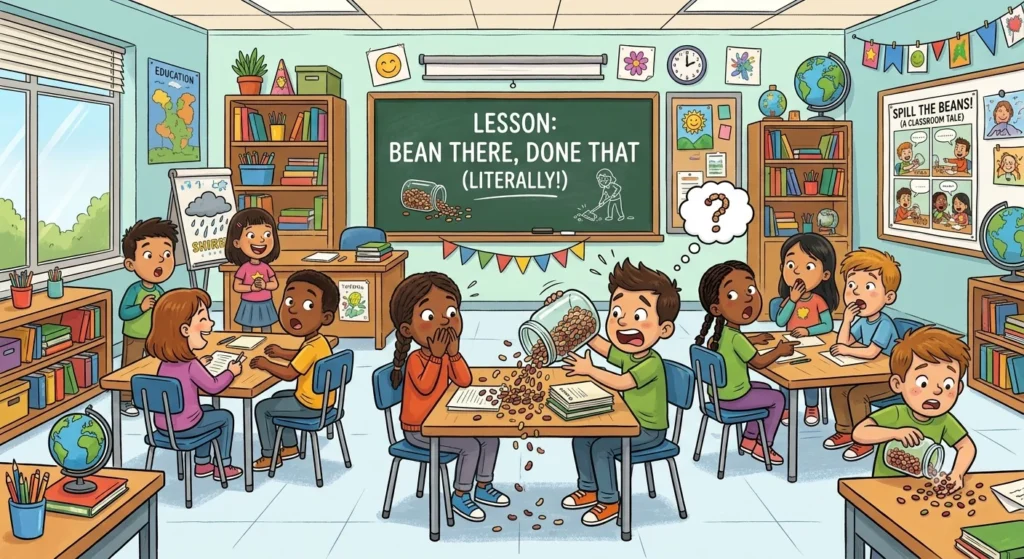
Spill the beans
- Word-by-word meaning: To drop actual beans.
- Idiomatic meaning: To reveal a secret.
- Example sentences:
- “Don’t spill the beans about the surprise party!”
- “Don’t spill the beans about the surprise party!”
- Common error: Misusing it as “spill beans” without “the.”
- Usage note: Informal, suitable for friends or classmates.
Hit the books
- Word-by-word meaning: To physically strike books.
- Idiomatic meaning: To study hard.

- Example sentences:
- “I need to hit the books for my final exams.”
- “I need to hit the books for my final exams.”
- Common error: Using it as “hit books” only.
- Usage note: Casual, academic context.
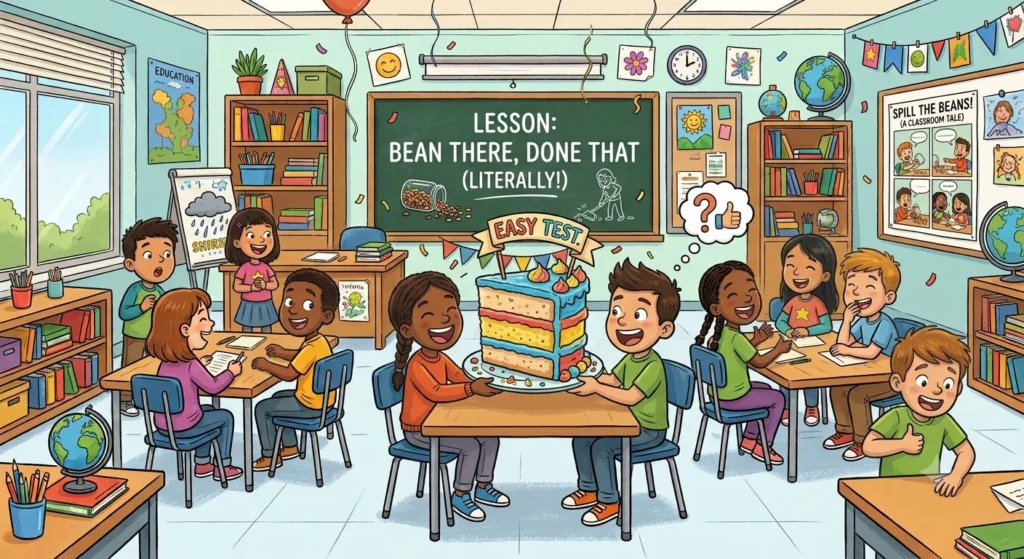
Piece of cake
- Word-by-word meaning: A slice of dessert.
- Idiomatic meaning: Something very easy.
- Example sentences:
- “The math quiz was a piece of cake.”
- “The math quiz was a piece of cake.”
- Common error: Confusing with “a cake piece.”
- Usage note: Informal, fun, encouraging.
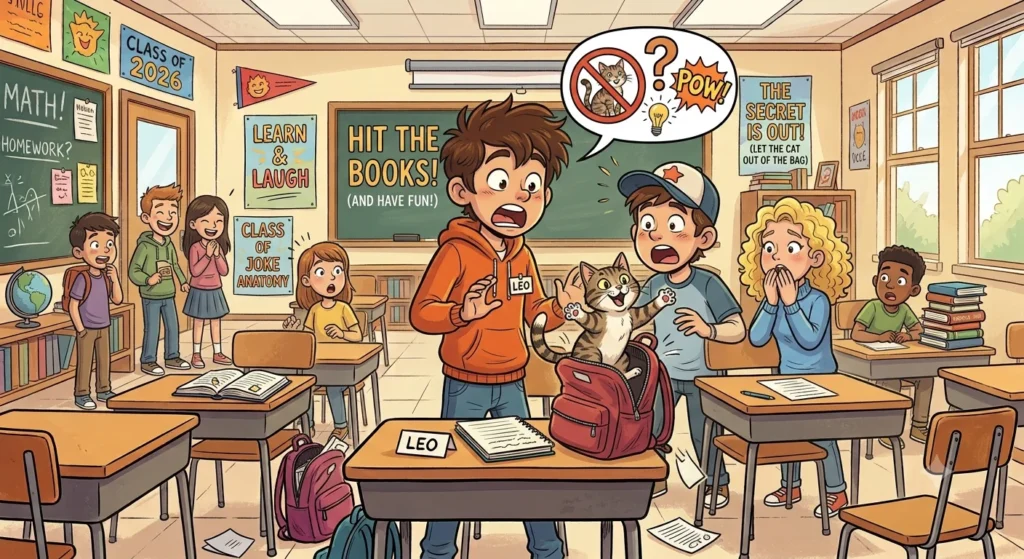
Let the cat out of the bag
- Word-by-word meaning: Releasing a cat from a sack.
- Idiomatic meaning: Reveal a hidden secret unintentionally.
- Example sentences:
- “He let the cat out of the bag about the surprise trip.”
- “He let the cat out of the bag about the surprise trip.”
- Common error: Misplacing “the bag” or using it literally.
- Usage note: Often used humorously in casual conversations.
Bite the bullet
- Word-by-word meaning: To literally bite a bullet.
- Idiomatic meaning: To endure a painful situation bravely.
- Example sentences:
- “I had to bite the bullet and submit my assignment late.”
- “I had to bite the bullet and submit my assignment late.”
- Common error: Using in non-painful contexts.
- Usage note: Can be motivational in academic situations.
Caught between a rock and a hard place
- Word-by-word meaning: Trapped physically between rocks.
- Idiomatic meaning: Facing two difficult choices.
- Example sentences:
- “I was caught between a rock and a hard place deciding between two colleges.”
- “I was caught between a rock and a hard place deciding between two colleges.”
- Common error: Omitting “and a hard place.”
- Usage note: Often in writing or serious student discussions.
Hit the sack
- Word-by-word meaning: Punch a bag.
- Idiomatic meaning: Go to sleep.
- Example sentences:
- “I’m exhausted; time to hit the sack.”
- “I’m exhausted; time to hit the sack.”
- Common error: Thinking it means exercise.
- Usage note: Informal, friendly tone.
Kick the bucket
- Word-by-word meaning: Strike a bucket with your foot.
- Idiomatic meaning: To die (humorous, euphemistic).
- Example sentences:
- “Grandpa joked, ‘I hope I don’t kick the bucket during exam week!’”
- “Grandpa joked, ‘I hope I don’t kick the bucket during exam week!’”
- Common error: Using it in serious contexts.
- Usage note: Usually humorous or lighthearted.
Under the weather
- Word-by-word meaning: Beneath atmospheric conditions.
- Idiomatic meaning: Feeling sick or unwell.
- Example sentences:
- “I’m under the weather today, so I’ll skip class.”
- “I’m under the weather today, so I’ll skip class.”
- Common error: Thinking it means rainy weather literally.
- Usage note: Common and polite way to describe illness.
Costs an arm and a leg
- Word-by-word meaning: Expensive in body parts.
- Idiomatic meaning: Very expensive.
- Example sentences:
- “This new laptop costs an arm and a leg.”
- “This new laptop costs an arm and a leg.”
- Common error: Using it literally.
- Usage note: Casual, can exaggerate for humor.
When pigs fly
- Word-by-word meaning: Flying pigs.
- Idiomatic meaning: Something impossible.
- Example sentences:
- “He’ll clean his room when pigs fly.”
- “He’ll clean his room when pigs fly.”
- Common error: Misusing as a serious expectation.
- Usage note: Humorous, exaggerates impossibility.
Pull someone’s leg
- Word-by-word meaning: Physically tug a leg.
- Idiomatic meaning: Tease or joke with someone.
- Example sentences:
- “I was just pulling your leg about failing the exam.”
- “I was just pulling your leg about failing the exam.”
- Common error: Thinking it means harming someone.
- Usage note: Friendly teasing only.
Blow off steam
- Word-by-word meaning: Release pressure via blowing.
- Idiomatic meaning: Release stress or anger.
- Example sentences:
- “After exams, students like to blow off steam by playing football.”
- “After exams, students like to blow off steam by playing football.”
- Common error: Using literally.
- Usage note: Common in informal stress-relief contexts.
Go bananas
- Word-by-word meaning: Transform into a banana.
- Idiomatic meaning: Go crazy or overly excited.
- Example sentences:
- “She went bananas when she won the scholarship.”
- “She went bananas when she won the scholarship.”
- Common error: Using in calm situations.
- Usage note: Fun, informal expression.
Up in the air
- Word-by-word meaning: Floating in the sky.
- Idiomatic meaning: Uncertain or undecided.
- Example sentences:
- “Our trip plan is still up in the air.”
- “Our trip plan is still up in the air.”
- Common error: Thinking it’s a literal flight.
- Usage note: Can be used in academic or casual discussion.
Barking up the wrong tree
- Word-by-word meaning: Dog barking at the wrong tree.
- Idiomatic meaning: Pursuing the wrong course or person.
- Example sentences:
- “You’re barking up the wrong tree if you think I cheated.”
- “You’re barking up the wrong tree if you think I cheated.”
- Common error: Confusing with literal barking.
- Usage note: Polite correction in conversation.
Throw in the towel
- Word-by-word meaning: Toss a towel.
- Idiomatic meaning: Give up.
- Example sentences:
- “I won’t throw in the towel until I pass this test.”
- “I won’t throw in the towel until I pass this test.”
- Common error: Using literally.
- Usage note: Motivational or academic contexts.
Cut corners
- Word-by-word meaning: Literally trim edges.
- Idiomatic meaning: Do something poorly to save time/money.
- Example sentences:
- “Don’t cut corners on your essay research.”
- “Don’t cut corners on your essay research.”
- Common error: Thinking it’s literal cutting.
- Usage note: Academic or professional warning.
Head in the clouds
- Word-by-word meaning: Brain floating above.
- Idiomatic meaning: Daydreaming or being inattentive.
- Example sentences:
- “She has her head in the clouds during lectures.”
- “She has her head in the clouds during lectures.”
- Common error: Literal sky interpretation.
- Usage note: Commonly used in student contexts.
FAQs About Funny Idioms
Q1: How can I remember idioms easily?
A: Visualize the idiom literally, then connect it to its figurative meaning. Using flashcards or cartoons helps.
Q2: Can I use idioms in essays?
A: Yes, but avoid overusing them in formal essays. Save them for personal statements or creative writing.
Q3: Are these idioms only for students?
A: No, anyone can use them! But students find them particularly fun and memorable.
Q4: How do idioms improve English?
A: They enhance vocabulary, make speech expressive, and help in sounding like a native speaker.
Q5: Is it okay to make up idioms?
A: Creative writing allows it, but common idioms are best for clear communication.
Conclusion
Learning idioms doesn’t have to be boring! Start using these funny idioms examples for students in daily conversations, classroom discussions, or even in your essays. Practice, make mistakes, laugh, and soon these idioms will become a natural part of your English.

Adrian Wells, author at SeekIdiom, shares easy explanations of English idioms with examples to help learners expand vocabulary and speak more confidently.