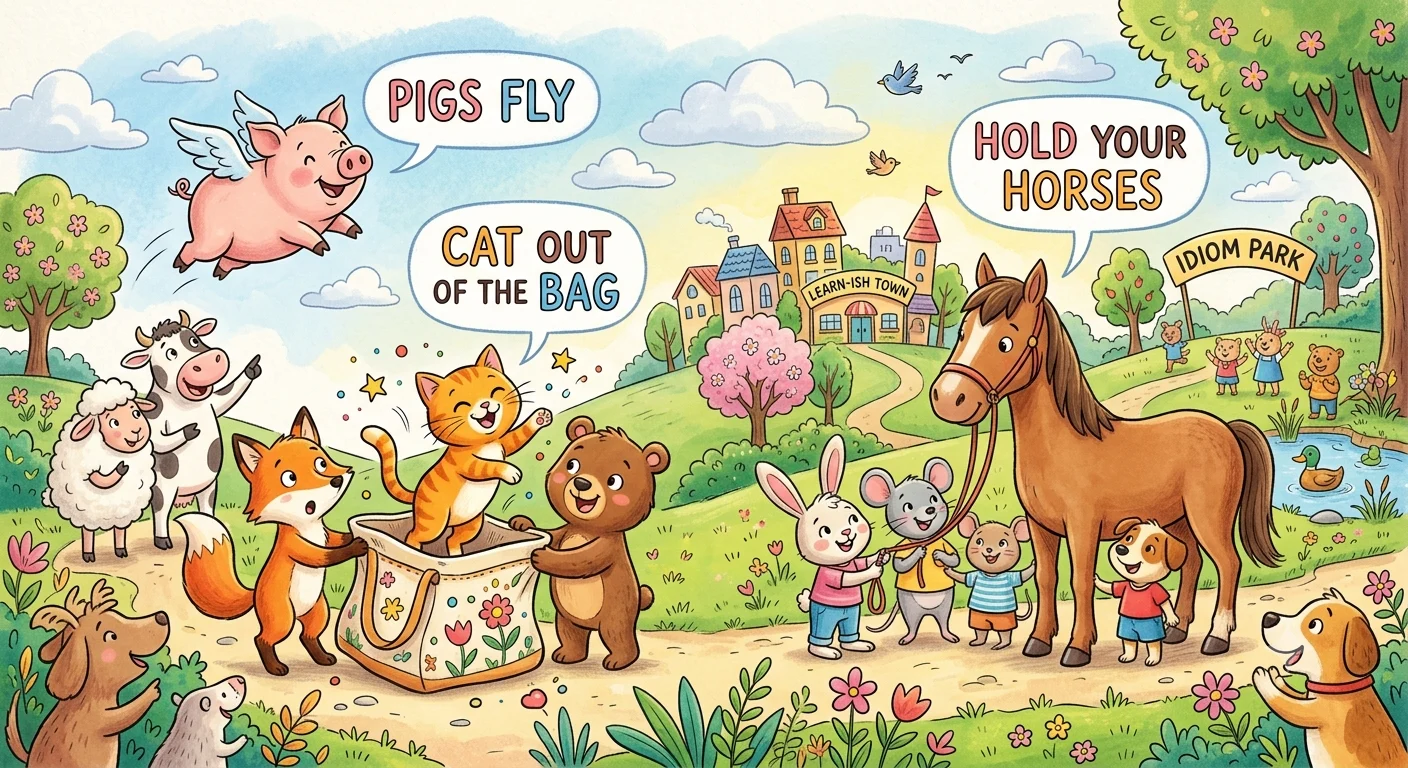
Ever noticed how English has idioms that sound downright goofy? Picture someone saying, “Hold your horses!” while you’re rushing to catch the bus—makes you smile, right? Goofy idioms are quirky expressions that can confuse learners but also make conversations lively and fun. In this guide, we’ll explore 20 famous goofy idioms, breaking down their literal meanings, figurative meanings, example sentences, common errors, and usage tips so you can use them naturally.
Hold Your Horses
Word-by-Word Meaning
Hold = to grasp; horses = the animals.
Idiomatic/Figurative Meaning
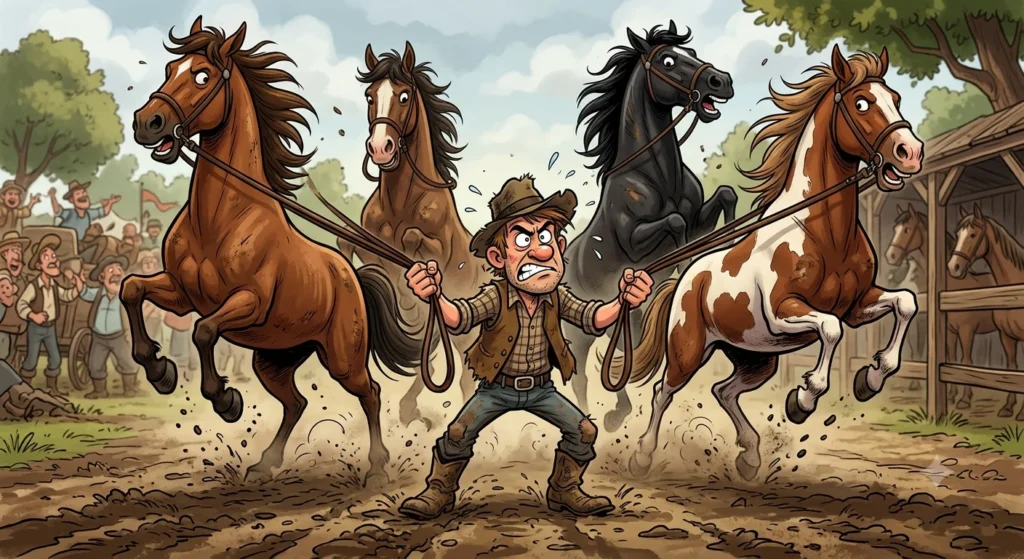
Wait a moment; be patient.
Example Sentences
- “Hold your horses! Dinner isn’t ready yet.”
- “Before making a decision, hold your horses and think it through.”
Common Error
Using it in formal writing; it’s mostly casual.
Usage Note
Perfect for friendly conversation or informal contexts.
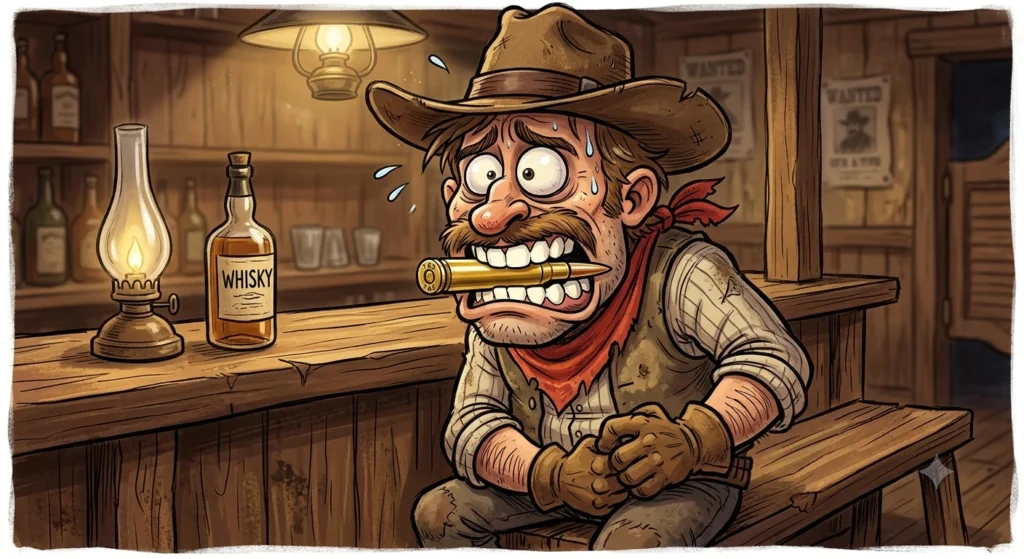
Bite the Bullet
Word-by-Word Meaning
Bite = use your teeth; bullet = ammunition.
Idiomatic/Figurative Meaning
To endure a painful or unpleasant situation bravely.
Example Sentences
- “I didn’t want to apologize, but I had to bite the bullet.”
- “He bit the bullet and faced the exam without studying.”
Common Error
Misusing it as a literal action.
Usage Note
Works best when describing bravery in tough situations.
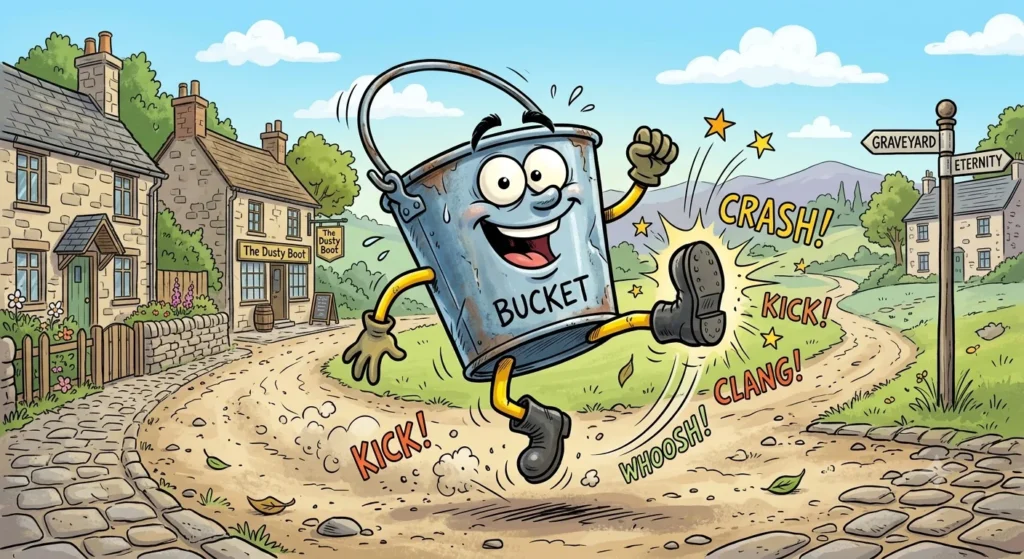
Kick the Bucket
Word-by-Word Meaning
Kick = strike; bucket = container.
Idiomatic/Figurative Meaning
To die.
Example Sentences
- “I hope my old laptop doesn’t kick the bucket before I save my work.”
- “Sadly, their pet cat kicked the bucket last week.”
Common Error
Using in formal or serious contexts; consider it humorous/casual.
Usage Note
Used jokingly or in informal storytelling.
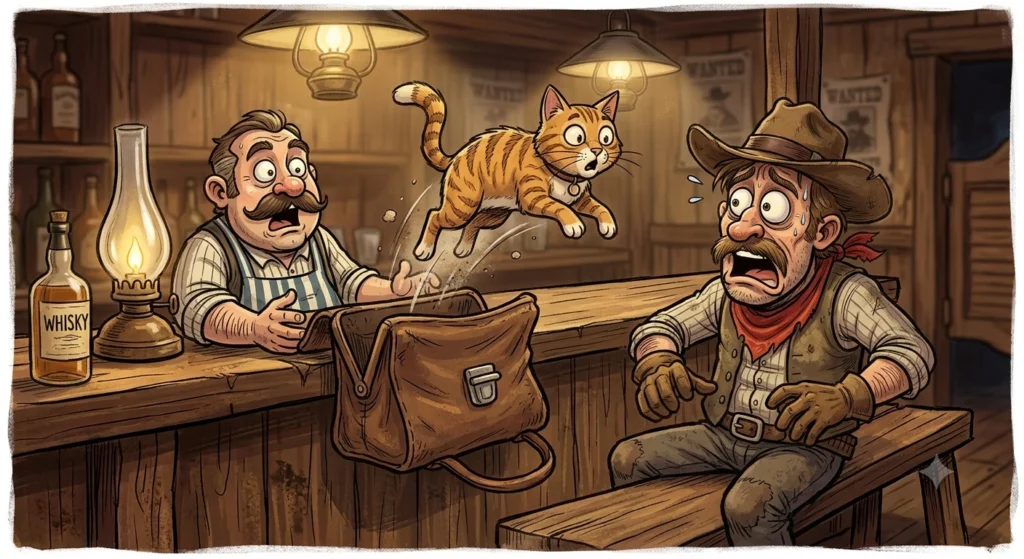
Let the Cat Out of the Bag
Word-by-Word Meaning
Let = release; cat = feline; bag = container.
Idiomatic/Figurative Meaning
Reveal a secret unintentionally.
Example Sentences
- “She let the cat out of the bag about the surprise party.”
- “Oops! I think I let the cat out of the bag.”
Common Error
Confusing with “spill the beans” (similar meaning, slightly different tone).
Usage Note
Great for playful storytelling.
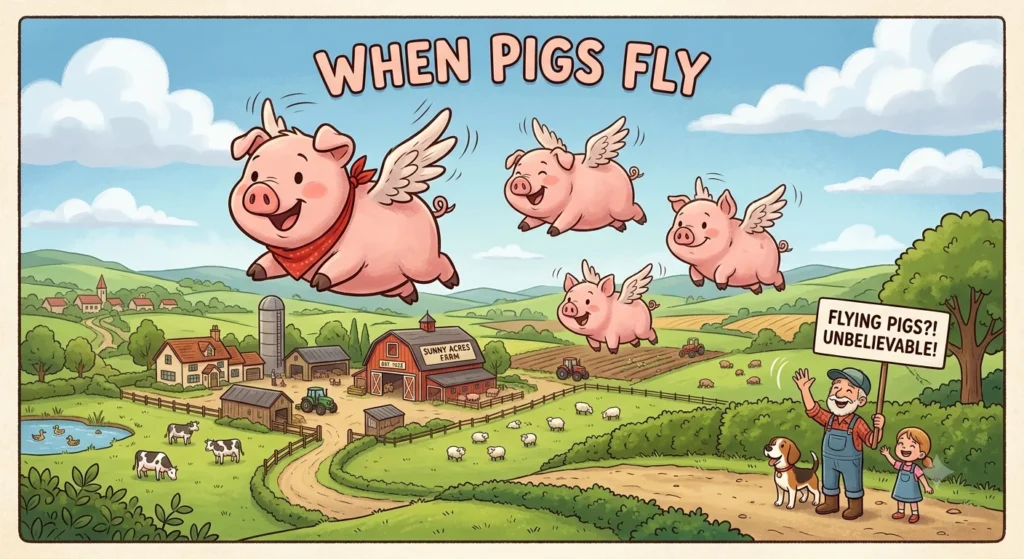
When Pigs Fly
Word-by-Word Meaning
When = at the time; pigs = farm animals; fly = move through the air.
Idiomatic/Figurative Meaning
Something that will never happen.
Example Sentences
- “Sure, he’ll clean his room when pigs fly.”
- “I’ll get a raise when pigs fly!”
Common Error
Using literally; it’s always figurative.
Usage Note
Used humorously to exaggerate impossibility.
Break a Leg
Word-by-Word Meaning
Break = fracture; leg = a limb.
Idiomatic/Figurative Meaning
A way to say “good luck,” usually in performing arts.
Example Sentences
- “Break a leg in your audition today!”
- “You’ll do great in the play; break a leg!”
Common Error
Using it literally; never wish someone actual harm.
Usage Note
Commonly used in theater or performances.
Butterflies in My Stomach
Word-by-Word Meaning
Butterflies = insects; stomach = belly.
Idiomatic/Figurative Meaning
Feeling nervous or anxious.
Example Sentences
- “I have butterflies in my stomach before speaking.”
- “She had butterflies before her first date.”
Common Error
Confusing with excitement; butterflies are usually nervousness.
Usage Note
Common in informal or storytelling contexts.
Cat Got Your Tongue
Word-by-Word Meaning
Cat = feline; got = obtained; tongue = organ for speaking.
Idiomatic/Figurative Meaning
Asking why someone is silent or speechless.
Example Sentences
- “Why so quiet? Cat got your tongue?”
- “I see the cat got your tongue after that question.”
Common Error
Using literally; it’s always figurative.
Usage Note
Mostly playful or teasing tone.
70+ Funny Idioms Examples for Students That Sound Hilarious 🤪
Cry Over Spilt Milk
Word-by-Word Meaning
Cry = shed tears; spilt = poured accidentally; milk = dairy liquid.
Idiomatic/Figurative Meaning
Worrying or being upset over something that cannot be changed.
Example Sentences
- “Don’t cry over spilt milk, just try again.”
- “It’s done, so don’t cry over spilt milk.”
Common Error
Taking literally; it’s a metaphor.
Usage Note
Encourages moving on from mistakes.
Elephant in the Room
Word-by-Word Meaning
Elephant = large animal; room = enclosed space.
Idiomatic/Figurative Meaning
An obvious problem or issue that people avoid discussing.
Example Sentences
- “We need to address the elephant in the room before continuing.”
- “The budget cuts were the elephant in the room.”
Common Error
Using literally; it’s always figurative.
Usage Note
Used in discussions or workplace scenarios.
Hit the Sack
Word-by-Word Meaning
Hit = strike; sack = bag or bed.
Idiomatic/Figurative Meaning
Go to bed or sleep.
Example Sentences
- “I’m exhausted; time to hit the sack.”
- “After the party, we hit the sack immediately.”
Common Error
Confusing with physical hitting; always about sleep.
Usage Note
Informal, casual conversation.
It’s Raining Cats and Dogs
Word-by-Word Meaning
Raining = water falling; cats and dogs = animals.
Idiomatic/Figurative Meaning
It’s raining very heavily.
Example Sentences
- “Grab an umbrella; it’s raining cats and dogs!”
- “We can’t play outside; it’s raining cats and dogs.”
Common Error
Using literally; not actual animals.
Usage Note
Used humorously or in storytelling.
Let Sleeping Dogs Lie
Word-by-Word Meaning
Let = allow; sleeping = resting; dogs = animals; lie = stay.
Idiomatic/Figurative Meaning
Avoid stirring up trouble or revisiting old conflicts.
Example Sentences
- “Don’t bring up the argument again; let sleeping dogs lie.”
- “She decided to let sleeping dogs lie and moved on.”
Common Error
Thinking it encourages laziness; it’s about avoiding conflict.
Usage Note
Useful in social or professional settings.
Mad as a Hatter
Word-by-Word Meaning
Mad = crazy; hatter = someone making hats.
Idiomatic/Figurative Meaning
Completely crazy or eccentric.
Example Sentences
- “He’s mad as a hatter sometimes, but very creative.”
- “That plan is mad as a hatter, but let’s try it!”
Common Error
Taking literally; it’s always figurative.
Usage Note
Used humorously or descriptively.
Pull Someone’s Leg
Word-by-Word Meaning
Pull = tug; leg = limb.
Idiomatic/Figurative Meaning
To joke or tease someone playfully.
Example Sentences
- “I was just pulling your leg about the surprise.”
- “Don’t worry, he’s pulling your leg.”
Common Error
Thinking it’s literal; no one actually pulls legs.
Usage Note
Friendly teasing context only.
Spill the Beans
Word-by-Word Meaning
Spill = drop; beans = food.
Idiomatic/Figurative Meaning
Reveal a secret or confidential info.
Example Sentences
- “She spilled the beans about the surprise party.”
- “Don’t spill the beans about the exam questions!”
Common Error
Using literally; beans rarely matter.
Usage Note
Common in playful or casual speech.
Take With a Grain of Salt
Word-by-Word Meaning
Take = accept; grain = tiny piece; salt = seasoning.
Idiomatic/Figurative Meaning
Be skeptical; don’t take something literally or seriously.
Example Sentences
- “Take his advice with a grain of salt.”
- “I take news from tabloids with a grain of salt.”
Common Error
Taking literally; it’s figurative.
Usage Note
Used when cautioning someone about trustworthiness.
Under the Weather
Word-by-Word Meaning
Under = beneath; weather = atmospheric conditions.
Idiomatic/Figurative Meaning
Feeling ill or sick.
Example Sentences
- “I feel under the weather today, so I’m staying home.”
- “He’s under the weather but should recover soon.”
Common Error
Taking literally; not about actual weather.
Usage Note
Common, casual phrase for mild sickness.
Your Guess Is as Good as Mine
Word-by-Word Meaning
Guess = estimate; mine = my estimate.
Idiomatic/Figurative Meaning
I have no idea either.
Example Sentences
- “Why is the printer not working? Your guess is as good as mine.”
- “When will they arrive? Your guess is as good as mine.”
Common Error
Using in formal writing; casual only.
Usage Note
Casual, friendly conversations when admitting uncertainty.
Barking Up the Wrong Tree
Word-by-Word Meaning
Barking = dog sound; tree = plant.
Idiomatic/Figurative Meaning
Accusing the wrong person or pursuing a mistaken idea.
Example Sentences
- “If you blame John, you’re barking up the wrong tree.”
- “She’s barking up the wrong tree with that strategy.”
Common Error
Thinking it’s literal; always figurative.
Usage Note
Useful in discussions or problem-solving contexts.
FAQs About Goofy Idioms
Q1: Can I use goofy idioms in formal writing?
A: Mostly no; they are casual and conversational.
Q2: How can I remember idioms easily?
A: Create funny mental images or associate them with real-life situations.
Q3: Are goofy idioms universal?
A: No, idioms are culture-specific; some may not translate literally.
Q4: Can I invent my own goofy idioms?
A: Absolutely! English loves playful creativity.
Q5: Can goofy idioms improve my spoken English?
A: Yes! They make conversations lively, humorous, and more natural.
Conclusion
Learning goofy idioms adds humor, creativity, and personality to your English. Practice one idiom a day in conversations, texts, or journals—you’ll remember them faster than you think. Don’t be afraid to get playful and have fun with language!

Julian Mercer, author at SeekIdiom, writes clear explanations of English idioms with examples to help learners improve vocabulary and communication skills.