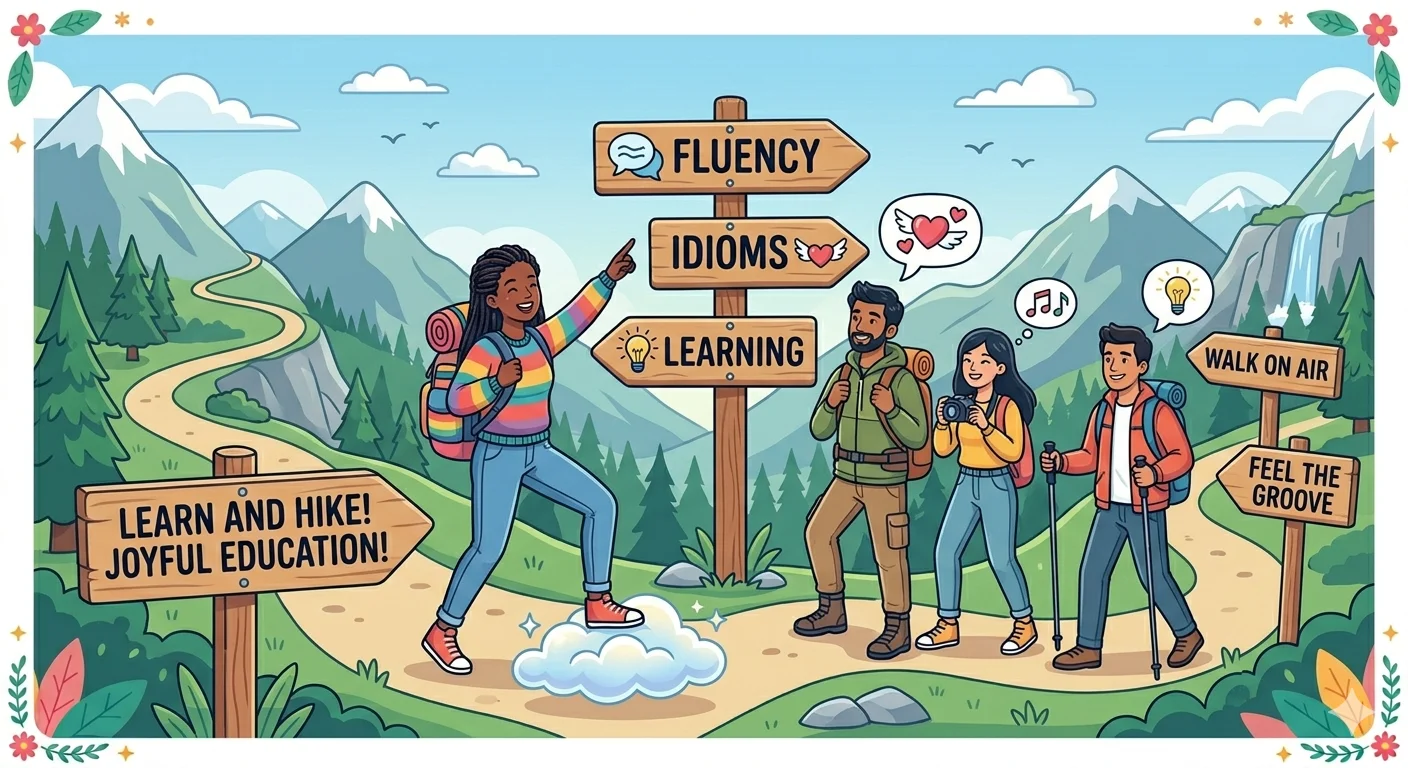
Ever felt like learning English is a long walk uphill? 😄 Hiking idioms make the journey more fun. From casual chats to motivational talks, these expressions help you sound natural, confident, and fluent—step by step.
In this guide, you’ll explore the 20 most famous hiking idioms, explained clearly with examples, common mistakes, and usage tips.
Why Hiking Idioms Matter in Everyday English
Hiking idioms aren’t only about mountains or trails. Native speakers use them to talk about:
- Life challenges
- Personal growth
- Career progress
- Motivation and perseverance
Learning these idioms helps you:
- Understand movies, books, and conversations
- Express struggles and success naturally
- Sound more fluent and confident
On the Right Track
Word-by-word meaning: Walking on the correct path
Idiomatic meaning: Doing something correctly
Example:
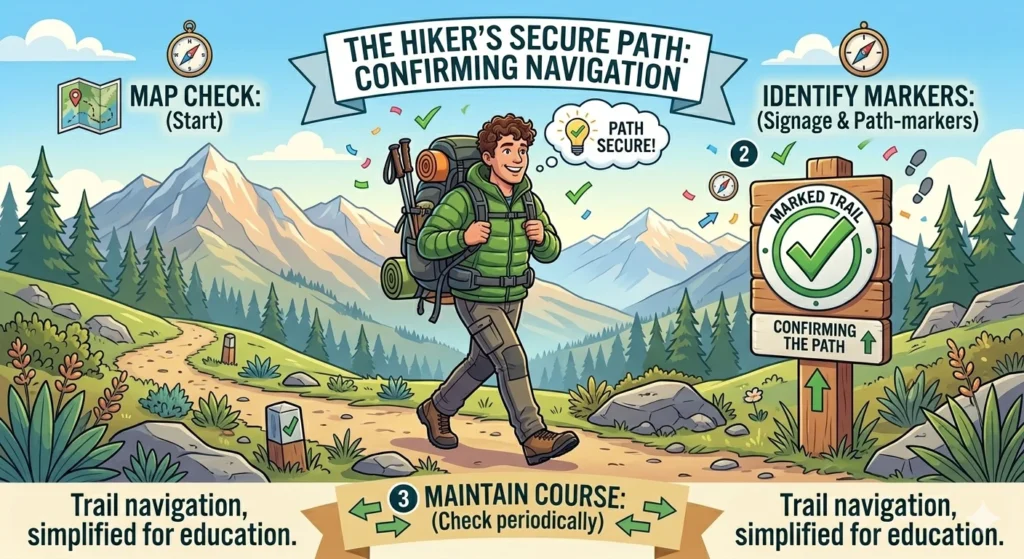
- Your study plan looks great—you’re on the right track.
Common error: Using it for physical paths only
Usage note: Often used for advice or encouragement
Blaze a Trail
Word-by-word meaning: Create a new path
Idiomatic meaning: Do something innovative or new
Example:
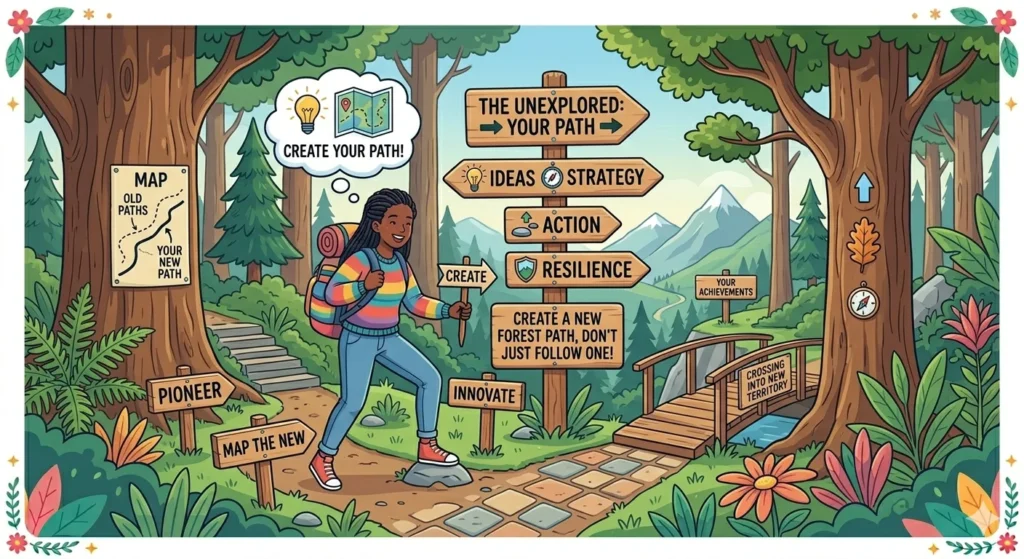
- She blazed a trail for women in tech.
Common error: Using it for small changes
Usage note: Best for major achievements
Take the High Road
Word-by-word meaning: Choose a higher path
Idiomatic meaning: Act morally or maturely
Example:
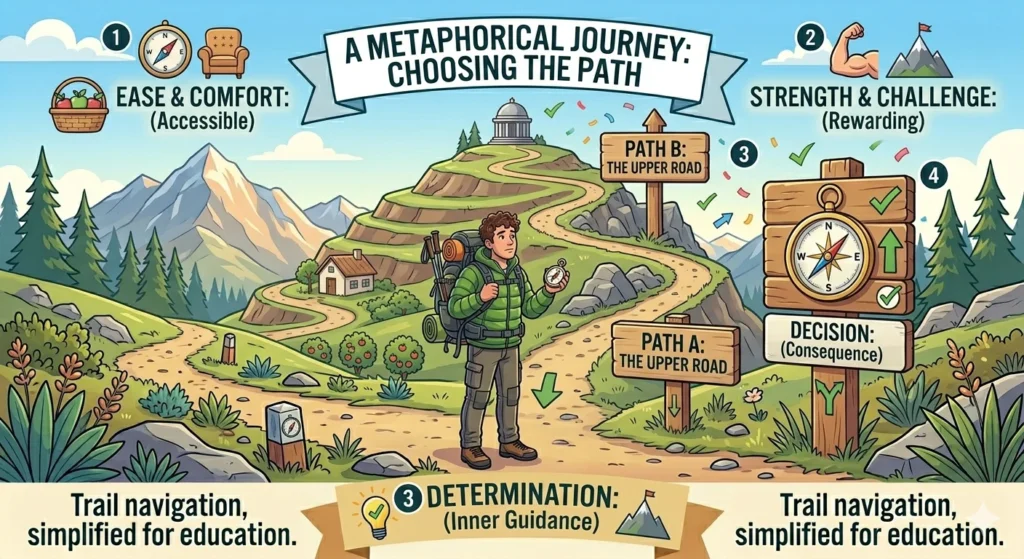
- He insulted me, but I took the high road.
Common error: Confusing with physical roads
Usage note: Common in conflicts or arguments
A Long Uphill Battle
Word-by-word meaning: Hard climb upward
Idiomatic meaning: A difficult struggle
Example:
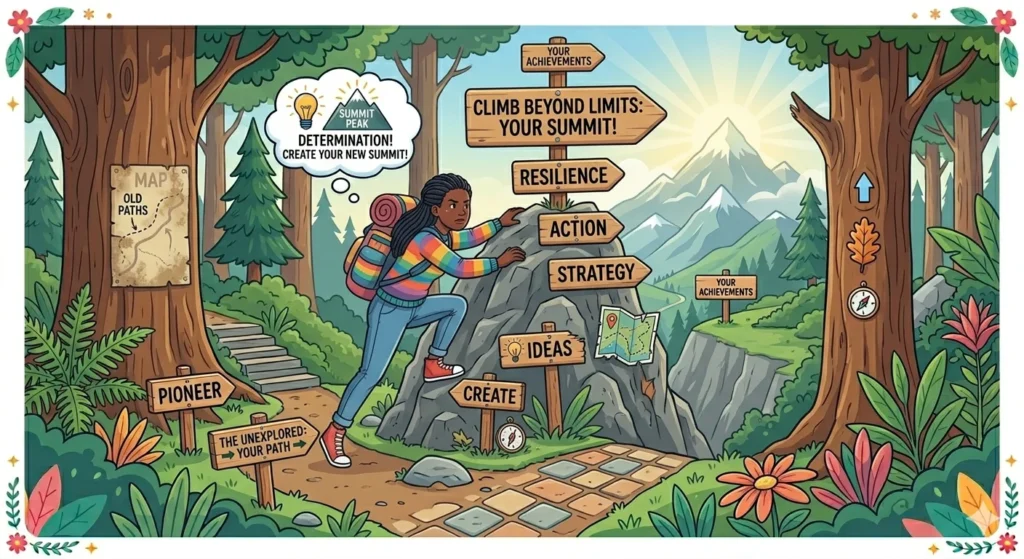
- Learning English can be a long uphill battle.
Common error: Using for short tasks
Usage note: Emphasizes difficulty over time
Go the Extra Mile
Word-by-word meaning: Walk further than required
Idiomatic meaning: Put in extra effort
Example:
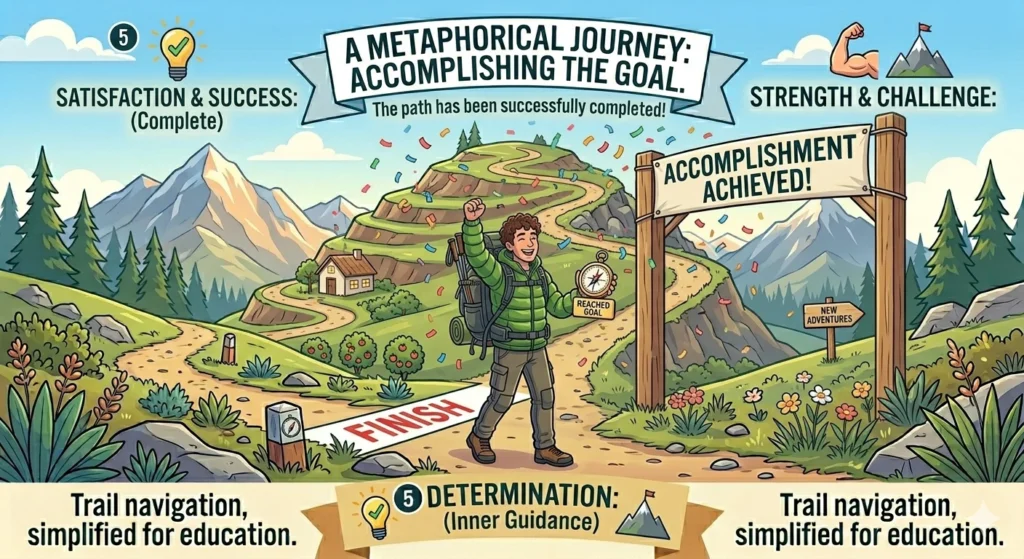
- She always goes the extra mile for clients.
Common error: Mixing with distance context
Usage note: Common in work or service situations
At a Crossroads
Word-by-word meaning: Where paths meet
Idiomatic meaning: Facing an important decision
Example:
- He’s at a crossroads in his career.
Common error: Using for minor choices
Usage note: Serious life or career decisions
Find Your Footing
Word-by-word meaning: Balance your feet
Idiomatic meaning: Become confident or stable
Example:
- It took time to find my footing at the new job.
Common error: Using only for walking
Usage note: Ideal for new situations
Off the Beaten Path
Word-by-word meaning: Away from common trails
Idiomatic meaning: Unusual or less popular
Example:
- We visited an off-the-beaten-path village.
Common error: Using for dangerous places
Usage note: Often positive and adventurous
Climb the Ladder
Word-by-word meaning: Move upward
Idiomatic meaning: Advance in career or status
Example:
- He’s climbing the corporate ladder.
Common error: Mixing with physical ladders
Usage note: Workplace-related idiom
Hit the Trail
Word-by-word meaning: Start walking
Idiomatic meaning: Begin a journey
Example:
- Let’s hit the trail early tomorrow.
Common error: Using in formal writing
Usage note: Casual and friendly tone
Lose Your Way
Word-by-word meaning: Get lost
Idiomatic meaning: Feel confused or directionless
Example:
- He lost his way after graduation.
Common error: Using only literally
Usage note: Emotional or life-related context
Back on Track
Word-by-word meaning: Return to the path
Idiomatic meaning: Recover from a problem
Example:
- After a break, she’s back on track.
Common error: Forgetting “on”
Usage note: Great for motivation
Pave the Way
Word-by-word meaning: Make a smooth road
Idiomatic meaning: Make something easier for others
Example:
- Her success paved the way for others.
Common error: Using for personal gain only
Usage note: Leadership and influence
83+ Dancing Idioms to Boost Vocabulary and Speaking Skills 🚀
Take a Detour
Word-by-word meaning: Change route
Idiomatic meaning: Do something different temporarily
Example:
- My career took a detour into freelancing.
Common error: Using for permanent changes
Usage note: Neutral or positive tone
Downhill from Here
Word-by-word meaning: Easy descent
Idiomatic meaning: Gets easier after this point
Example:
- The exam was hard, but it’s downhill from here.
Common error: Confusing with negative meaning
Usage note: Context decides tone
Lose Ground
Word-by-word meaning: Fall behind
Idiomatic meaning: Become less successful
Example:
- The team lost ground in the competition.
Common error: Using with physical land
Usage note: Competition-related
Chart Your Own Course
Word-by-word meaning: Plan your route
Idiomatic meaning: Choose your own path in life
Example:
- She charted her own course as an artist.
Common error: Overusing in casual chat
Usage note: Inspirational tone
Step by Step
Word-by-word meaning: One step at a time
Idiomatic meaning: Progress slowly but steadily
Example:
- Learn English step by step.
Common error: Using without context
Usage note: Encouraging and supportive
Reach the Summit
Word-by-word meaning: Reach the top
Idiomatic meaning: Achieve ultimate success
Example:
- Winning the award was reaching the summit.
Common error: Using for small wins
Usage note: Big achievements only
Walking on Thin Ice
Word-by-word meaning: Risky walking
Idiomatic meaning: In a dangerous situation
Example:
- You’re walking on thin ice with the boss.
Common error: Confusing with hiking safety
Usage note: Warning context
FAQs About Hiking Idioms
1. Are hiking idioms only about nature?
No. Most hiking idioms are used metaphorically in daily life and work.
2. Can I use hiking idioms in professional English?
Yes—many are common in business, motivation, and leadership contexts.
3. Are hiking idioms informal?
Most are neutral, but some are casual. Context matters.
4. How can I learn idioms faster?
Practice them in sentences and real-life situations.
5. Are hiking idioms common in American and British English?
Yes, they’re widely used in both.
Conclusion: Keep Moving Forward 🚶♀️
Learning hiking idioms is like going on a language adventure. You won’t master them overnight—but step by step, you’ll gain confidence, fluency, and clarity.
👉 Pick 3 idioms today.
👉 Use them in a sentence.
👉 Come back tomorrow and hike a little further.
Your English journey is already on the right track.

Hazel Monroe, author at SeekIdiom, explains English idioms through simple meanings and examples, helping learners improve vocabulary and everyday usage.