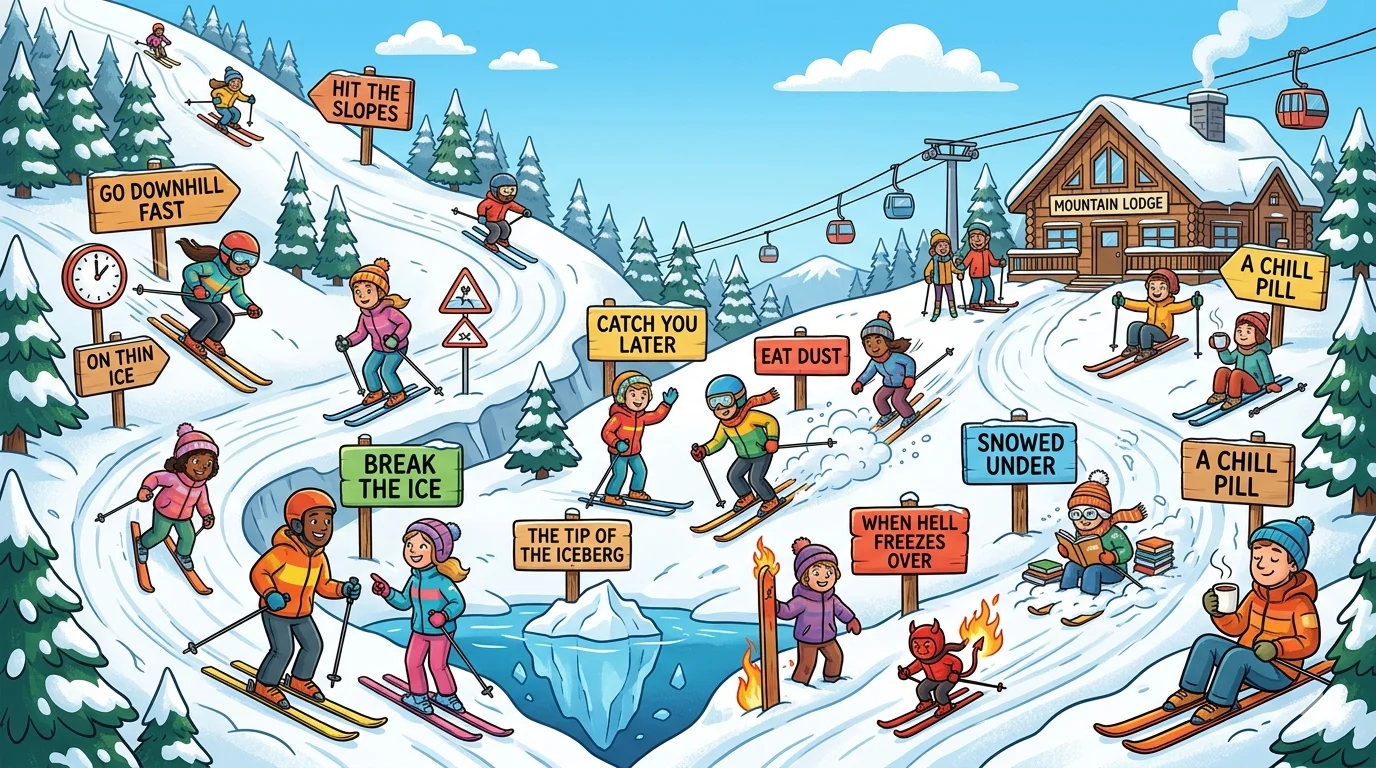
Ever heard someone say “We’re on a slippery slope” or “Let’s ski around the issue” and wondered what skiing has to do with daily life? Skiing idioms are common English expressions inspired by skiing and winter sports—and native speakers use them all the time. Let’s break them down in a fun, simple, and practical way so you can use them confidently in real conversations.
Why Learn Skiing Idioms?
Skiing idioms help you:
- Sound more natural and fluent
- Understand movies, news, and conversations
- Express ideas creatively and clearly
Think of them as shortcuts to expressive English ❄️
On a Slippery Slope
Word-by-word meaning: A smooth, icy hill
Idiomatic meaning: A situation likely to get worse
Example:
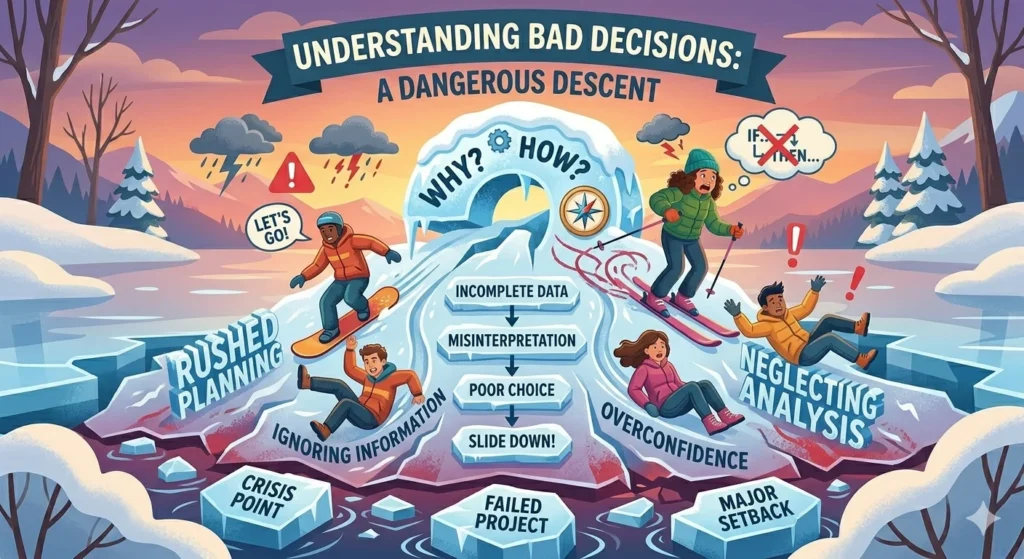
- Skipping workouts is a slippery slope to losing fitness.
Common error: Using it for positive situations
Usage note: Mostly used as a warning
Hit the Slopes
Word-by-word meaning: Go skiing
Idiomatic meaning: Start an activity enthusiastically
Example:
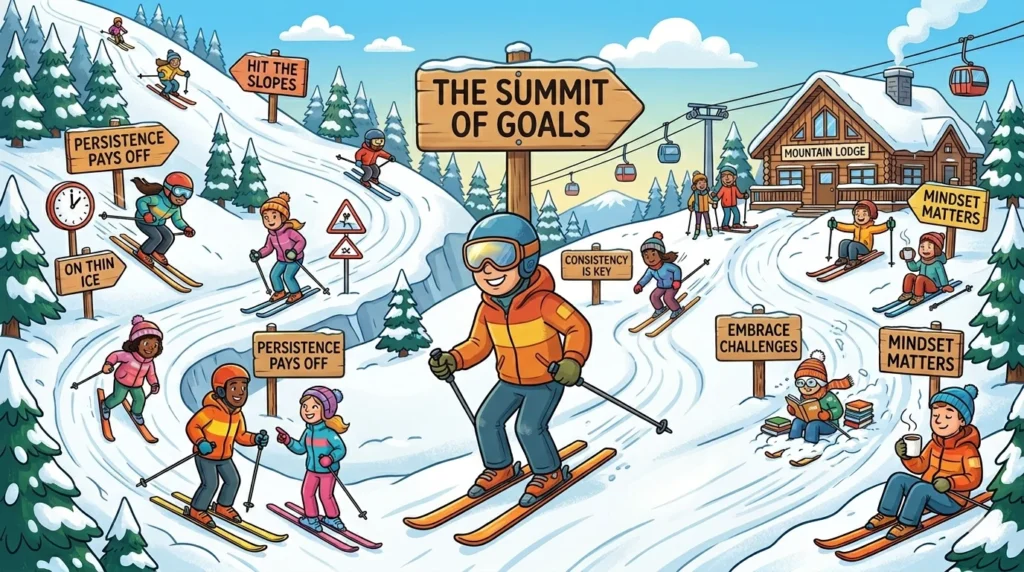
- After exams, we’re hitting the slopes of freelancing.
Common error: Confusing with physical hitting
Usage note: Informal and upbeat
Ski Around the Issue
Word-by-word meaning: Skiing in circles
Idiomatic meaning: Avoid the main topic
Example:
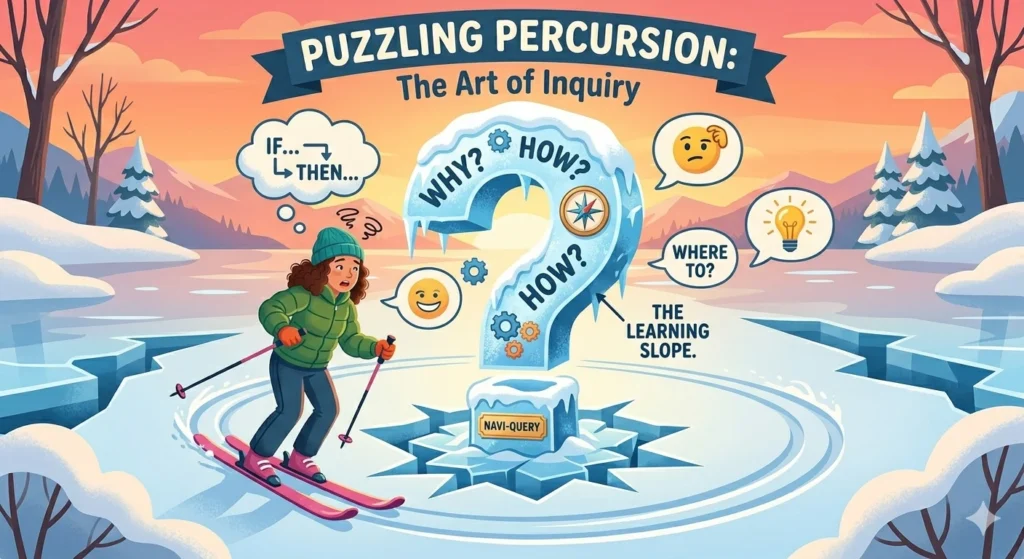
- Stop skiing around the issue and be honest.
Common error: Saying “ski about” instead of “around”
Usage note: Often used in debates
Cold Feet
Word-by-word meaning: Feet feeling cold
Idiomatic meaning: Feeling nervous before a decision
Example:
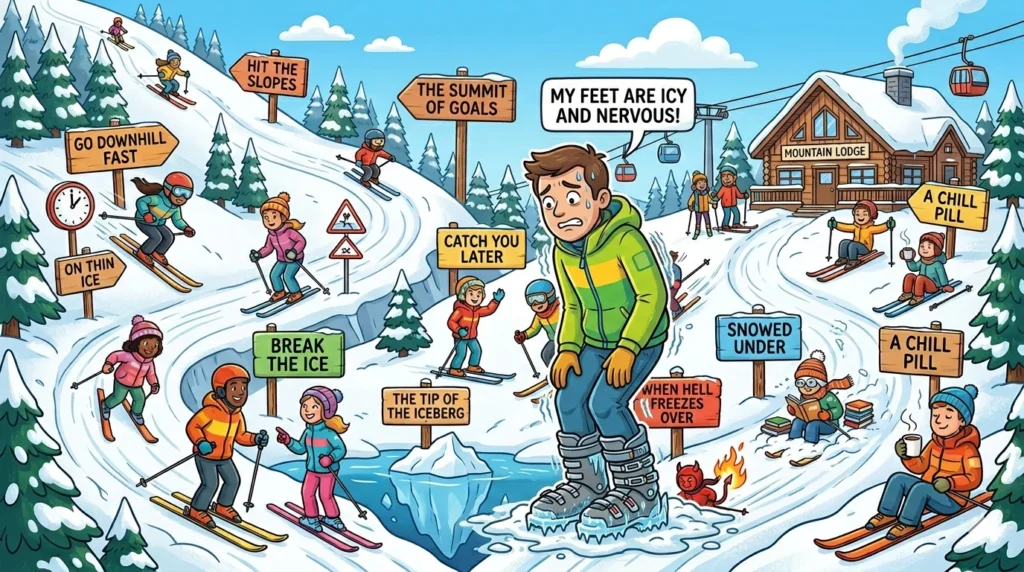
- She got cold feet before quitting her job.
Common error: Using it after the action
Usage note: Used before action
Break the Ice
Word-by-word meaning: Crack frozen water
Idiomatic meaning: Start a friendly conversation
Example:
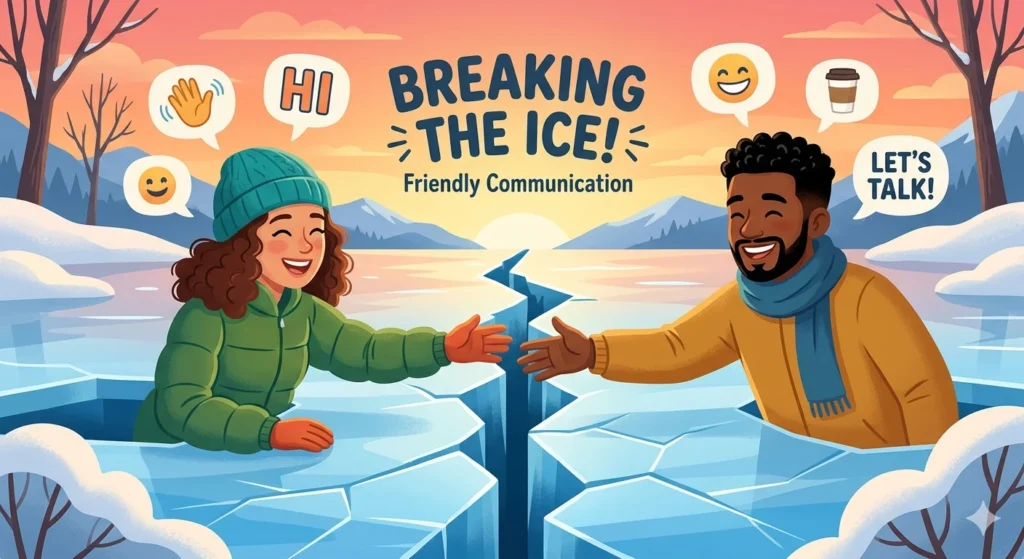
- A joke helped break the ice at the meeting.
Common error: Using in serious conflicts
Usage note: Social situations
Downhill All the Way
Word-by-word meaning: Going down a slope
Idiomatic meaning: Things are getting worse
Example:
- After the argument, it was downhill all the way.
Common error: Mixing with physical direction
Usage note: Negative context
Get Your Skates On
Word-by-word meaning: Wear skates
Idiomatic meaning: Hurry up
Example:
- Get your skates on—we’re late!
Common error: Literal interpretation
Usage note: British English
Ice-Cold Response
Word-by-word meaning: Extremely cold
Idiomatic meaning: Emotionless or unfriendly reply
Example:
- His message got an ice-cold response.
Common error: Using for weather only
Usage note: Emotional tone
On Thin Ice
Word-by-word meaning: Unsafe frozen surface
Idiomatic meaning: In a risky situation
Example:
- You’re on thin ice with the boss.
Common error: Using for physical danger only
Usage note: Warning expression
Snowed Under
Word-by-word meaning: Covered in snow
Idiomatic meaning: Extremely busy
Example:
- I’m snowed under with work.
Common error: Using for relaxation
Usage note: Informal
Glide Through
Word-by-word meaning: Move smoothly
Idiomatic meaning: Handle something easily
Example:
- She glided through the interview.
Common error: Overusing in formal writing
Usage note: Positive tone
Freeze Someone Out
Word-by-word meaning: Make someone cold
Idiomatic meaning: Ignore deliberately
Example:
- They froze him out of the group.
Common error: Confusing with physical cold
Usage note: Social conflict
Icebreaker
Word-by-word meaning: Tool that breaks ice
Idiomatic meaning: Conversation starter
Example:
- Games are great icebreakers.
Common error: Using as a verb incorrectly
Usage note: Noun form
Slalom Through Problems
Word-by-word meaning: Zigzag skiing
Idiomatic meaning: Handle obstacles skillfully
Example:
- He slalomed through office politics.
Common error: Pronunciation mistakes
Usage note: Advanced idiom
Snowball Effect
Word-by-word meaning: Growing snowball
Idiomatic meaning: Small issue growing bigger
Example:
- One delay caused a snowball effect.
Common error: Using for instant results
Usage note: Gradual growth
Chill Out
Word-by-word meaning: Cool down
Idiomatic meaning: Relax
Example:
- Chill out—it’s not a big deal.
Common error: Using in formal emails
Usage note: Casual speech
Skid Out of Control
Word-by-word meaning: Lose grip while sliding
Idiomatic meaning: Situation becoming unmanageable
Example:
- The argument skidded out of control.
Common error: Mixing with “slip”
Usage note: Dramatic tone
Frozen Solid
Word-by-word meaning: Completely frozen
Idiomatic meaning: Unable to act or decide
Example:
- I froze solid during the presentation.
Common error: Overusing in writing
Usage note: Emotional stress
Ice in the Veins
Word-by-word meaning: Cold blood
Idiomatic meaning: Calm under pressure
Example:
- That pilot has ice in his veins.
Common error: Negative usage
Usage note: Compliment
Take a Chill Pill
Word-by-word meaning: Cool down medicine
Idiomatic meaning: Calm yourself
Example:
- Take a chill pill—it’s just a game.
Common error: Using in serious settings
Usage note: Very informal
FAQs About Skiing Idioms
Q1: Are skiing idioms only used in winter?
No, they’re used year-round in everyday English.
Q2: Are skiing idioms formal or informal?
Mostly informal, but many appear in business and media contexts.
Q3: Can beginners use skiing idioms?
Yes! Start with common ones like break the ice or cold feet.
Q4: Are skiing idioms popular in American English?
Yes—especially in news, sports, and conversations.
Q5: How can I practice skiing idioms?
Use one idiom daily in speaking or writing.
Final Thoughts:
Learning skiing idioms is like mastering smooth turns on a snowy slope—the more you practice, the more confident you become. Pick 3 idioms today, use them in sentences, and soon they’ll feel completely natural. ❄️⛷️

Julian Mercer, author at SeekIdiom, writes clear explanations of English idioms with examples to help learners improve vocabulary and communication skills.