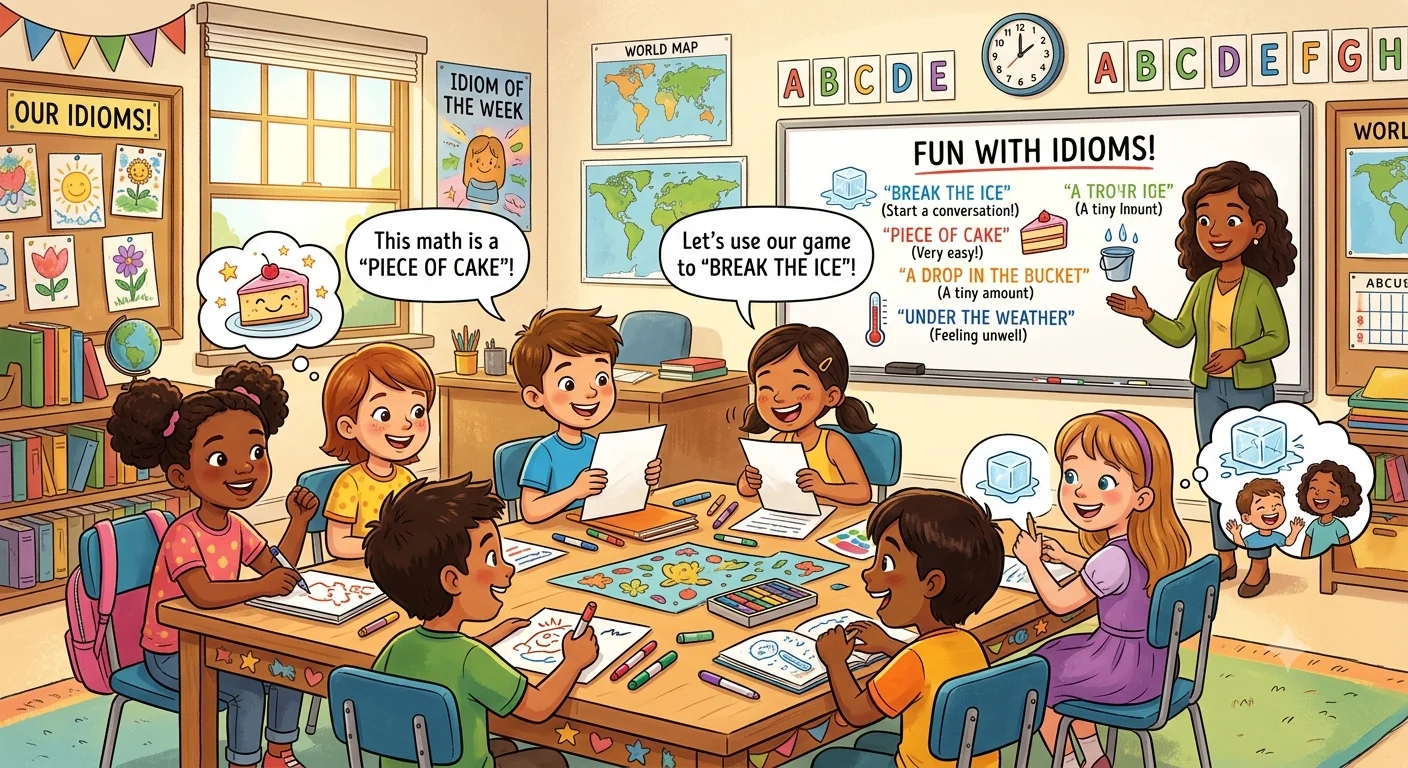
Idioms make language fun, colorful, and easy to remember! Imagine telling your friend, “Don’t cry over spilled milk”—it sounds funny, but it really means not to worry about small mistakes. In this article, we’ll explore 20 famous idioms for 3rd grade, with simple explanations, examples, and tips for using them correctly. Perfect for kids, teachers, and parents!
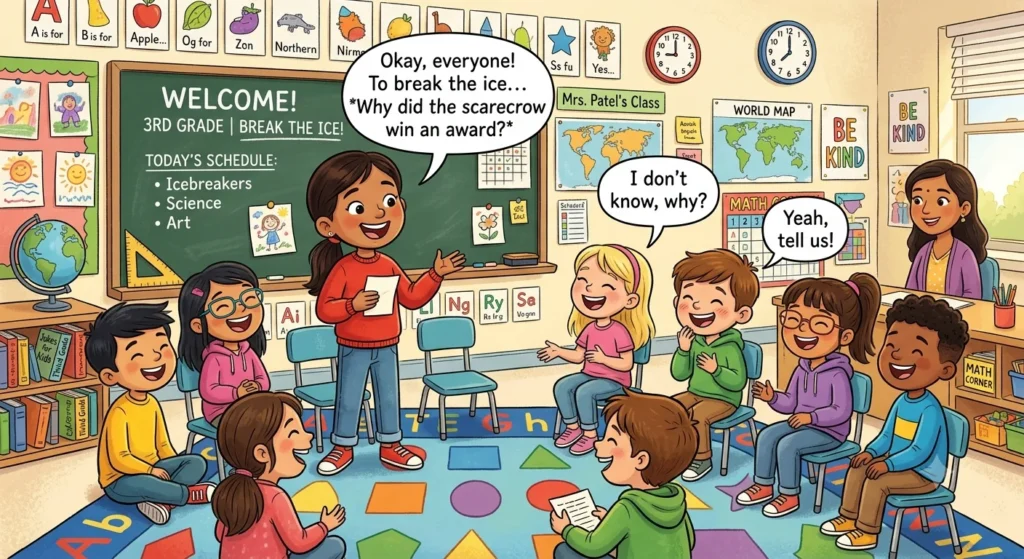
Break the Ice
Word-by-Word Meaning
Break: to separate or split
Ice: frozen water
Idiomatic/Figurative Meaning
To start a conversation in a friendly way, especially in an awkward situation.
Example Sentence
At the new school, Sarah told a joke to break the ice with her classmates.
Common Error
Using it literally as breaking real ice.
Usage Note
Used mostly in social or first-meeting contexts.
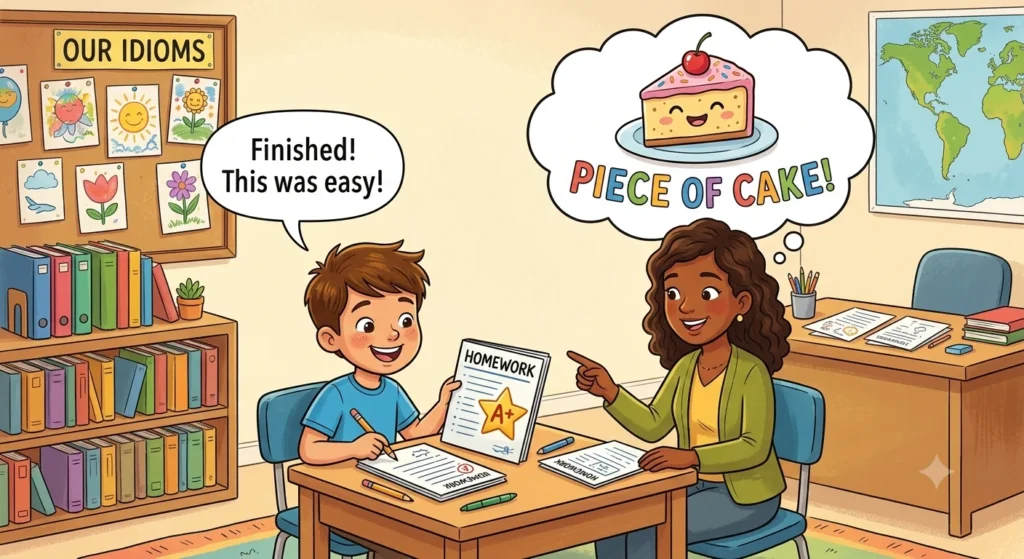
Piece of Cake
Word-by-Word Meaning
Piece: a portion
Cake: a sweet dessert
Idiomatic/Figurative Meaning
Something very easy to do.
Example Sentence
The math homework was a piece of cake for Liam.
Common Error
Thinking it refers to eating cake.
Usage Note
Use for tasks, assignments, or activities that are easy.
Spill the Beans
Word-by-Word Meaning
Spill: to let fall
Beans: small legumes
Idiomatic/Figurative Meaning
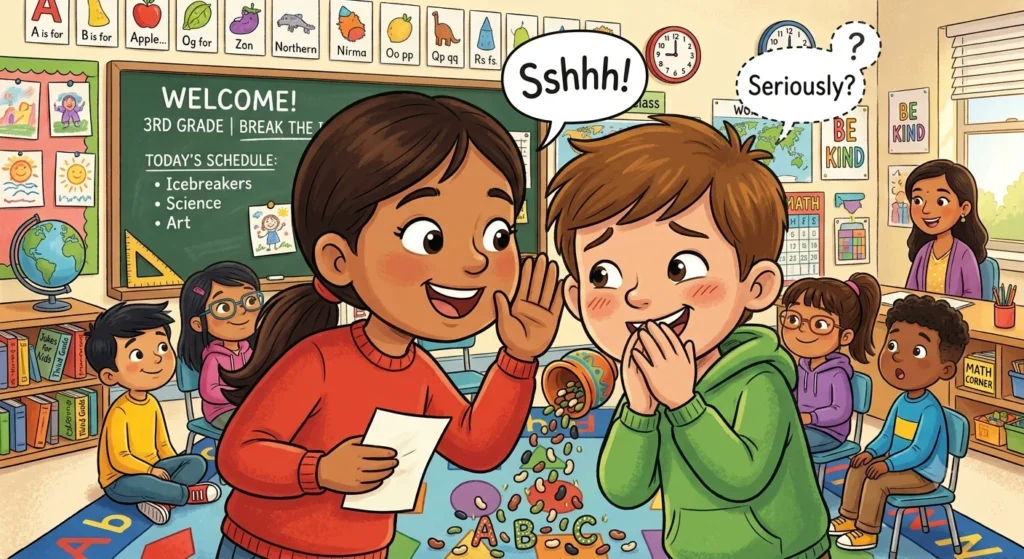
To reveal a secret.
Example Sentence
Don’t spill the beans about the surprise party!
Common Error
Taking it literally as spilling actual beans.
Usage Note
Use in casual conversations about secrets.
Hit the Sack
Word-by-Word Meaning
Hit: strike
Sack: bag or bed
Idiomatic/Figurative Meaning
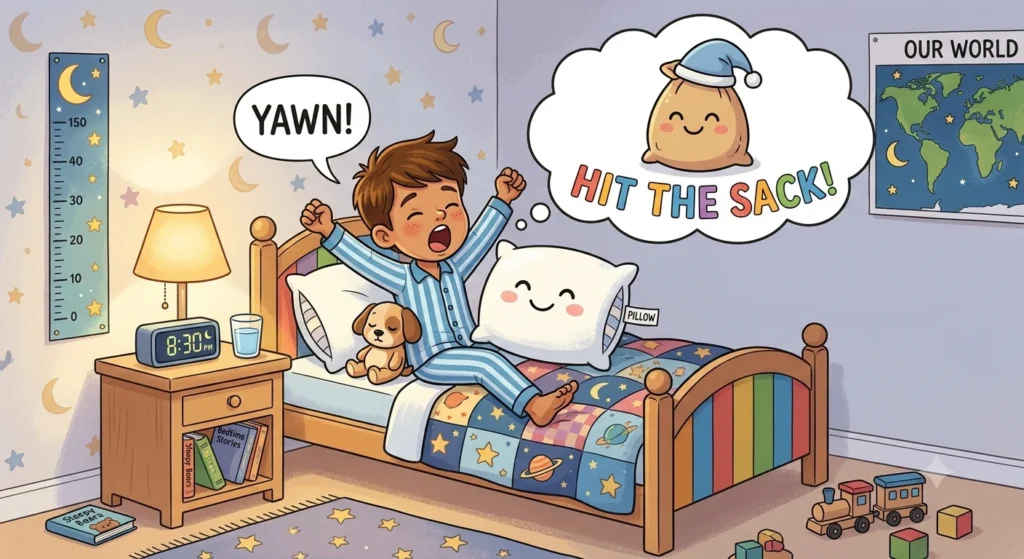
To go to sleep.
Example Sentence
After a long day, Tim was ready to hit the sack.
Common Error
Thinking it means hitting a bag.
Usage Note
Informal idiom, mainly for bedtime contexts.
Let the Cat Out of the Bag
Word-by-Word Meaning
Let: allow
Cat: a pet
Bag: container
Idiomatic/Figurative Meaning
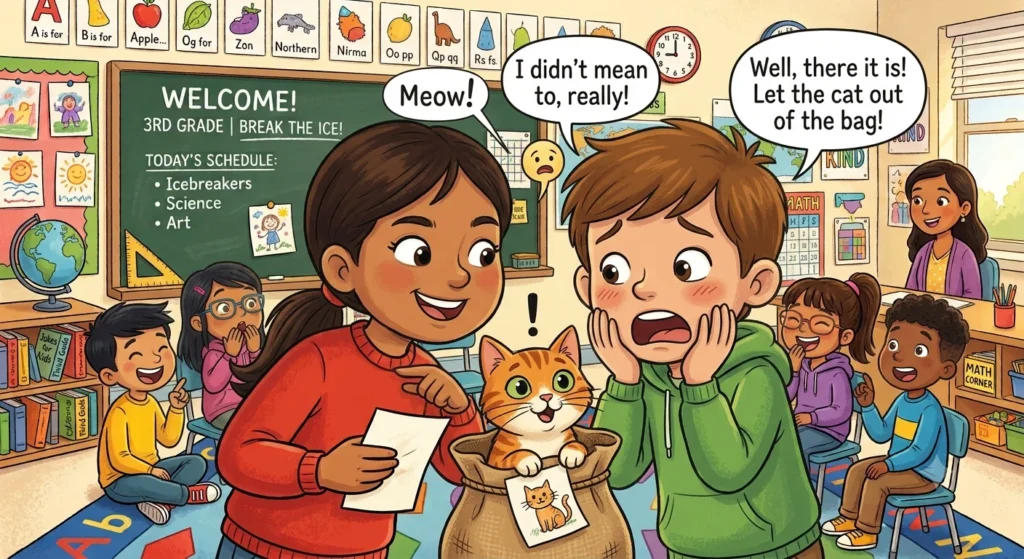
To accidentally reveal a secret.
Example Sentence
Mia let the cat out of the bag about the class trip.
Common Error
Interpreting it literally with a real cat and bag.
Usage Note
Used when sharing secrets accidentally.
Under the Weather
Word-by-Word Meaning
Under: below
Weather: rain, sun, wind, etc.
Idiomatic/Figurative Meaning
Feeling sick or unwell.
Example Sentence
Lucas stayed home from school because he was under the weather.
Common Error
Thinking it’s about the actual weather outside.
Usage Note
Commonly used to describe mild sickness.
When Pigs Fly
Word-by-Word Meaning
Pigs: farm animals
Fly: to soar in the air
Idiomatic/Figurative Meaning
Something that will never happen.
Example Sentence
“I’ll clean my room on time? Yeah, when pigs fly!”
Common Error
Literal interpretation of pigs flying.
Usage Note
Funny way to show impossibility.
76+ Teaching English Idioms for Speaking and Writing Skills 🗣️
Costs an Arm and a Leg
Word-by-Word Meaning
Arm: body part
Leg: body part
Idiomatic/Figurative Meaning
Very expensive.
Example Sentence
The new video game costs an arm and a leg!
Common Error
Thinking it involves real body parts.
Usage Note
Informal, used for expensive items.
Bite Your Tongue
Word-by-Word Meaning
Bite: to use teeth
Tongue: inside mouth
Idiomatic/Figurative Meaning
To avoid saying something you shouldn’t.
Example Sentence
I had to bite my tongue when my friend gave a bad joke.
Common Error
Taking it literally and biting your actual tongue.
Usage Note
Used when holding back words in social situations.
Cry Over Spilled Milk
Word-by-Word Meaning
Cry: shed tears
Spilled: dropped
Milk: dairy
Idiomatic/Figurative Meaning
Don’t worry about something that can’t be changed.
Example Sentence
It’s okay you lost the game; don’t cry over spilled milk.
Common Error
Thinking it’s about actual milk.
Usage Note
Encourages moving on from mistakes.
A Blessing in Disguise
Word-by-Word Meaning
Blessing: something good
Disguise: hidden appearance
Idiomatic/Figurative Meaning
Something good that seems bad at first.
Example Sentence
Missing the bus was a blessing in disguise because I met my friend at the next stop.
Common Error
Assuming it only refers to blessings.
Usage Note
Use to show a positive outcome from a negative event.
Burn the Midnight Oil
Word-by-Word Meaning
Burn: to use
Midnight oil: light/oil at night
Idiomatic/Figurative Meaning
To stay up late working or studying.
Example Sentence
Anna had to burn the midnight oil to finish her project.
Common Error
Taking it literally as burning oil at midnight.
Usage Note
Informal, mostly used for school or work tasks.
Hit the Nail on the Head
Word-by-Word Meaning
Hit: strike
Nail: metal pin
Head: top part
Idiomatic/Figurative Meaning
To be exactly correct.
Example Sentence
Tom hit the nail on the head when he guessed the solution.
Common Error
Interpreting it literally as hitting nails.
Usage Note
Used in problem-solving or discussions.
Kick the Bucket
Word-by-Word Meaning
Kick: strike with foot
Bucket: container
Idiomatic/Figurative Meaning
To die.
Example Sentence
The old dog finally kicked the bucket peacefully.
Common Error
Thinking it’s a literal kick.
Usage Note
Use carefully; can be sensitive with children.
Let Sleeping Dogs Lie
Word-by-Word Meaning
Let: allow
Sleeping: resting
Dogs: animals
Lie: stay down
Idiomatic/Figurative Meaning
Don’t start trouble or disturb a situation.
Example Sentence
Don’t ask about the argument; it’s better to let sleeping dogs lie.
Common Error
Assuming it involves actual dogs.
Usage Note
Useful in advice-giving or conflict resolution.
Out of the Blue
Word-by-Word Meaning
Out: from
Blue: sky
Idiomatic/Figurative Meaning
Something happening unexpectedly.
Example Sentence
The gift arrived out of the blue, and I was so happy!
Common Error
Taking it literally as the color blue.
Usage Note
Used in casual storytelling.
The Ball is in Your Court
Word-by-Word Meaning
Ball: object for play
Court: playing area
Idiomatic/Figurative Meaning
It’s your turn to act or make a decision.
Example Sentence
I’ve done my part; now the ball is in your court.
Common Error
Thinking it’s only about sports.
Usage Note
Used in decision-making contexts.
Add Fuel to the Fire
Word-by-Word Meaning
Add: increase
Fuel: combustible material
Fire: flames
Idiomatic/Figurative Meaning
To make a bad situation worse.
Example Sentence
Arguing back just added fuel to the fire.
Common Error
Taking it literally as adding fuel.
Usage Note
Used in conflicts or tense situations.
Barking up the Wrong Tree
Word-by-Word Meaning
Barking: dog sound
Wrong tree: incorrect tree
Idiomatic/Figurative Meaning
Blaming or pursuing the wrong person or idea.
Example Sentence
If you think I lost your book, you’re barking up the wrong tree.
Common Error
Assuming literal dogs and trees.
Usage Note
Used in corrections or clarifications.
Every Cloud Has a Silver Lining
Word-by-Word Meaning
Cloud: sky formation
Silver lining: shiny edge
Idiomatic/Figurative Meaning
Every bad situation has a positive side.
Example Sentence
Even though I failed the test, every cloud has a silver lining because I learned from my mistakes.
Common Error
Thinking it’s about weather only.
Usage Note
Use to encourage optimism.
FAQ About Idioms for 3rd Graders
Q1: What is an idiom?
A: An idiom is a phrase whose meaning is different from the literal words. For example, “piece of cake” means something is easy.
Q2: How can kids remember idioms easily?
A: Use stories, cartoons, and real-life examples. Practicing in sentences helps a lot.
Q3: Are idioms suitable for school essays?
A: Yes! They make writing fun and expressive when used correctly.
Q4: Can idioms have multiple meanings?
A: Some can, depending on the context. Always check how it’s used in the sentence.
Q5: Why learn idioms in 3rd grade?
A: Early exposure improves vocabulary, reading comprehension, and makes English more enjoyable.
Conclusion
Learning idioms is like unlocking a secret code in English! By practicing these 20 idioms for 3rd grade, kids can make their speech more fun and expressive. Try using one idiom each day, and soon you’ll sound like a pro. Remember, the more you use them, the easier it becomes!

Sophie Langford, author at SeekIdiom, explains English idioms with clear meanings, examples, and usage to help learners improve vocabulary and communication.