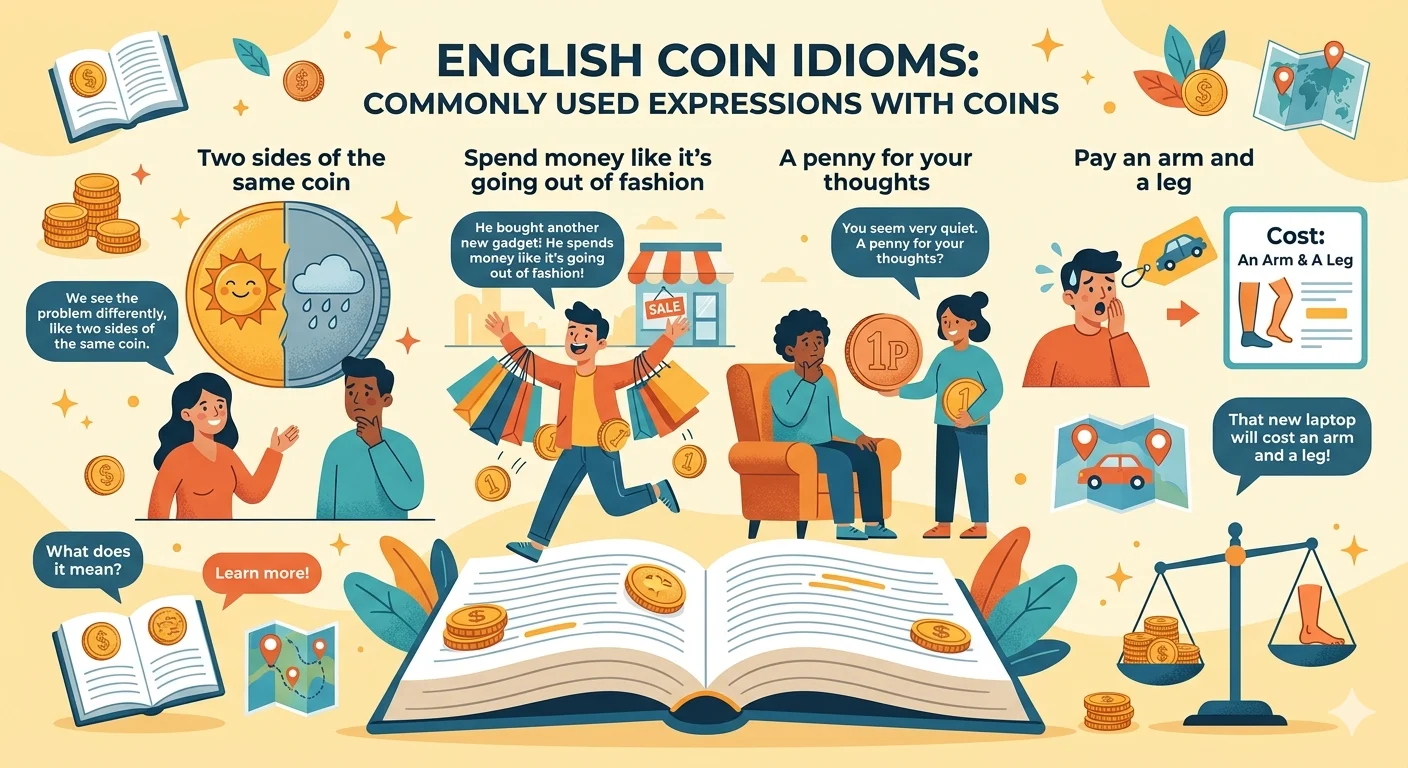
Have you ever heard someone say, “That’s the other side of the coin” and wondered what it really means? Coin idioms are everyday English expressions that use money-related words to describe life, choices, and situations—often with meanings far beyond actual coins. Let’s break them down in a simple, memorable way you’ll actually use in real conversations.
What Are Coin Idioms?
Coin idioms are figurative expressions that include words like coin, penny, dime, or cent, but their meanings are symbolic—not literal. Native speakers use them in conversations, writing, business, and storytelling.
Each idiom below includes:
- Word-by-word meaning
- Idiomatic (figurative) meaning
- Example sentence
- Common error
- Usage note
The Other Side of the Coin
Word-by-word meaning: The opposite face of a coin
Idiomatic meaning: A different or opposite aspect of a situation

Example: Success looks glamorous, but stress is the other side of the coin.
Common error: Using it for unrelated topics
Usage note: Used to show contrast or balance
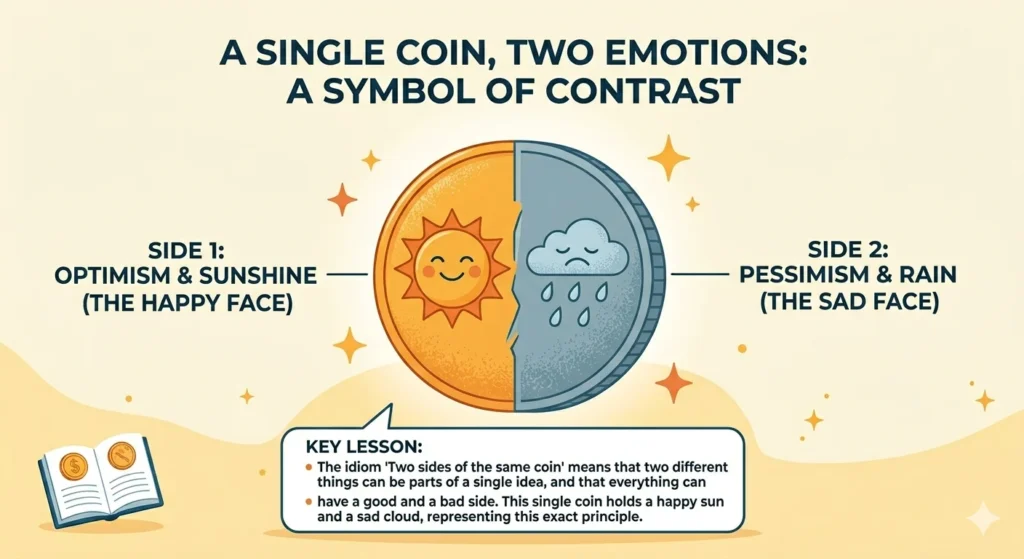
Two Sides of the Same Coin
Word-by-word meaning: Both faces of one coin
Idiomatic meaning: Two things closely connected
Example: Love and hate are two sides of the same coin.
Common error: Using it for completely opposite ideas
Usage note: Often used in philosophy or emotions
A Coin Toss
Word-by-word meaning: Throwing a coin to decide
Idiomatic meaning: A decision with equal chances
Example: Whether we win or lose is a coin toss.

Common error: Using it for planned outcomes
Usage note: Common in sports and predictions
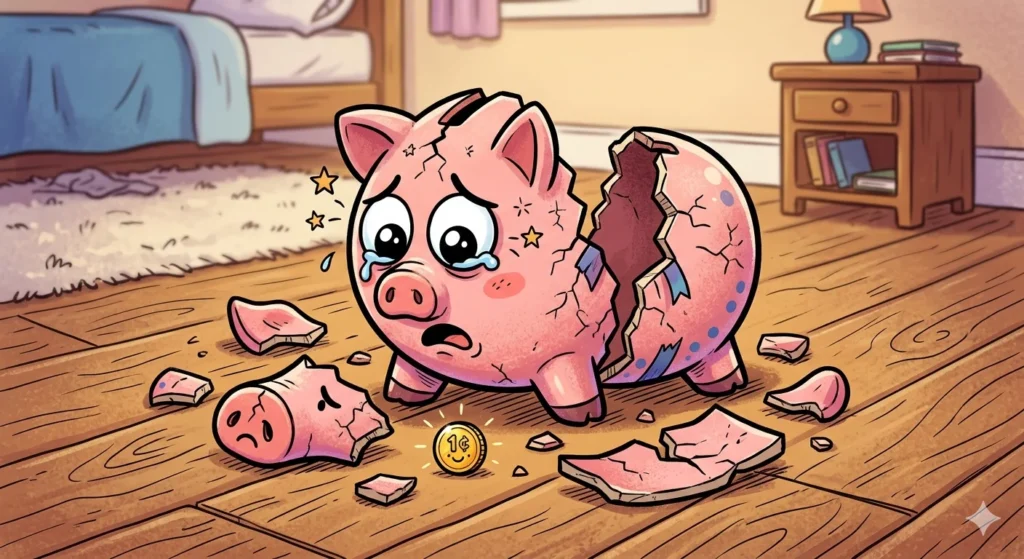
Not Worth a Dime
Word-by-word meaning: Not worth ten cents
Idiomatic meaning: Completely worthless
Example: That old phone isn’t worth a dime now.
Common error: Using it for people instead of things
Usage note: Informal, slightly negative
Penny for Your Thoughts
Word-by-word meaning: Offering a penny to hear thoughts
Idiomatic meaning: Asking what someone is thinking
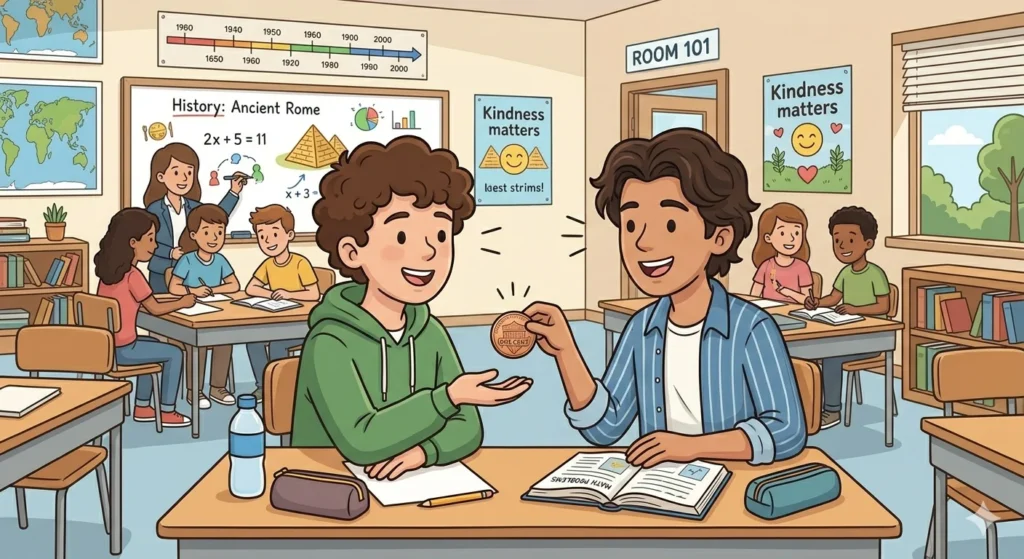
Example: You’re quiet—penny for your thoughts?
Common error: Using it in formal writing
Usage note: Friendly and conversational
In for a Penny, In for a Pound
Word-by-word meaning: Small coin vs large coin
Idiomatic meaning: If you start, commit fully
Example: I’ve started the project—now I’m in for a penny, in for a pound.
Common error: Using it before starting something
Usage note: British English origin
Flip a Coin
Word-by-word meaning: Tossing a coin
Idiomatic meaning: Decide randomly
Example: Let’s flip a coin to choose the restaurant.
Common error: Using it for serious decisions
Usage note: Very common in casual speech
Heads or Tails
Word-by-word meaning: Two sides of a coin
Idiomatic meaning: Possible outcomes
Example: I don’t know heads or tails of this issue.
Common error: Forgetting “of” in the phrase
Usage note: Often used with confusion
Penny-Pincher
Word-by-word meaning: Someone who holds pennies tightly
Idiomatic meaning: Very frugal person
Example: He’s a penny-pincher who hates wasting money.
Common error: Confusing with “cheap”
Usage note: Can be neutral or negative
A Pretty Penny
Word-by-word meaning: A nice amount of money
Idiomatic meaning: A large sum
Example: That car cost a pretty penny.
Common error: Thinking it means “cheap”
Usage note: Often used humorously
Turn Up Like a Bad Penny
Word-by-word meaning: A bad coin appearing again
Idiomatic meaning: Something unwanted returning
Example: That rumor keeps turning up like a bad penny.
Common error: Using it for positive events
Usage note: Slightly negative tone
Penny Wise, Pound Foolish
Word-by-word meaning: Careful with small money, careless with big
Idiomatic meaning: Saving small amounts but wasting big ones
Example: Skipping maintenance was penny wise, pound foolish.
Common error: Mixing word order
Usage note: Common in advice contexts
Drop a Dime
Word-by-word meaning: Give ten cents
Idiomatic meaning: Inform authorities secretly
Example: Someone dropped a dime on the thief.
Common error: Using it in formal writing
Usage note: Informal, American English
Count Every Penny
Word-by-word meaning: Count each coin
Idiomatic meaning: Be extremely careful with money
Example: After losing his job, he counted every penny.
Common error: Using it positively in luxury contexts
Usage note: Often about financial struggle
Look Like a Million Dollars
Word-by-word meaning: Appear very valuable
Idiomatic meaning: Look amazing
Example: You look like a million dollars today!
Common error: Using it for objects only
Usage note: Compliment
Pennies on the Dollar
Word-by-word meaning: Small cents compared to full dollar
Idiomatic meaning: Very cheaply
Example: He bought the house for pennies on the dollar.
Common error: Using it for exact prices
Usage note: Business and real estate
Cash in Your Chips
Word-by-word meaning: Exchange gambling chips
Idiomatic meaning: Quit or die (context matters)
Example: He decided to cash in his chips and retire.
Common error: Using it casually about death
Usage note: Be context-sensitive
Dime a Dozen
Word-by-word meaning: Ten cents for twelve items
Idiomatic meaning: Very common
Example: Cheap apps are a dime a dozen.
Common error: Using it for rare things
Usage note: Informal
Put Your Money Where Your Mouth Is
Word-by-word meaning: Match words with money
Idiomatic meaning: Prove your claims
Example: If you believe in the idea, invest in it.
Common error: Shortening incorrectly
Usage note: Used in challenges
Pay Someone Back in the Same Coin
Word-by-word meaning: Repay using the same currency
Idiomatic meaning: Treat someone the way they treated you
Example: He insulted me, so I paid him back in the same coin.
Common error: Using it for money repayment
Usage note: Often about revenge or justice
Frequently Asked Questions About Coin Idioms
1. Why are coin idioms so common in English?
Money is universal, making coin idioms relatable and easy to understand.
2. Can I use coin idioms in exams?
Yes—use them carefully in essays, not formal reports.
3. Are coin idioms British or American?
Both! Some lean British (pound), others American (dime).
4. How can I remember coin idioms easily?
Link them to real-life money situations you’ve experienced.
Conclusion: Practice Makes Perfect 💡
Coin idioms add color, confidence, and fluency to your English. Try using one idiom a day—in conversations, journaling, or social media captions. The more you practice, the more natural they’ll feel. Start today—flip the coin and give it a try!

Hazel Monroe, author at SeekIdiom, explains English idioms through simple meanings and examples, helping learners improve vocabulary and everyday usage.